



GE HealthCare (NASDAQ: GEHC | GEHC Price Prediction) currently trades at $59.49, well below the Wall Street consensus price target of $89.74. That implies upside of roughly 50.8% if the analysts are right.
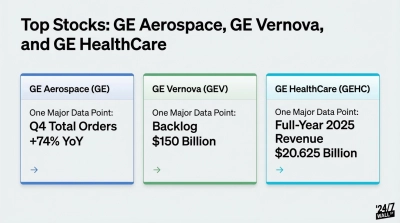
GE HealthCare is the medical imaging and diagnostics business spun from General Electric, with about $20.6 billion in annual revenue across Advanced Imaging Solutions, Patient Care Solutions, and Pharmaceutical Diagnostics. Wall Street has treated it as a defensive growth story tied to aging demographics, hospital capex, and a refresh cycle in CT and MRI hardware.
The company just snapped its multi-quarter beat streak and management trimmed full-year profit guidance. The market reaction was severe enough to break the prior 52-week low, raising the question of whether this is a real rerating or an overreaction to a temporary problem.
A 13% Single-Day Drop on a Margin Guide-Down
The catalyst for the decline was the guidance cut. GE HealthCare reduced its full-year 2026 adjusted EPS range to $4.80 to $5.00, down from $4.95 to $5.15, and lowered free cash flow guidance to roughly $1.6 billion from $1.7 billion. Adjusted EBIT margin guidance fell to 15.4% to 15.7%. Shares fell 13.2% on the day.
That reaction is outsized. Across the prior four reports, the average day-of move was −0.55%. Q1 adjusted EPS landed at $0.99 against $1.05 consensus, a 5.71% miss, while revenue beat at $5.13 billion, up 7.41% year over year. Adjusted EBIT margin contracted 150 basis points to 13.5%.
Two issues drove the profit miss. CEO Peter Arduini cited “a PDx supplier issue that has since been resolved” and “significant increases in memory chips, oil and freight costs” that management expects to persist. Patient Care Solutions revenue fell 6.5% and segment EBIT collapsed 79.8% to just $10 million.
Why the Sell Side Is Sticking With the Bull Case
With implied upside above 50%, the analyst stance merits scrutiny. Of 19 covering analysts, three rate it Strong Buy, 10 at Buy, five Hold, and one Underperform. Sentiment skews about 70% bullish to 5% bearish. The core thesis is that cost shocks are macro-driven rather than structural, and the topline engine remains intact.
Organic revenue growth guidance was reaffirmed at 3.0% to 4.0%. Pharmaceutical Diagnostics grew 21.7% on the Flyrcado ramp and Advanced Visualization Solutions grew 8.2%. Book-to-bill was 1.07x against a record $21.8 billion backlog, the cleanest evidence that customer demand has not cracked.
Analysts also point to a real innovation pipeline: FDA clearance for the Photonova Spectra photon-counting CT, next-generation SIGNA MRI clearances, and the $2.3 billion Intelerad acquisition for cloud-enabled enterprise imaging. Arduini said management expects to “offset more than half of the inflation impact with price and cost actions,” framing 2026 as a margin trough rather than a new baseline.
Valuation Looks Cheap, but the Chart Is Ugly
At $59.49, GE HealthCare trades at a forward P/E of roughly 14x on the new guidance midpoint, with a trailing P/E of 15x. The consensus target implies nearly 51% upside, supported by 13 Buy-equivalent ratings.
The stock is down 27.5% year to date and 16.7% over the past week. The 52-week range runs from $89.77 to $58.75, a fresh low on Wednesday. The S&P 500 is about 4% higher than at the start of the year, making this a stock-specific drawdown.
The Setup: Cheap Multiple, but Margin Risk Warrants Caution
The bull case is compelling if you view the cost story as cyclical. The bull path is straightforward: the PDx supplier issue is already resolved, pricing actions absorb half the inflation hit, Flyrcado keeps compounding, and the $21.8 billion backlog converts at the reaffirmed organic growth rate. If margins stabilize into the back half and the Intelerad deal contributes as expected, the gap to a $90 price level closes naturally as 2027 estimates come into view.
The bear case holds if tariffs and freight are the new normal for global medtech. Patient Care Solutions losing nearly all of its segment profit signals a deeper problem, China exposure is unresolved, and net income already fell 31.0% year over year. A second guidance cut would turn concerns about the stock being a value trap from speculation into the prevailing view.
On balance, the bull case looks better supported at this level. The topline beat, reaffirmed organic guide, and record backlog are hard to square with a stock priced for structural decline. For investors who agree with the bull case, the next earnings report is the key catalyst to watch.









 Top Gaining Stocks
 Top Losing Stocks