


The Suburb as Server Farm
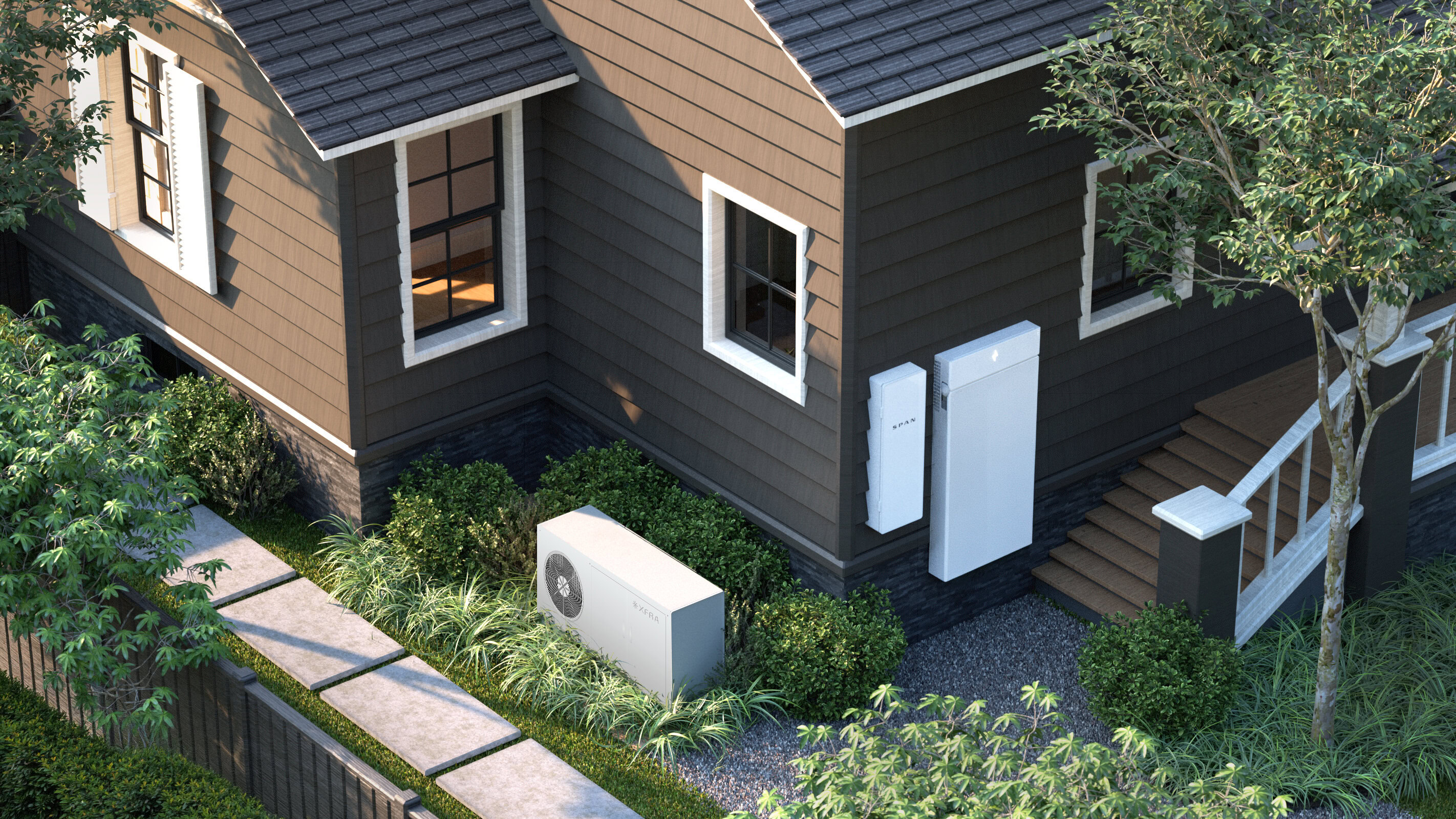
NVIDIA (NASDAQ:NVDA | NVDA Price Prediction) wants the next AI factory to sit in your garage. Through a partnership with California startup Span, the chipmaker is teaming with homebuilder PulteGroup (NYSE:PHM) to deploy residential “XFRA units,” small data centers bolted onto new houses that tap unused grid capacity through Span’s smart panels.
The pitch is brutal math. Span claims it can deploy 8,000 units six times faster and at one-fifth the cost of building a comparable 100-megawatt centralized data center, while a traditional data center uses as much electricity as 100,000 households. Span CEO Arch Rao says the model helps “meet what is clearly an insatiable demand for more compute, much more cost effectively, while benefiting individual consumers.” Homeowners get a flat fee for power and Wi-Fi while being compensated based on Span’s energy and network use.
Why Pulte Matters
PulteGroup operates 1,043 active communities across more than 45 markets, giving NVIDIA national distribution into freshly poured slabs. The timing helps. Housing starts hit 1.50 million annualized units in March 2026, up 7.4% month over month, sitting in the 90.9th percentile of historical activity. Pulte itself logged net new orders of 8,034 homes in Q1 2026, up 3% year over year.
The Edge AI Stack Behind It
The home node plugs into NVIDIA’s broader edge arsenal: DGX Spark personal AI supercomputers, the RTX PRO 5000 72GB Blackwell GPU for local agentic workflows, BlueField-4 data processors, Jetson AGX Thor for robotics, and GeForce RTX 5060 cards starting at $299. CFO Colette Kress told investors that “DGX Spark and Station revolutionized personal computing by putting the power of an AI supercomputer in a desktop form factor.”
CEO Jensen Huang frames the moment bluntly. “Enterprise adoption of agents is skyrocketing,” he said on the Q4 call, with customers racing to fund the AI compute that powers the industrial revolution. He also describes AI “going everywhere, doing everything, all at once.”
The Numbers Backing the Bet
NVIDIA can fund this experiment. Q4 FY2026 revenue hit $68.13 billion, up 73.21% year over year, with EPS of $1.62 against a $1.52 consensus. Data Center Networking surged 263% while free cash flow jumped 124.42% to $34.90 billion. Q1 FY2027 guidance calls for roughly $78 billion in revenue, excluding China data center sales. Shares trade at $207.83, up 83.09% over the past year.
Keep an eye on the stock as the first XFRA-equipped Pulte communities come online and Span scales its node network. If distributed compute can absorb meaningful inference load, the American suburb becomes a new revenue surface for Jensen Huang’s empire.

















 Top Gaining Stocks
 Top Losing Stocks