



The Denver Post’s management announced it would cut nearly a third of its editorial jobs. Its parent, Digital First Media, has also announced large layoffs at its California papers. Between the two, the number of journalists who will lose jobs is a substantial part of the newsroom operations at all the papers affected. The layoffs are a sign that revenue in most of the industry continues to fall, and margins almost certainly are falling.
Even Warren Buffett, a long-time supporter of the newspaper industry, finds himself in the dilemma, which is the tradeoff between quality journalism and industry financials. BH Media, a division of Berkshire Hathaway Inc. (NYSE: BRK-A), said it would cut 148 jobs and not fill over 100 open positions. This follows large layoffs last year.
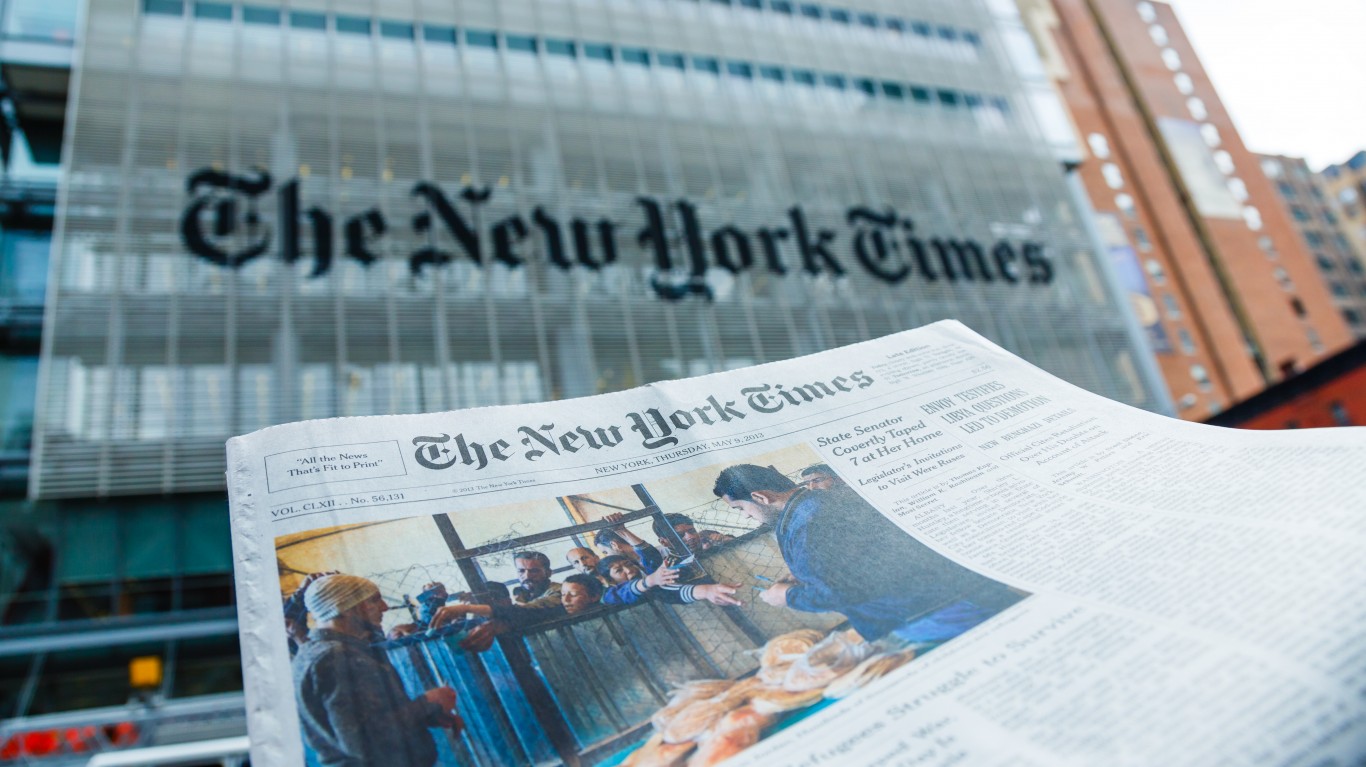
The newspaper industry is divided by most experts into haves and have-nots. The first group has large digital subscription revenue, and it is led by New York Times Co. (NYSE: NYT). Its revenue rose last year, a novelty among large newspaper companies. Revenue for 2017 was up 7.7% to $1.675 billion. The key to the growth was an increase of 14.5% in subscription revenue to $1 billion. The New York Times has built a tremendous online subscriber base. It disclosed in the full-year earnings report:
Digital-only subscriptions totaled approximately 2,644,000 at the end of the fourth quarter of 2017, a net increase of 157,000 subscriptions compared with the end of the third quarter of 2017 and a 41.8 percent increase compared with the end of the fourth quarter of 2016.
[nativounit]
Other newspaper companies have digital subscriber bases in the hundreds of thousands. And few, if any, can charge the hundreds of dollars a year the paper charges almost all its subscribers. Other large dailies are fortunate to be able to charge a fraction of what the New York Times does, and some have introductory offers for just a few dollars a month.
Based on the trends among publicly traded newspaper companies, total revenue at each dropped 7% to 10% last year. The long-term decline in print advertising and subscription revenue has not been entirely offset by digital advertising. At many of the companies, digital ad growth has fallen into the single digits. Without a major jump in digital subscriber revenue, the percentage decline in total revenue for 2018 could match 2017. That makes more cost cuts throughout the industry this year inevitable.
The downward cycle in the industry is well documented. Editorial cost cuts harm editorial coverage. A drop in coverage makes people less likely to subscribe. And there is no end in sight.
[wallst_email_signup]













 Top Gaining Stocks
 Top Losing Stocks