


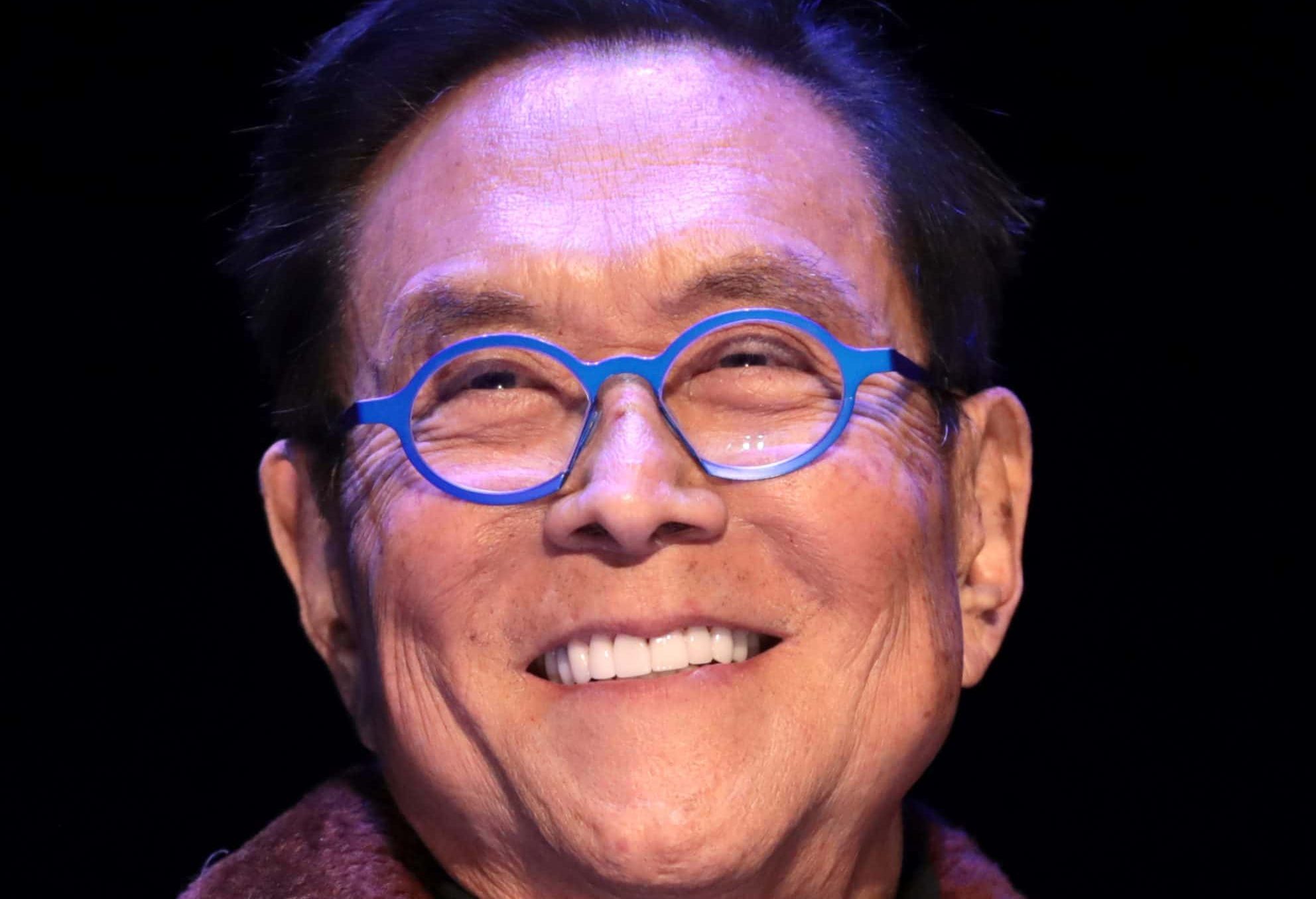
With over 40 million copies sold, Robert Kiyosaki’s Rich Dad/Poor Dad ranks as one of the top-selling financial books of all time. With nearly 20 subsequent best-selling books, speaking seminars, and other ventures, Robert Kiyosaki’s journey from failed student growing up in Hawaii to financial guru and successful author has been littered with controversies, both in some of his business practices, as well as with some of his more exotic and unequivocally riskier financial ideas. However, certain underlying principles that underlie all of Kiyosaki’s fundamental concepts have been time-tested and validated by millions, and his truthful observations on wealth resonate with countless people from all cultures and backgrounds.
Robert Kiyosaki’s Valid Wealth Principles

Wealth building through prudent money management and focusing on assets over income are some of Kiyosaki’s principle teachings.
Among Robert Kiyosaki’s wealth principles that, by and large, are applicable and valid in all societies that are based on a capitalist system.
- The Rich Don’t Work For Money – They Let Their Money Work For Them – What many uninformed advocates decrying that “the rich don’t pay their fair share” don’t understand or want to admit is that many of the rich don’t work for a paycheck. Their investments and businesses pay for the bulk of their expenses, so their actual reported passive income is taxed lower, relative to their net worth. The entire basis of the “Rich Dad/Poor Dad” concept is that Kiyosaki’s biological “Poor Dad” was a school teacher who worked for a regular salary. His “Rich Dad”, or financial mentor, taught him the fundamentals of how finance worked, and how to grow one’s wealth starts with a mindset change.
- It’s Not How Much You Make, But How Much You Keep – In other words, adoption of a frugal spending and aggressive savings and investment mindset will help one grow wealth faster and more consistently. This is consistent with the F.I.R.E. ethos, which can work regardless of income bracket, as it focuses on personal discipline, more than on any income sum, to succeed.
- Financial Education Is A Separate Field of Study From Academia – Kiyosaki is quick to point out numerous examples of highly educated people in fields of medicine, engineering, law, and the other fields, who are still financially illiterate. There is still an assumption that getting a high-paying job means that intelligent and strategic money management and wealth building is a given, which is simply untrue.
- The Difference Between Assets and Liabilities – Another fundamental aspect of Kiyosaki’s philosophies is to focus on owning assets, which make you money and increases net worth, versus liabilities, which generate money outflows and decreases your net worth. The underlying truth in this concept is often overlooked, due to the marketing behind a wide range of products. For example, Kiyosaki considers his Ferrari as a liability, while he considers his investments in real estate and physical precious metals as assets. (see below for his more controversial views on fiat money)
- Focusing On One’s Own Business – Kiyosaki advises people to spend more time on acquiring assets vs. focusing solely on income, since one can’t get back the time spent earning income but an asset that continues to generate income on its own ultimately leaves one with more time for their own pursuits.
- “Winners are not afraid of losing. But losers are. Failure is part of the process of success.” – Kiyosaki encourages people seeking wealth to take calculated risks, and that overcoming the fear of losing money is a crucial step for building wealth, otherwise, one is certain to miss opportunities. He also distinguishes investing from gambling: “It is not gambling if you know what you’re doing. It is gambling if you’re just throwing money into a deal and praying.”
Robert Kiyosaki’s Controversial Views

Kiyosaki’s personal $1.2 billion accumulated debt to pursue acquiring Bitcoin and Precious Metals has been one of his more controversial moves.
While Robert Kiyosaki’s advice has benefited many of his book readers and seminar attendees, he has generated controversies with some of his other endeavors and ideas, most of which carry considerable risk:
- Fiat Currency – Kiyosaki rightly has criticized fiat currency and the misleading general perceptions about the privately-owned Federal Reserve Bank (which Senator Rand Paul correctly described as about as federal as Federal Express) and US dollar’s lack of intrinsic value. This perspective is historically accurate, although it has been derided in mainstream media since it was branded as “misinformation” when President Donald Trump also has mentioned as such.
- Bitcoin – Kiyosaki has been following the example of MicroStrategy (NASDAQ: MSTR) | MSTR Price Prediction , and has advocated loading up on Bitcoin, real estate, and precious metals as assets that will maintain and enhance in value as he anticipates a market crash and fiat US dollar collapse. While he is not wrong as to the possibility of his scenario, there is debate as to whether or not Bitcoin can be considered an asset, since its value is tied to a fiat US dollar. Perhaps Kiyosaki’s relationship with President Trump (they have co-authored a few books) might have informed him.
- Tax Liens and Foreclosure Investment – These are strategies to obtain real estate at bargain prices due to outstanding debt owed against the properties. This is a viable model that requires a level of real estate finance knowledge, the particular tax laws and court cases that the properties’ owners may have adjudicated judgments against, and other details that are the province of sophisticated niche real estate speculation and not for laymen.
- Debt Leverage – Kiyosaki has a personal high-risk tolerance. Perhaps honed by several bankruptcies he has experienced in other businesses, he displays little fear of carrying a high debt load if it is a means to further his goals. Last year, he admitted to amassing $1,2 billion in debt investing in assets like real estate, precious metals, and Bitcoin. While staying within his principle of using money to acquire assets and not liabilities, few people possess the gumption to run up $1.2 billion in debt and exclaim, “If I go bust, the bank goes bust. Not my problem.”













 Top Gaining Stocks
 Top Losing Stocks