


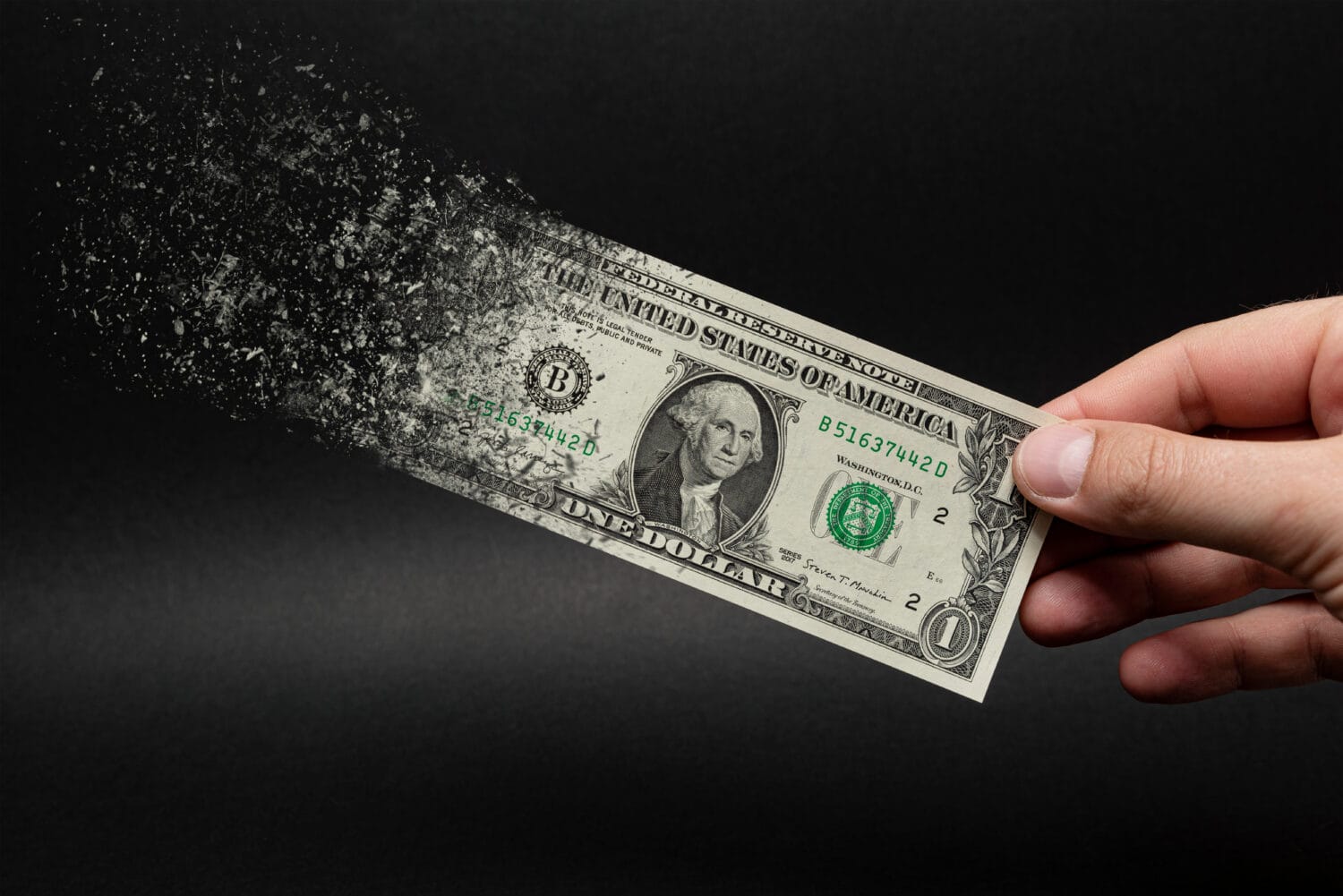
It’s hardly a secret that inflation has been a problem for several years running. This recent bout began back in 2021 when Americans, flush with stimulus cash, started to spend money more freely at a time when supply chains were battered. That caused demand to surge and prices to rise.
Inflation hasn’t been as rampant these past couple of years as it was back in 2022, when it peaked at over 9%. But it’s been annoyingly elevated.
And the worst may not be over. In fact, there’s reason to believe the economy may be headed for something worse than inflation — stagflation.
The problem with stagflation
A Reddit poster is concerned about Fed Chair Jerome Powell’s warning that the U.S. could be heading into a period of stagflation. And that’s understandable.
Stagflation refers to a period of stagnant inflation. But it’s a bit worse.
Typically, inflation defines a period when the cost of goods and services remains elevated. But inflation can commonly occur during a strong economy.
Stagflation, on the other hand, is a period of persistent inflation amidst slow economic growth. During stagflation, consumer spending is likely to decrease and unemployment has the potential to rise.
During the 1970s, the U.S. economy experienced stagflation when inflation rose while GDP declined and unemployment soared.
Another way to think of stagflation is the worst of all worlds. You’ve got higher costs, but an economy that isn’t thriving.
How to invest during stagflation
It would be premature to say that the U.S. is definitely headed toward stagflation. And the economy is certainly not there yet.
But it is important to know how to invest during stagflation. And your approach should hinge on where you are in life.
If you’re retired or nearing retirement, it’s important to invest in assets that can keep up with (or ideally outpace) inflation without taking on undue risk. I bonds can be an appropriate choice because they’re pegged to inflation. TIPS are another asset worth looking into if you need to put your money somewhere safe.
If you’re years away from retirement, stocks are still generally your best bet. It’s true that the market can be very volatile and that a weak economy can go hand in hand with a decline in stock values. But that’s not always the case.
And also, the stock market has proven its ability to generate strong returns over the long run. So if you’re in your 30s, 40s, or 50s, and you won’t be retiring for another 15 to 30 years, stocks are a good bet, especially since you can afford to take on some risk.
If you’re not sure how to invest or protect your finances during a period of stagflation, it’s a good idea to sit down with a financial advisor and get some guidance.
A financial advisor can review different investment strategies with you so you’re able to feel more confidence in your approach. They can also suggest ways to protect your finances in the near term in the event that economic conditions start to deteriorate.












 Top Gaining Stocks
 Top Losing Stocks