


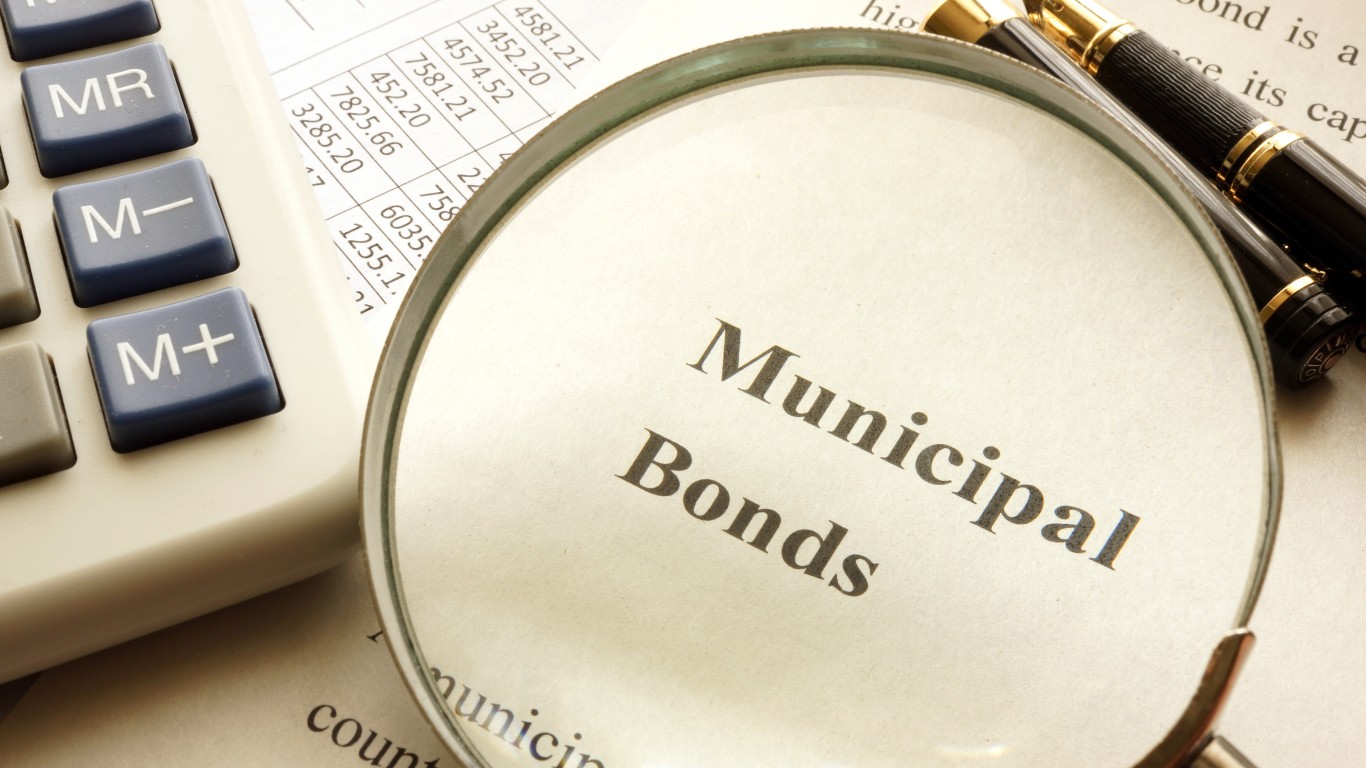
A 4.5% municipal bond yield and a 4.29% 10-year Treasury yield look nearly identical on paper. For someone in the 35% or 37% federal tax bracket, the difference is enormous, and it compounds every year they hold the bond.
This is the core mechanic of tax-equivalent yield: divide the muni yield by one minus your marginal tax rate to find the taxable yield you would need to match it after federal tax.
The Tax Brackets Where Muni Math Actually Works
The 35% and 37% federal brackets apply to a specific income tier. For 2026, the 35% bracket covers taxable income from $256,226 to $640,600 for single filers and $512,451 to $768,700 for married couples filing jointly. The 37% bracket applies above those thresholds. These are physicians, attorneys, senior executives, business owners, and dual-income professional households. They pay federal tax at rates that fundamentally change how fixed-income investments should be evaluated.
- Who: Single or married filers in the 35% or 37% federal income tax bracket
- The decision: Whether to hold taxable bonds (Treasuries, corporates) or tax-exempt municipal bonds
- What is at stake: After-tax income yield, which can differ by 1.5 to 2 percentage points annually on the same nominal yield
- The complication: Municipal bonds carry credit risk and interest rate risk that Treasuries largely do not
The One Number That Drives Everything
Tax-equivalent yield answers a specific question: what taxable yield would I need to match the after-tax income from a tax-exempt municipal bond? The formula is straightforward: divide the muni yield by one minus your marginal tax rate.
At a current 10-year Treasury yield of 4.29%, a 37% bracket investor keeps only 2.7% after federal tax. Treasuries are exempt from state tax, but federal tax still takes 37 cents of every dollar of interest. A comparable investment-grade municipal bond at 4.5% delivers the full 4.5% after federal tax. That roughly 1.75 percentage point after-tax spread on a $1 million portfolio translates to $17,500 per year in additional after-tax income. Over a 10-year hold without reinvestment, that is $175,000 in additional income.
| Muni Yield | 22% Bracket | 24% Bracket | 32% Bracket | 35% Bracket | 37% Bracket | 37% + CA (13.3%) | 37% + NY (10.9%) |
|---|---|---|---|---|---|---|---|
| 3.5% | 4% | 5% | 5% | 5% | 6% | 7% | 7% |
| 4.0% | 5% | 5% | 6% | 6% | 6% | 8% | 8% |
| 4.5% | 6% | 6% | 7% | 7% | 7% | 9% | 9% |
| 5.0% | 6% | 7% | 7% | 8% | 8% | 10% | 10% |
| 5.5% | 7% | 7% | 8% | 8% | 9% | 11% | 11% |
The state tax columns use California’s top marginal rate of 13.3% and New York’s top marginal rate of 10.9%. For residents of those states buying bonds issued within their home state, both federal and state tax exemptions apply simultaneously. A California resident in the 37% federal bracket buying a California muni at 5.5% is effectively earning the equivalent of 11% on a taxable bond.
Current muni yields: AAA-rated 10-year national municipal bonds yield approximately 3% while A-rated 10-year munis yield around 3.5%. Longer maturities push higher: A-rated 30-year munis yield approximately 5%. The high-yield muni market, which totaled $160 billion as of September 2025, yields around 6% on average, but comes with meaningfully higher credit risk.
Three Paths Forward
- Investment-grade munis, held to maturity: An investor buys a highly rated bond, clips tax-free coupons, and receives par at maturity. The math in the table above fully materializes. The risk is needing the money before maturity. The high-yield muni market is small relative to corporate bond markets, and even investment-grade munis can experience mark-to-market losses in a rising rate environment. Anyone who bought a 10-year muni in 2021 and needed to sell in 2023 learned this lesson. Hold-to-maturity discipline is not optional.
- High-yield munis for maximum after-tax income: The yield pickup is real, but so is the credit risk. Roughly 85% of munis currently in default were initially unrated, and over a five-year period, about 12% of munis rated B by Moody’s defaulted, compared with about 20% of similarly rated corporates. High-yield munis default less than high-yield corporates, but they default. This path works best for investors who can diversify across many issues, understand the specific revenue streams backing each bond, and do not need liquidity. A muni fund is usually more appropriate than picking individual high-yield issues.
- Staying in Treasuries or taxable bonds: For investors in the 22% or 24% bracket, the tax-equivalent math rarely favors munis. At 22%, a 4.5% muni is equivalent to about a 6% taxable bond, achievable in corporate bonds without liquidity constraints. But for the 35% and 37% brackets, the calculus flips decisively. Treasuries at 4.29% net down to roughly 3% after federal tax for a top-bracket investor. Staying in Treasuries when investment-grade munis are available at comparable nominal yields is costly.
Duration Risk and Credit Quality: What the Table Does Not Show
The single most important question is whether you can commit to holding the bond to maturity. The 10-year minus 2-year Treasury spread currently sits at about 0.5%, indicating a normally sloped yield curve. Longer-dated bonds carry real duration risk: if rates rise, the market value of a 20-year muni falls meaningfully before maturity. Investors who might need liquidity should buy shorter maturities or use a muni fund that manages duration actively.
The common mistake is treating muni bonds as a simple swap for CDs or Treasuries without accounting for credit quality variation. States, cities, hospital systems, and special tax districts all issue municipal bonds with varying creditworthiness. The spread between high-yield and investment-grade munis is near its lowest level in a decade at about 2%, which means the market is not paying investors much extra to take on lower-rated credit risk right now. For most high-bracket investors, investment-grade munis held to maturity are where the tax-equivalent yield story is cleanest and the risk is most manageable.
For California or New York residents, the in-state exemption amplifies everything. A California resident in the 37% bracket buying a California-issued muni skips both federal and state tax. At that combined rate, the tax-equivalent yield math becomes the most important number in their fixed-income portfolio.









 Top Gaining Stocks
 Top Losing Stocks