Nvidia Share Price Could Be Hit Hard By Iran War

Photo of Douglas A. McIntyre
By Douglas A. McIntyre Published

Quick Read

  • Nvidia Chips Made In Taiwan

  • Taiwan Energy Hit Hard By Iran Oil Issue

  • Nvidia Could Run Low During Period Of High Demand

This post may contain links from our sponsors and affiliates, and Flywheel Publishing may receive compensation for actions taken through them.
Nvidia Share Price Could Be Hit Hard By Iran War

© Canva

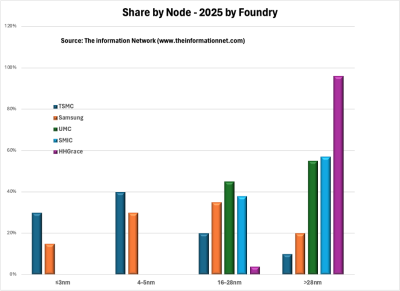
Over 90% of Nvidia’s chips are made at TSMC in Taiwan. This includes Blackwell. Much of Taiwan’s energy is powered by natural gas (about 90%). According to the Atlantic Council, “Taiwan relied on imports to meet 95 percent of its energy needs in 2025, including over 99 percent of its demand for oil and natural gas.”

From a profit standpoint, Nvidia (NASDAQ: NVDA | NVDA Price Prediction) has a 70% gross margin, so the problem isn’t massive early on. However, if this persists, Nvidia begins to run low on supply, and then the AI industry has problems. So does Nvidia’s share price.

Nvidia CEO Jensen Huang said the demand for Blackwell is extraordinary. According to Reuters, “Nvidia builds the GPU (graphics processing units), but we also build the CPU (central processing units), the networking, the switches, and so there are a lot of chips associated with Blackwell.” At the same time, he reminded people of the importance of his relationship with TSMC. Huang said Nvidia’s success actually depended on the Taiwan-based company.

For at least the last two years, the enemy of AI’s growth has been the ability to build AI data centers, due to construction constraints, energy availability, and the challenges of locating large electricity-generating facilities in many places. Data center builders are trying to make the process easier by creating their own electricity and staying off the public grid. In some cases, they have also said they would underwrite any additional payments resident customers might need to make due to data center demand.

Data centers still face the hurdle of water use and the fact that some electricity is generated by fossil fuels. Each of these is considered a threat to AI growth in America. Tech companies that believe AI is their future bemoan that Chinese competition has access to almost limitless electricity. And China has its own chips, although they do not approach Blackwell’s capabilities.

AI’s biggest challenge may be Iran, and no one expected that.

Photo of Douglas A. McIntyre
About the Author Douglas A. McIntyre →

Douglas A. McIntyre is the co-founder, chief executive officer and editor in chief of 24/7 Wall St. and 24/7 Tempo. He has held these jobs since 2006.

McIntyre has written thousands of articles for 24/7 Wall St. He is an expert on corporate finance, the automotive industry, media companies and international finance. He has edited articles on national demographics, sports, personal income and travel.

His work has been quoted or mentioned in The New York Times, The Wall Street Journal, Los Angeles Times, The Washington Post, NBC News, Time, The New Yorker, HuffPost USA Today, Business Insider, Yahoo, AOL, MarketWatch, The Atlantic, Bloomberg, New York Post, Chicago Tribune, Forbes, The Guardian and many other major publications. McIntyre has been a guest on CNBC, the BBC and television and radio stations across the country.

A magna cum laude graduate of Harvard College, McIntyre also was president of The Harvard Advocate. Founded in 1866, the Advocate is the oldest college publication in the United States.

TheStreet.com, Comps.com and Edgar Online are some of the public companies for which McIntyre served on the board of directors. He was a Vicinity Corporation board member when the company was sold to Microsoft in 2002. He served on the audit committees of some of these companies.

McIntyre has been the CEO of FutureSource, a provider of trading terminals and news to commodities and futures traders. He was president of Switchboard, the online phone directory company. He served as chairman and CEO of On2 Technologies, the video compression company that provided video compression software for Adobe’s Flash. Google bought On2 in 2009.

Featured Reads

Our top personal finance-related articles today. Your wallet will thank you later.

Continue Reading

Top Gaining Stocks

CBOE Vol: 1,568,143
PSKY Vol: 12,285,993
STX Vol: 7,378,346
ORCL Vol: 26,317,675
DDOG Vol: 6,247,779

Top Losing Stocks

LKQ
LKQ Vol: 4,367,433
CLX Vol: 13,260,523
SYK Vol: 4,519,455
MHK Vol: 1,859,865
AMGN Vol: 3,818,618