



The FT put together a complex analysis of what the future of Detroit’s car companies will look like in 2050. It quoted Glenn Mercer, an independent automotive researcher saying, “Simple extrapolation . . . says the domestic American industry is entirely gone before 2050.” The forecast assumes several twists and turns will happen between now and then, and a number of them are plausible.
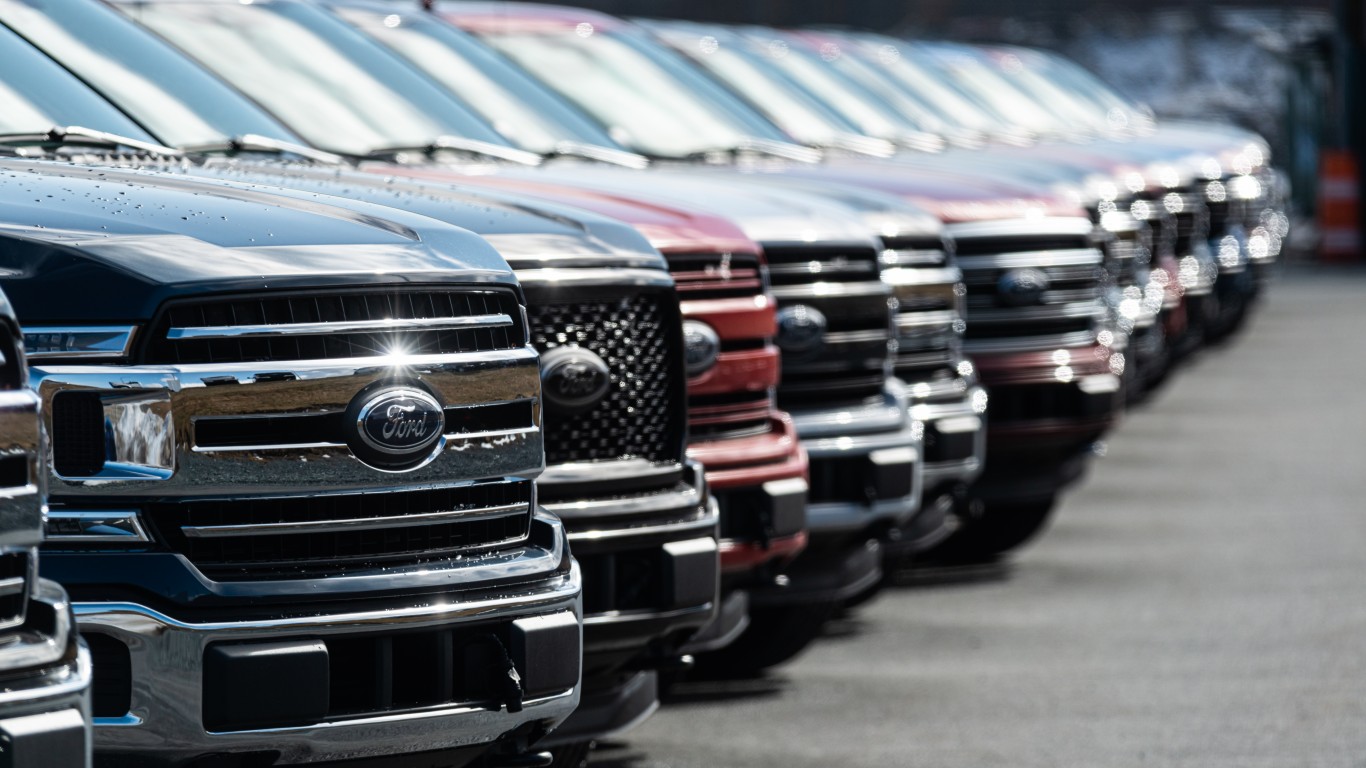
The first assumption is that Detroit will continue to milk its highly profitable SUVs and pickups but not move aggressively to return to the EV segment. This is understandable, since among them, they wrote off close to $50 billion for their efforts to capture a large segment of the EV market, only to see gas-powered cars remain considerably profitable.
Part of the mix of GM’s (NYSE: GM | GM Price Prediction) and Ford’s (NYSE: F) valuations is a calculation because of tariffs, which have cost them billions of dollars. Additionally, they face the upcoming negotiations and trade arrangements among the US, Canada, and Mexico. Ford and GM rely heavily on cars and parts made in the nations north and south of it.
Another challenge is that Donald Trump’s tariff programs are fickle. Today, there is a 100% tariff on EVs from China. As part of a much larger trade deal, he could change this overnight. In other words, Trump’s past trade policies put this 100% tariff on the table — for now. While the Trump tariffs have been eliminated by the Supreme Court, he says new tariffs will have similar effects. The extent to which this will be effective is a guess.
A flood of cheap Chinese EVs into the US would severely dent GM and Ford financially, since they do not have cheap EVs of their own. Both companies are working on programs and JVs to increase their EV capacity, but these programs are small and likely to be slow.
Detroit is at the start of a new financial bonanza. It has largely exited EV investments that have dragged down profits. These companies are back, almost exclusively in the SUV and truck business. That could bring them strong earnings until it doesn’t, if part of the FT analysis is right.










 Top Gaining Stocks
 Top Losing Stocks