



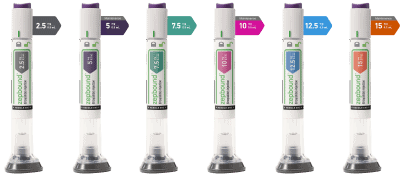
Eli Lilly (NYSE:LLY | LLY Price Prediction) is rapidly establishing itself as the leader in GLP-1 treatments for weight loss. Its Zepbound injection has driven strong sales, contributing to the company’s overall revenue growth in the midst of intense demand for obesity therapies. In a head-to-head Phase 3 trial, Zepbound demonstrated superior efficacy, with patients achieving 20.2% average weight loss over 72 weeks compared to 13.7% for Novo Nordisk‘s (NYSE:NVO) Wegovy.
This edge stems from Zepbound’s dual targeting of GLP-1 and GIP receptors, versus Wegovy’s single GLP-1 focus. As a result, Eli Lilly has gained market share, as Novo Nordisk has faced slowing growth and lowered its 2025 sales guidance due to competition and other factors.
Now, the latest development may have Eli Lilly advancing toward the ultimate convenience in weight loss: a daily pill.
A Breakthrough in Oral Therapies
Eli Lilly has submitted a new drug application to the FDA for orforglipron, its investigational once-daily oral GLP-1 receptor agonist, for the treatment of overweight adults or those with obesity. The submission follows positive Phase 3 results across multiple trials, positioning orforglipron as a potential scalable alternative to injections.
In the Phase 3 ATTAIN-MAINTAIN trial Lilly announced yesterday, orforglipron helped patients maintain most of their prior weight loss after switching from injectable therapies. Patients who had completed 72 weeks on the highest doses of either Zepbound or Wegovy were randomized to orforglipron or a placebo for 52 weeks. Those switching from Wegovy to orforglipron regained an average of just 2 pounds, while patients switching from Zepbound regained an average of about 11 pounds. Orforglipron had met its primary endpoint of superior weight maintenance versus a placebo.
This data highlights orforglipron’s potential for long-term use, particularly as a maintenance option after the initial injectable treatment. The safety profile was consistent with the overall GLP-1 class, primarily featuring mild to moderate gastrointestinal side effects.
Why a Pill Could Transform the Market
An oral option addresses the key barrier to wider adoption of GLP-1 drugs, namely patient preference for pills over weekly injections. Convenience could expand access, attracting those deterred by needles and potentially broadening the total addressable market.
However, both Novo Nordisk’s higher-dose oral semaglutide and Eli Lilly’s orforglipron are expected to reach the U.S. market in 2026. Orforglipron has received a priority review voucher, which could accelerate its approval timeline.
Lilly and Novo aren’t the only drugmakers pursuing oral GLP-1s or dual agonists. For example, Viking Therapeutics (NASDAQ:VKTX) with its VK2735 in earlier development stages was long seen as the best hope for an oral version of weight-loss drugs.
Others are just getting into the game or reentering the market. Earlier this year, Pfizer (NYSE:PFE) discontinued development of danuglipron, which it was studying as an oral GLP-1 therapy, but it ended the program after one patient developed liver injury tied to the drug’s usage. Yet, Pfizer just signed a licensing agreement with a subsidiary of Chinese drug developer YaoPharma to develop a GLP-1 treatment for weight control.
Still, the leaders in the space remain Eli Lilly and Novo Nordisk for near-term approvals.
Key Takeaway
If approved, orforglipron could mark a significant milestone for Eli Lilly and the industry, offering a convenient oral maintenance therapy and accelerating Lilly’s dominance in the obesity market. Combined with Zepbound’s superior efficacy and manufacturing scale-up, this positions the company for sustained growth in a category projected to expand dramatically.










 Top Gaining Stocks
 Top Losing Stocks