



The Fidelity Fundamental Emerging Markets ETF (NYSEARCA:FFEM) has rewarded patient investors. Shares trade near $40 after a 61% climb over the past year and a 19% year-to-date gain. The fund is actively managed, charges 6 basis points, benchmarks against the MSCI Emerging Markets Index, and gives investors low-cost exposure to growth economies most US-focused portfolios underweight.
That appeal is also where the risk lives. After a run like this, the question is what could give back a meaningful slice of those gains.
A Portfolio That Lives or Dies on Asian Tech
FFEM concentrates far more than the "emerging markets" label suggests. China, Taiwan, Korea, and India together represent 74% of the portfolio, with China at 29% and Taiwan at 19%. Information technology and communication services combined account for 39% of assets, and the single largest holding, Taiwan Semiconductor, sits at 14%. The top three positions, TSM, Tencent, and Samsung, make up 28% of the fund.
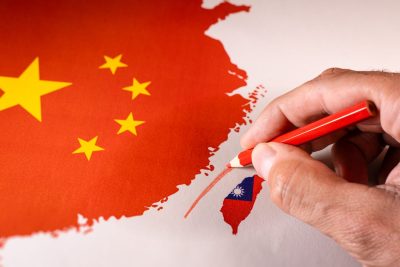
The transmission mechanism is straightforward. A meaningful drawdown in TSM alone moves the NAV by a multiple of what most diversified ETFs would feel. Pair that with elevated China weight and the fund effectively lives along the Taiwan Strait. Any escalation in cross-strait tensions, new US semiconductor export controls, or a tightening of CHIPS-related restrictions on Chinese fabs hits both the largest single position and the largest country weight at the same time. The 2022 Pelosi-visit episode and the 2023 export-control rounds both produced sharp, multi-week declines in Taiwan and China equity benchmarks. FFEM, by construction, would have participated fully.
Sector concentration compounds the issue. Memory and logic semis are cyclical. SK Hynix at 3% and Samsung at 7% sit alongside TSM, so a downturn in DRAM or AI chip orders shows up across multiple top holdings rather than netting out.
The Dollar and Rate Backdrop Working Against EM
The secondary risk is the US rate environment. The 10-year Treasury yield sits at almost 4.5%, in the 71st percentile of its 12-month range, while the Fed funds upper bound has held at 3.75% for five months after 75 basis points of cuts ending in December 2025. That combination is a restrictive backdrop.
For EM equities the chain runs through the dollar. Higher real US yields pull capital toward dollar assets, strengthen the USD, and pressure EM currencies and the dollar value of EM earnings. The collapse of US real GDP growth from 4.4% in Q3 2025 to 0.5% in Q4 2025 adds a wrinkle: a sharp slowdown can either weaken the dollar (helpful for EM) or trigger a flight-to-safety bid in Treasuries (painful for EM). The March 2026 VIX spike to 31 is a recent example of how fast that risk-off rotation hits.
What to Watch
- TSM share price and order trends. Track quarterly revenue updates on Taiwan Semiconductor’s investor relations site. A double-digit decline in TSM, or guidance cuts on AI accelerator demand, will pull FFEM down disproportionately given the 14% weight.
- Taiwan Strait and US-China policy headlines. New entity-list additions, chip export rule changes from the Bureau of Industry and Security, or PLA exercise announcements are the asymmetric-loss triggers. Check at least weekly.
- The 10-year Treasury yield and DXY. Both are free on FRED and major financial data sites. A sustained move above the 12-month high of almost 4.6% on the 10-year, or a dollar breakout, would tighten EM financial conditions further.
- VIX above 20. The current reading of almost 19 is normal. Sustained readings above 20 historically correlate with EM outflows.
How to Frame the Risk
FFEM is a sound, low-cost vehicle for investors who want active EM exposure, but the label undersells how much of the fund’s fate rides on a few Asian tech names and on US dollar dynamics. After a 61% twelve-month run, the margin of safety has narrowed. Investors comfortable with concentrated Asian tech and willing to monitor Taiwan-related policy risk have a coherent thesis to stay with. Those who assumed they were buying broad "emerging markets" are taking on a more concentrated bet than the label implies.












 Top Gaining Stocks
 Top Losing Stocks