



A retiree who saved diligently and built a comfortable portfolio can face an unwelcome surprise at tax season: a bill far larger than expected. This happens when investment income combines with Social Security benefits in ways that trigger multiple tax consequences at once.
The core issue is how different income sources stack together. Dividend income from holdings like SCHD or VYM can reach $20,000 to $30,000 annually, while bond interest adds another layer. These amounts don’t just get taxed on their own—they also determine whether Social Security benefits become taxable, creating a compounding effect that catches many retirees off guard.
When Portfolio Income Makes Social Security Taxable
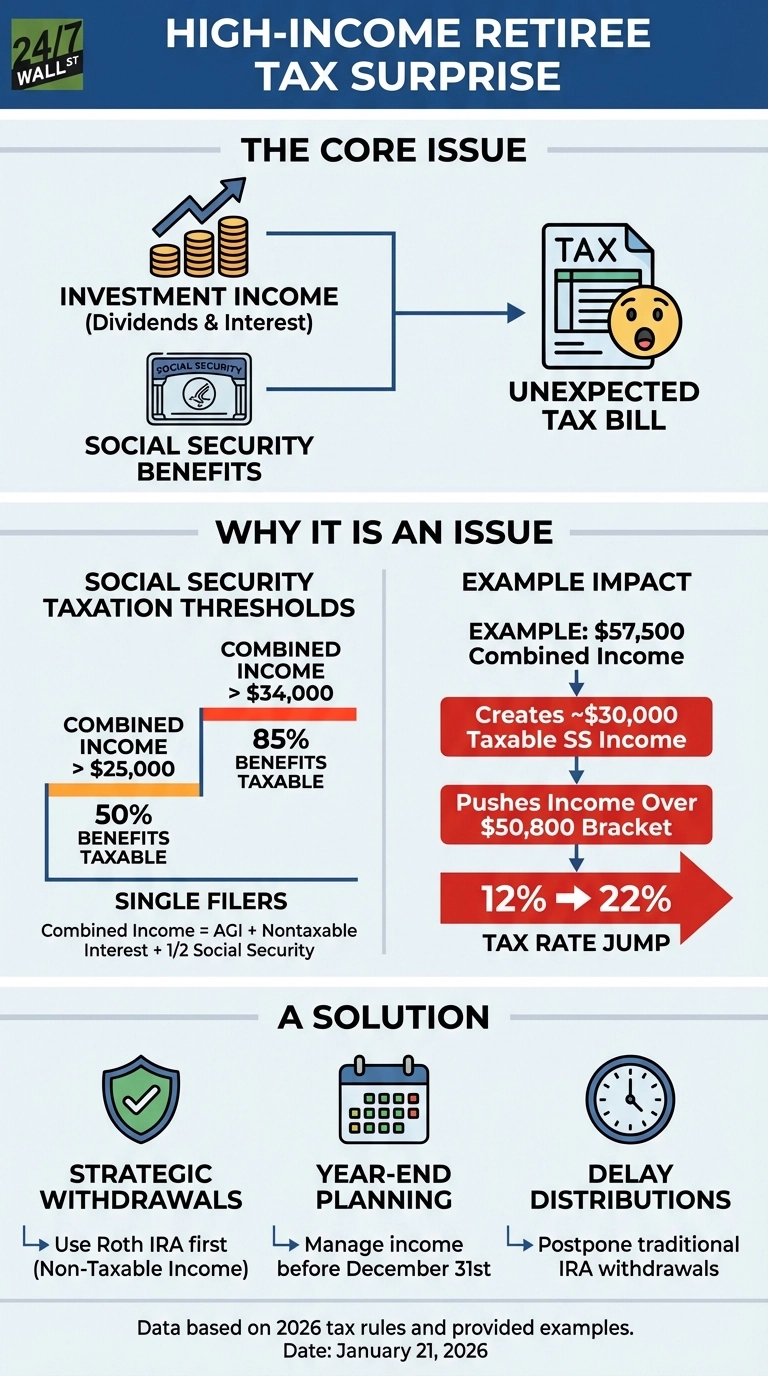
Social Security taxation hinges on “combined income”—the sum of your adjusted gross income, nontaxable interest, and half of your Social Security benefits. The mechanism creates a compounding effect where portfolio withdrawals don’t just face their own tax rates but also activate taxation on benefits that would otherwise remain untaxed.
Cross certain thresholds and suddenly half or even 85% of your benefits become taxable. For single filers, this taxation begins at $25,000 in combined income, illustrating how even modest investment income can trigger unexpected tax consequences.
Consider a retiree receiving $35,000 in Social Security who also takes $40,000 in dividends and interest. The tax code requires adding the investment income to half the Social Security benefits to calculate combined income, which determines taxation thresholds.
In this scenario, combined income reaches $57,500, well past the point where most Social Security becomes taxable. The result adds roughly $30,000 to taxable income—money that would have been tax-free with lower portfolio withdrawals.
The Bracket Creep That Catches People Off Guard
The 2026 tax brackets create a compounding problem. A retiree starts in the 12% bracket, but when taxable Social Security benefits push total income above $50,800, the next dollars get taxed at 22%. This bracket jump means the last portion of income faces nearly double the tax rate, turning what seemed like a comfortable withdrawal strategy into an unexpectedly expensive one.
Qualified dividends enjoy preferential 15% rates for most retirees, but this apparent tax advantage comes with a hidden cost. That dividend income still counts when calculating whether Social Security becomes taxable, creating a situation where the 15% rate on dividends triggers 22% taxation on Social Security benefits. The same income also affects Medicare Part B premiums based on earnings from two years earlier, adding another layer of delayed consequences.
How This Fits With Withdrawal Strategy
Understanding these interactions changes how retirees should think about tapping different accounts. Traditional IRA distributions add to adjusted gross income just like dividends do, potentially triggering the same Social Security taxation. Roth IRA withdrawals don’t count as income and won’t affect Social Security taxation or Medicare premiums, making Roth accounts particularly valuable for managing tax bills in retirement.
What to Think Through First
Calculate your combined income before year-end. If you’re close to a threshold, even small adjustments matter. Delaying an IRA distribution by a few weeks or managing dividend-paying positions more carefully can keep you below the level where Social Security becomes taxable. Once you cross that line, the tax impact compounds quickly, and there’s no way to undo it after December 31st.














 Top Gaining Stocks
 Top Losing Stocks