


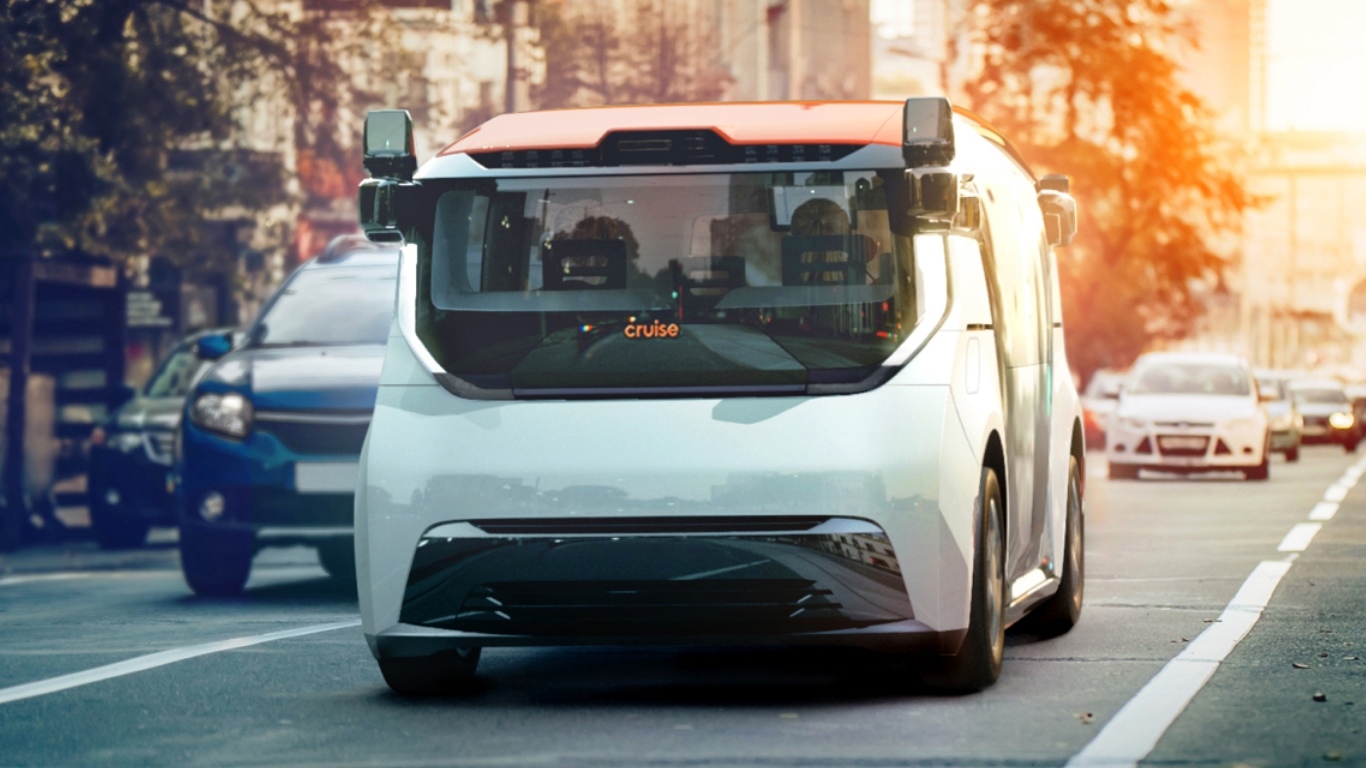
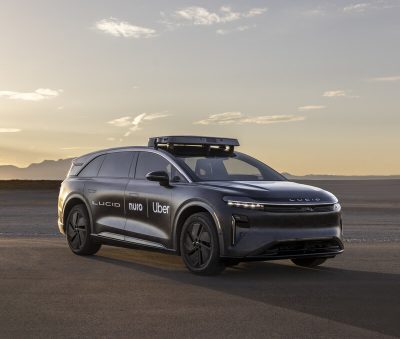
Uber just announced a partnership with Zoox, Amazon’s robotaxi subsidiary, and the stock jumped nearly 3% on the news. Market analyst Jason John summed it up cleanly: “It’s another example of their foray into the AV business. I mean, this is one of many deals. Zoox is the latest, but Wave, Wasabi, Lucid, you know, so it’s all about the platform.”
That framing is exactly right. This isn’t a one-off announcement. It’s a pattern.
The Platform Play
Uber Technologies (NYSE:UBER | UBER Price Prediction) isn’t trying to build autonomous vehicles. It’s trying to be the road every AV company drives on. The strategy is to become the distribution layer for the autonomous vehicle era, the app that passengers open regardless of whose robot is doing the driving.
By Q2 2025, Uber had already announced 20 autonomous partners worldwide. Then in a single week during Q1 2025, they dropped five new AV partnership announcements. Zoox joins a roster that already includes Wave, Wasabi, and Lucid. CEO Dara Khosrowshahi put it plainly on the Q4 2025 earnings call: “We enter 2026 with a rapidly growing topline, significant cash flow, and a clear path to becoming the largest facilitator of AV trips in the world.”
Uber is also putting real money behind this. The company has committed over $100 million to build AV charging infrastructure, signaling this isn’t just a press release strategy.
The Business Behind the Bet
The underlying business gives Uber the financial runway to make this work. Full year 2025 revenue hit $52.02 billion, up 18.28% year over year. Free cash flow reached $9.76 billion for the full year, up 41.6%. That’s real cash to fund infrastructure, partnerships, and buybacks.
On the Q4 call, Khosrowshahi noted the platform now has 202 million monthly active users completing over 40 million trips every day. That audience is the asset. Any AV company that wants scale needs access to it.
The Margin Trade-Off You Need to Understand
Here’s the honest tension in this story. When Uber partners with an AV company for rides, it shares revenue. That means lower margins compared to a trip where an independent human driver absorbs the cost risk. John flagged this directly as a key risk: when Uber partners with someone for rides, margins are lower because revenue must be shared.
The bull case says volume and scale offset the margin compression over time. The bear case says Uber is essentially helping AV companies commoditize its own core product.
The stock is down about 11.44% year to date, sitting well below analyst consensus targets of $103.81. John has expressed a bullish long-term view despite the recent weakness, citing the platform logic as a key factor. If autonomous vehicles are the future of transportation, Uber is building the toll road.








 Top Gaining Stocks
 Top Losing Stocks