


Uber Technologies (NYSE:UBER | UBER Price Prediction) shares climbed 5% in morning trading today after the company announced its long-anticipated autonomous robotaxi fleet will launch in Los Angeles and San Francisco in the first half of 2027 before expanding to 28 cities globally by 2028. The timing and scale were notable, but what truly electrified investors were two special words that reliably juice stock prices when spoken in tandem: “Nvidia” and “AI.”
The ride-hailing giant’s partnership expansion with Nvidia (NASDAQ:NVDA) to deploy Level 4 software-driven vehicles on its platform turned an otherwise familiar update into a market event, sending the stock higher amid broader enthusiasm for artificial-intelligence-powered mobility.
Robotaxi Plans Were Already Well Telegraphed
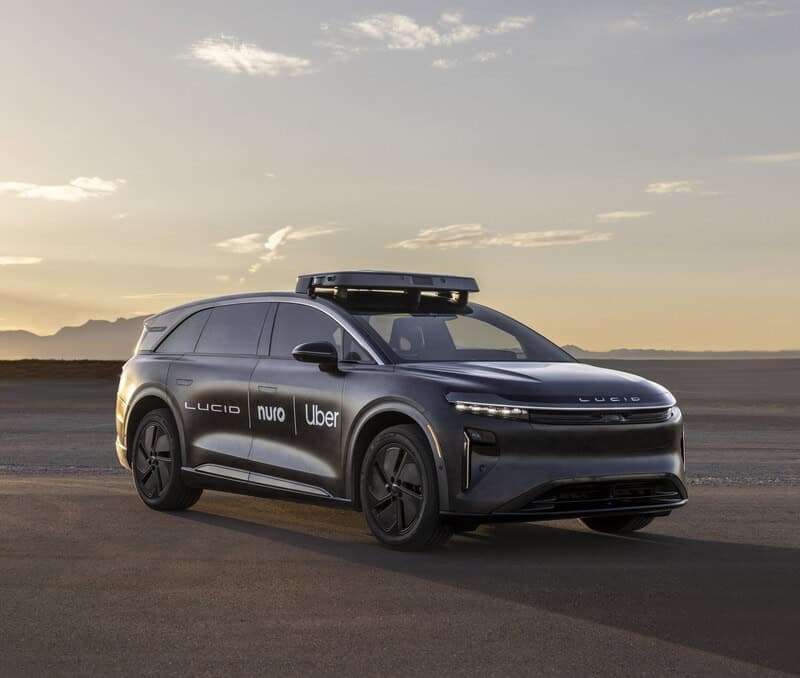
Uber’s robotaxi ambitions have been public and widely anticipated for months, if not years. At CES 2026 in January, the company, alongside Lucid Motors (NASDAQ:LCID) and autonomy specialist Nuro, unveiled a premium robotaxi built on Lucid’s Gravity SUV platform, with on-road autonomous testing already underway since December. The vehicle’s spacious, luxurious cabin and integrated sensor suite were positioned as a step above typical robotaxis, promising riders a high-end experience exclusive to the Uber network.
Even earlier, in July 2025, Lucid ignited a frenzy when it disclosed a $300 million strategic partnership and investment from Uber to deliver up to 20,000 electric vehicles over six years for the robotaxi program. That deal alone propelled Lucid shares at the time and signaled Uber’s commitment to scaling a dedicated autonomous fleet.
Yesterday’s announcement essentially confirmed a launch window that analysts had already baked into models. Other than pinning down the 2027 start in two key markets, little was genuinely new.
The Pixie Dust That Moves Markets
The Nvidia connection is equally old news. Uber has been integrated with the chipmaker’s autonomous-vehicle stack for some time, including early adoption of the Alpamayo reasoning-based AI model designed to handle complex “long-tail” driving scenarios.
Yet by explicitly highlighting “Nvidia” and “AI” in the press release and investor materials, Uber tapped into Wall Street’s favorite narrative. Investors have repeatedly rewarded companies that utter those terms together — regardless of incremental progress — because they evoke visions of exponential growth, software margins, and tech disruption.
In this case, the market overlooked that the hardware-software foundation was already in place. Instead, the buzzwords triggered algorithmic buying and retail FOMO. Nvidia’s own ecosystem momentum (from data centers to automotive) amplified the effect, turning a timeline clarification into a perceived AI catalyst. The result: a quick 5% pop that had more to do with sentiment than substance.
Key Takeaways
Even stripping away the trigger buzzwords, Uber’s announcement deserves attention. It signals that fully autonomous vehicles will soon move from pilot programs to mainstream urban mobility. Tesla (NASDAQ:TSLA) is accelerating its own robotaxi efforts with ambitious timelines and in-house technology, while Google’s Waymo remains further along operationally, already offering commercial driverless rides in multiple cities. Uber’s move, powered by Lucid vehicles, Nuro autonomy, and Nvidia’s full-stack L4 software, positions the company to compete in a crowded but rapidly maturing field.
Still, while a noteworthy advance of existing plans, the development hardly justifies the 5% gain the market assigned it. The core elements — vehicle supplier, autonomy partner, launch cities, and Nvidia integration — were already disclosed and priced in. What changed was the calendar and the magical invocation of “AI.”
Investors chasing the narrative may be disappointed when execution realities (regulatory hurdles, scaling costs, and competition) set in. For now, the stock’s reaction looks like classic buzz over substance: much ado about a timeline that was largely expected all along.







 Top Gaining Stocks
 Top Losing Stocks