


Uber Technologies (NYSE:UBER | UBER Price Prediction) stock is up 5% in Tuesday morning trading, with shares climbing to $78 and change from a prior close of $74.66. The move puts UBER on pace for one of its strongest single sessions in recent months, reversing a rough start to 2026.
The catalyst is a one-two punch of autonomous vehicle news. Uber announced an expanded partnership with NVIDIA (NASDAQ:NVDA) and a new deal with Zoox, Amazon‘s (NASDAQ:AMZN)’s autonomous vehicle division, both pointing toward a future where Uber’s platform hosts a fleet of robotaxis it doesn’t have to build or own. That “asset-right” model is exactly what the bulls have been waiting for.
Uber stock had already shown some life recently, gaining 4% earlier this month on similar autonomous vehicle optimism. Today’s move builds on that momentum, though UBER shares remain down 4% year-to-date.
NVIDIA Deal Targets 28 Cities by 2028
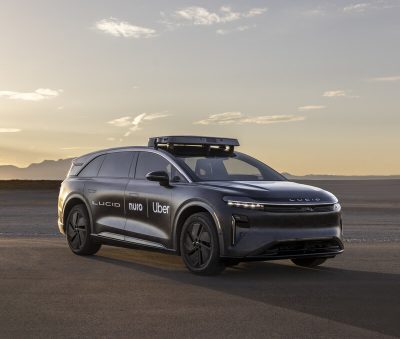
The NVIDIA partnership is the bigger headline. The expanded deal targets launches in Los Angeles and San Francisco in early 2027, with a goal of reaching 28 cities worldwide by 2028, spanning North America, Europe, Australia, and Asia. The technology stack runs on the NVIDIA DRIVE Hyperion platform and Alpamayo AI model, enabling fully driverless Level 4 autonomous vehicles.
Deutsche Bank reiterated Uber stock as a Buy following the announcement, citing the expanded NVIDIA partnership as a key reason for confidence. The deployment strategy is phased, moving from data collection through operator-led launches and into full driverless operation, which reduces execution risk compared to a hard launch.
Zoox Adds Near-Term Deployment Visibility
Zoox is targeting Las Vegas by summer 2026 and Los Angeles by mid-2027, with Zoox covering insurance and fleet costs. That last detail matters. Uber’s take rate on Zoox rides will be lower than a standard UberX fare, but BofA Securities, which reiterated a Buy rating with a $103 price target, noted the financial impact on overall profitability through 2027 is minimal.
Think of Uber here like a toll road operator. It doesn’t build the cars, maintain the fleet, or pay for insurance. Instead, it just collects a fee every time a robotaxi uses its network. As that network scales, the economics get better without proportional cost increases. That’s the story the market is pricing in today.
The Fundamentals Back the Narrative
This isn’t just hype riding on future promises. Uber’s underlying business is generating serious cash. Full-year 2025 free cash flow came in at $9.76 billion, up 41.6% year over year. Q4 2025 alone produced a record $2.81 billion in free cash flow, up 65% year over year. That cash supports both the autonomous vehicle infrastructure buildout and continued share repurchases.
Uber committed over $100 million to build charging infrastructure for autonomous vehicles, signaling this isn’t a press release strategy. It’s capital deployment. The company already counts 20-plus autonomous partners worldwide as of mid-2025, and each new deal announced this week adds to that roster.
Uber CEO Dara Khosrowshahi set the tone on the Q4 2025 earnings call: “We enter 2026 with a rapidly growing topline, significant cash flow, and a clear path to becoming the largest facilitator of AV trips in the world.” With 202 million monthly active platform consumers and 3.8 billion trips completed in 2025’s fourth quarter, Uber’s distribution network to support that ambition already exists.
Analyst Targets and Sentiment
The analyst consensus price target for UBER stock sits at $103.81, with 47 Buy ratings, 8 Hold ratings, and just 1 Sell rating. At today’s price between $78 and $79, that consensus target represents meaningful upside if the robotaxi strategy executes. The stock trades at roughly 15x trailing earnings, which looks reasonable for a platform business growing revenue at 20.1% YoY.
The composite sentiment score for Uber stock heading into today’s session was 65.46, rated bullish with medium confidence, with news sentiment specifically scoring 60.92 across 50 recent articles. Today’s dual announcements will likely push that score higher as coverage builds through the session.
What to Watch
The key question isn’t whether Uber can sign robotaxi partnerships; it clearly can. The question is whether the take rates on autonomous rides can scale fast enough to move the needle on a company already doing $52 billion in annual revenue. The $77.92 fifty-day moving average is a level analysts will be watching for UBER stock as a technical reference point heading into the rest of the week.
Uber has spent years building the demand side of the equation, with 202 million monthly users and over 40 million daily trips. The robotaxi partnerships are about adding supply to that demand without adding the cost structure that comes with owning vehicles.
If that model proves out across 28 cities by 2028, the current 6% move reflects early-stage optimism that will be tested when deployment results come in. Uber’s next real test comes when the Las Vegas Zoox deployment goes live this summer and investors get a look at what those take rates actually produce.








 Top Gaining Stocks
 Top Losing Stocks