



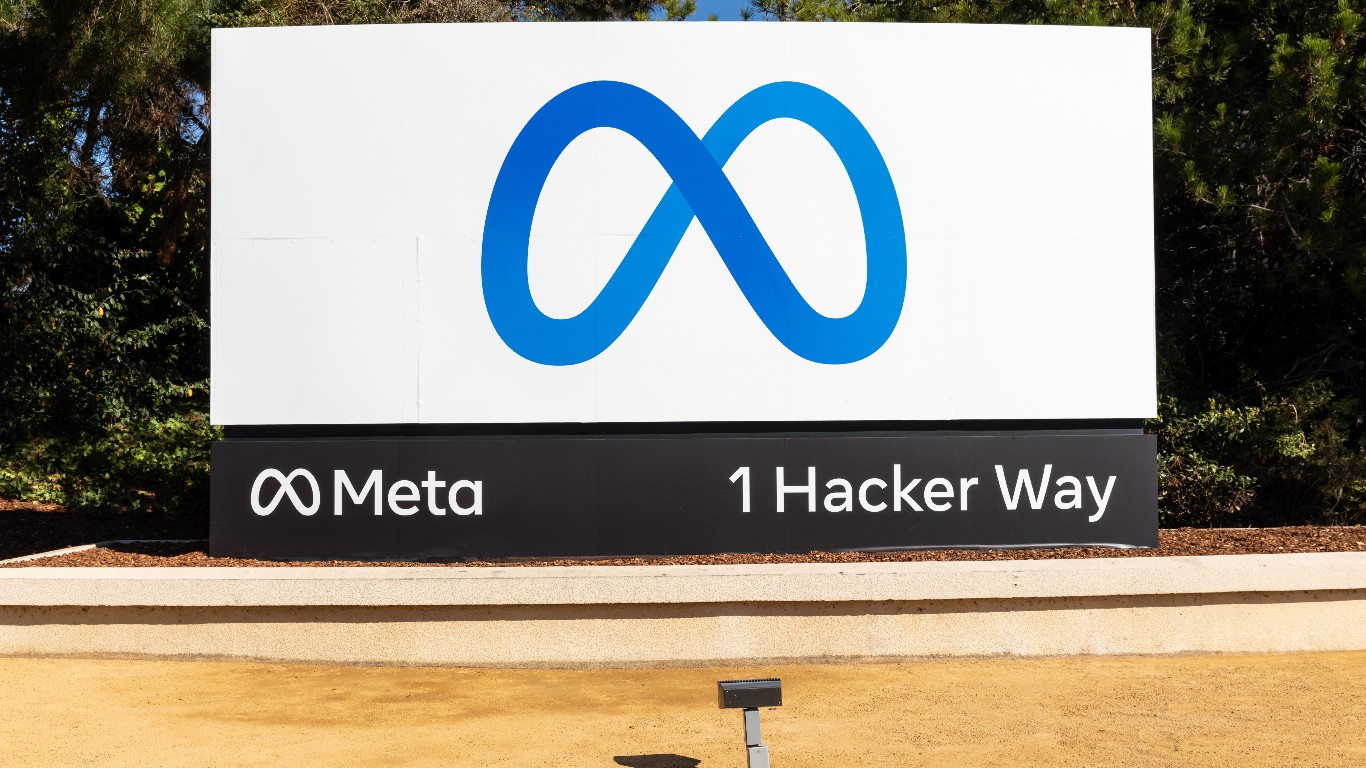
Michael Cuggino, fund manager at Permanent Portfolio Family of Funds, has two AI stock picks: Meta Platforms (NASDAQ:META | META Price Prediction) and Palantir Technologies (NASDAQ:PLTR). His framework cuts through the noise around AI spending in a way most commentary doesn’t.
“META. I think they’re one of the hyperscalers. We believe they’ve shown great cost containment and guardrails around their costs and spending. So even though they’re spending like the others, we have a feeling that they know where the lines are there in terms of how to do it and still make money.”
That last phrase is the crux. Knowing where the lines are. It’s not about spending less. It’s about spending with a framework that keeps profitability intact.
Why META’s Discipline Stands Out
The knock on hyperscalers right now is that companies are tapping debt markets for AI capex in unprecedented ways. Cuggino compared it to “a person buying their first house or car” — new financial territory, uncertain how to manage it. Meta is less exposed to that risk than peers.
Look at the numbers. Meta’s 2026 capex guidance is $115 to $135 billion, a massive step up. But management paired that with a clear commitment: “Despite the meaningful step-up in infrastructure investment, in 2026, we expect to deliver operating income that is above 2025 operating income.” Spending big while growing profit is exactly what Cuggino means by knowing where the lines are.
The Q4 2025 results back this up. Revenue hit $59.89 billion, up 23.8% year over year, beating estimates by 2.4%. Operating margin compressed from 48% to 41% as spending ramped, but the business absorbed it. Family daily active people reached 3.58 billion, up 7% year over year, giving the ad engine more surface area to monetize.
Zuckerberg framed the infrastructure build around efficiency, not just scale: “Being the most efficient at how we engineer, invest, and partner to build our infrastructure will become a strategic advantage.” That’s the guardrail Cuggino is pointing to.
Palantir: Early Innings on the Commercial Side
On Palantir, Cuggino sees “huge addressable markets both government and consumer,” with the government platform well established and the commercial side “wide open.”
The Q4 numbers give that thesis real teeth. U.S. commercial revenue grew 137% year over year to $507 million. Full year 2026 U.S. commercial revenue guidance calls for more than $3.144 billion, implying at least 115% growth. The capital model contrasts sharply with Meta’s: full year 2025 capex was just $33.882 million against a business generating real free cash flow at scale.
CEO Alex Karp put it directly on the earnings call: “We are an n of 1, and these numbers prove it.”
The Bigger Picture
Cuggino characterized current AI skepticism – the debt market concerns, the ROI questions – as an “opportunity area to add.” arguing that AI will “find its way into many, many applications — consumer, business, industrial” over time and that near-term doubt has weighed on valuations of companies he believes are best positioned to survive the buildout.
Cuggino views the two picks as representing different expressions of that bet. In his framework, Meta is the disciplined infrastructure spender that has shown it can absorb massive capex without blowing up margins. Palantir is the capital-light software play riding AI adoption without needing to build the rails. In Cuggino’s view, together they bracket the AI opportunity from two very different angles.











 Top Gaining Stocks
 Top Losing Stocks