



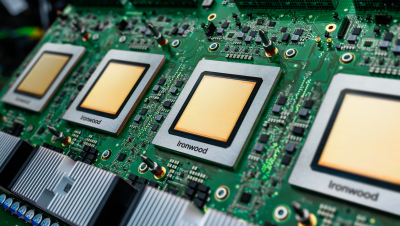
Advanced packaging has quietly become the make-or-break factor in the AI race. Hyperscalers need to combine chiplets, high-bandwidth memory, and dense interconnects into powerful final packages that overcome the physical limits of printing ever-larger chips on a single wafer.
As AI models scale, this back-end process now drives a growing share of performance gains, power efficiency, and cost control. And right now, Intel (NASDAQ:INTC | INTC Price Prediction) stands poised to turn that surging demand into meaningful revenue for its foundry business. It’s on the brink of having growth put on steroids.
Why Advanced Packaging Matters More Than Ever for Intel
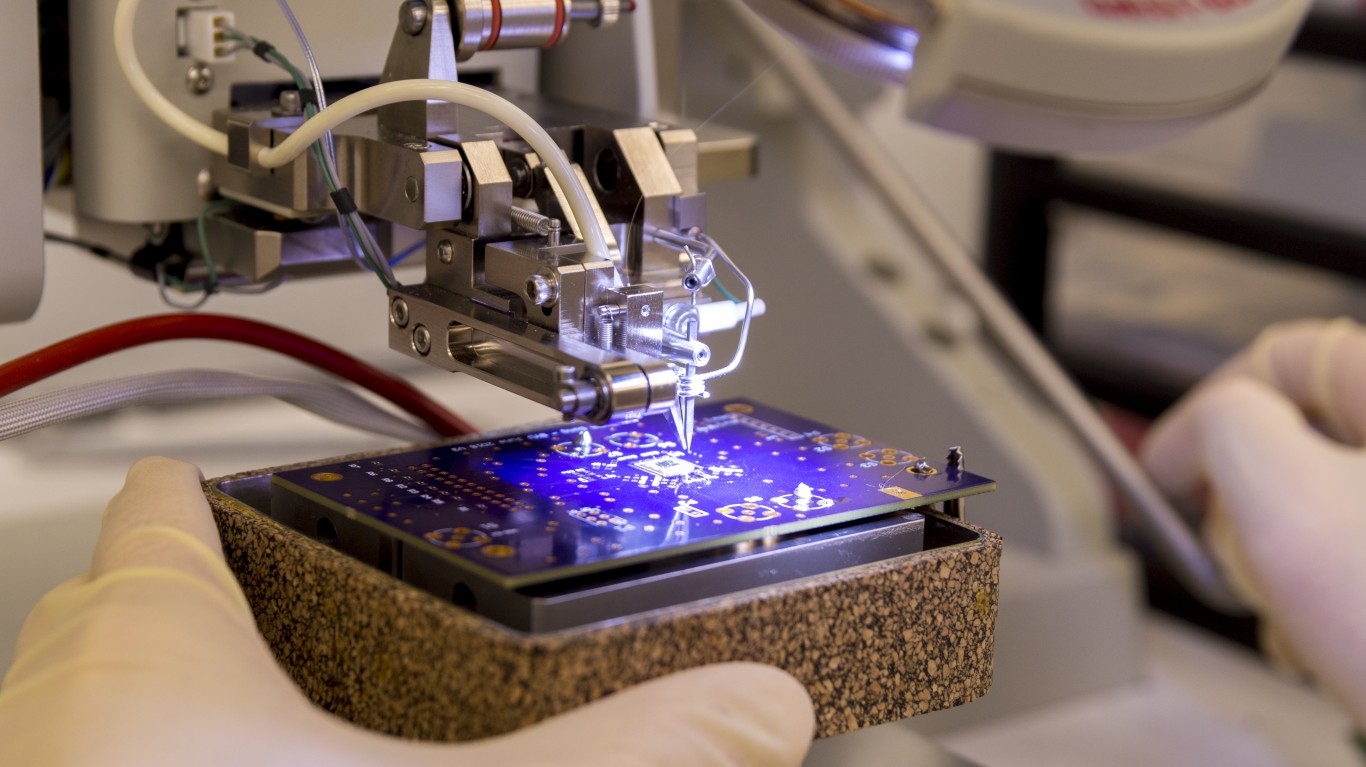
Advanced packaging isn’t flashy front-end wafer fabrication. That’s a fancy way of saying it assembles finished dies into the final product that actually runs in data centers. Intel’s tools — EMIB, introduced in 2017, Foveros from 2019, and the new EMIB-T rolling out this year — deliver denser connections, better power efficiency, and lower costs than many alternatives. Foundry head Naga Chandrasekaran put it plainly in a Wired article this morning: “Even more so than the silicon itself, chip packaging is going to transform how this AI revolution comes to fruition over the next decade.”
Intel already ships these packages for its own products and select outsiders. The payoff is higher margins and quicker revenue than full-wafer deals. CFO Dave Zinsner told investors at the March 5 Morgan Stanley Technology, Media and Telecom conference that packaging now ranks as “the more interesting part of the Foundry business today” and can hit 40% gross margins — matching the company’s core product business.
Hyperscaler Talks Signal Billions in New Revenue
Here’s where it gets exciting for shareholders. The same Wired report confirms Intel sits in advanced talks with Google and Amazon (NASDAQ:AMZN) for advanced packaging services on their custom AI chips. Both hyperscalers design their own accelerators — Google’s TPUs, Amazon’s Trainium and Inferentia — but outsource key assembly steps. Zinsner went further at the Morgan Stanley event: the company stands “close to closing some deals that are in the billions of dollars per year in terms of revenue” from packaging alone.
That updates earlier guidance. On the Q4 earnings call in January, Zinsner revised his view upward from “hundreds of millions” to “well north of $1 billion” annually in external packaging revenue — arriving before meaningful wafer revenue kicks in. If even one of these hyperscaler deals lands, it would dwarf the $222 million in external foundry revenue Intel posted for Q4.
Capacity ramps are already underway. Intel received $500 million from the CHIPS Act for Fab 9 in New Mexico and will start the first phase of expanded packaging in Malaysia later this year, according to Wired.
Where Intel Stands Today — and the Path to Breakeven
No one should sugarcoat the current numbers. Intel Foundry generated $4.5 billion in Q4 revenue — up 6.4% sequentially — but posted a $2.5 billion operating loss, driven by the Intel 18A ramp. Full-year 2025 external foundry revenue totaled just $307 million.
That said, Zinsner reiterated at the March conference that the business still exits 2027 at breakeven operating margins. Packaging wins accelerate that timeline because they require far less capital than new fabs and deliver revenue faster. Compare that to the broader foundry market: Intel’s approach gives U.S.-based customers a domestic alternative to Taiwan Semiconductor Manufacturing‘s (NYSE:TSM) dominant CoWoS packaging, especially amid allocation squeezes.
Intel shares trade at $50.38 with a forward P/E of 101 and a market cap of $252.96 billion, reflecting skepticism on execution. However, these talks offer the clearest near-term catalyst yet.
Key Takeaway
In short, confirmed deals with Google or Amazon would validate Intel’s foundry pivot, lift external revenue from the current trickle to a flood, and put the division on a firmer path to 2027 breakeven. Granted, risks remain — capacity must scale on schedule, and Taiwan Semi still leads on volume.
Despite this, smart investors should watch the next few quarters for contract announcements. If packaging revenue hits even half the billions Zinsner flagged, it could re-rate the stock significantly higher while the core CPU business stabilizes. If you believe in the long-term AI infrastructure story, these potential deals make Intel a buy. The data now points to packaging as the lever that actually moves the needle first.









 Top Gaining Stocks
 Top Losing Stocks