



Alaska Air Group (NYSE: ALK | ALK Price Prediction) carries a unanimous Wall Street buy consensus: 4 Strong Buy and 12 Buy ratings, zero Holds, zero Sells, across 16 analysts covering the stock. The stock has delivered a −43.8% return over the past decade. That gap between what analysts say and what shareholders have experienced is the central question facing any investor looking at Alaska Air today.
What the Smart Money Is Pricing In
The bull thesis rests on three pillars. First, the Alaska Accelerate strategy targets $10 in EPS by 2027 via $1 billion in incremental profit, a number that would represent a dramatic re-rating from current levels. Second, the Hawaiian Airlines acquisition creates a combined carrier with genuine network scale. Citi raised its price target to $69 from $61 in January 2026, and UBS followed with a constructive view anchored on the West Coast network and loyalty expansion. Third, the fleet buildout: Alaska placed a record 110-jet order with Boeing in January 2026 to support international growth, including new routes to Rome launching April 28, and London and Reykjavik in May 2026. Seattle-Tokyo and Seattle-Seoul routes are already running with load factors exceeding 90%.
Revenue trends in Q1 2026 support the structural argument. Managed corporate travel rose 19% year-over-year, premium revenue grew 8%, and active loyalty members expanded 13%. These numbers reflect deliberate network repositioning.
What the Tape Is Saying
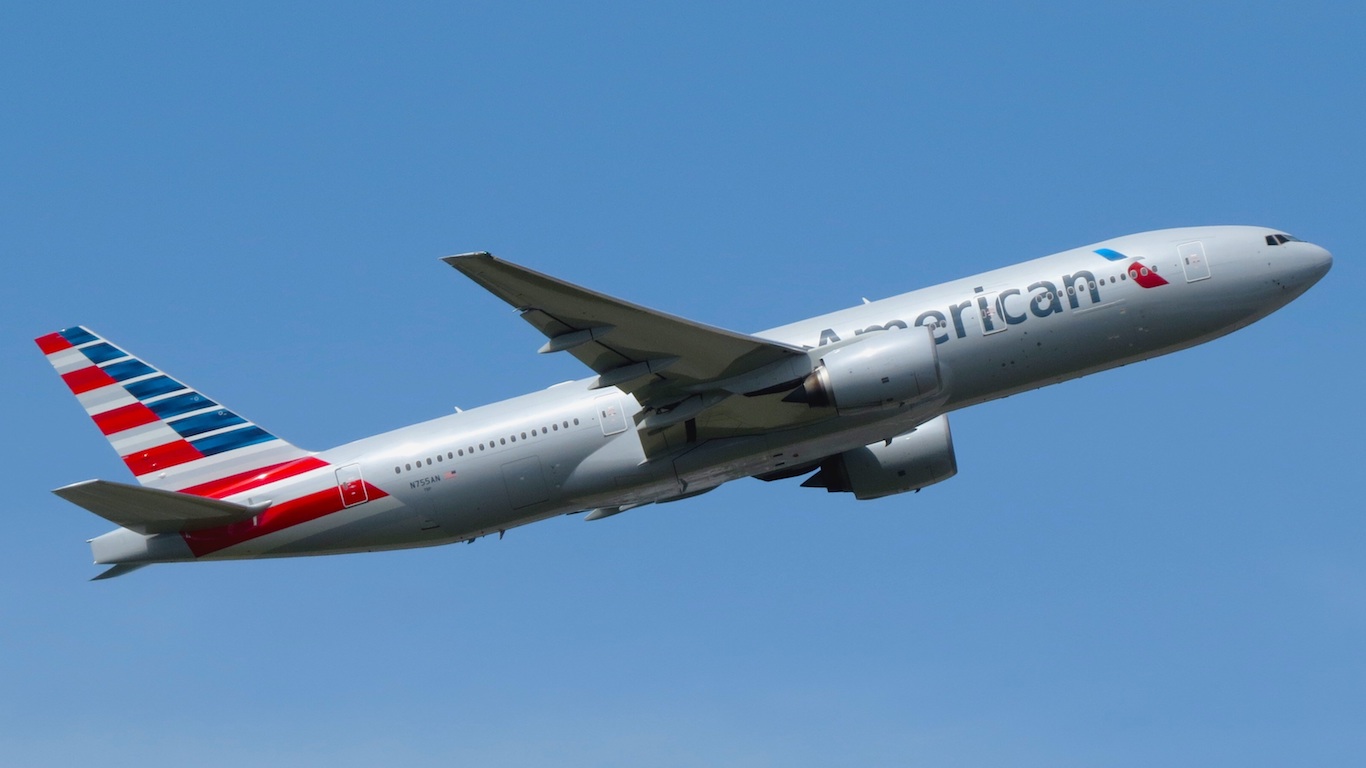
The price history tells a different story. Alaska Air shares are down 37.2% over five years and 14.1% year-to-date, opening at $42.00 on April 21, 2026. For context, Delta Air Lines (NYSE: DAL) has returned 60.4% over the same 10-year window, while American Airlines (NASDAQ: AAL) has lost 68.3%. Alaska Air’s decade-long underperformance sits between a peer that compounded shareholder value and one that destroyed it.
The near-term financials are under pressure. Q1 2026 adjusted EPS came in at −$1.68, missing the consensus estimate of −$1.59. Fuel expense jumped 17% to $796 million, with average cost per gallon rising 14.2% to $2.98. WTI crude spiked to $114.58 per barrel on April 7, 2026, and while it has pulled back to $100.72 as of April 13, that remains well above the 12-month average of $67.02. Management suspended full-year 2026 EPS guidance entirely, citing fuel volatility, and guided Q2 fuel at approximately $4.50 per gallon, representing a roughly $3.60 per-share EPS headwind. The balance sheet carries a debt-to-capitalization ratio of 61%, well above the company’s own 40% to 50% target.
The Gap and What It Means for Retail Investors
A 100% buy consensus on a stock trading near decade lows raises a legitimate question about what analysts are actually measuring. The bull case is a 2027 earnings story contingent on fuel normalization, successful Hawaiian integration, and international routes reaching scale simultaneously. CEO Ben Minicucci stated: “Even in a volatile quarter, we’re seeing clear evidence that our long-term Alaska Accelerate plan is working.” That confidence is real, but so is the suspended guidance.
Alaska Air has a beta of 1.275, meaning it amplifies market swings in both directions. The past month showed a 17.9% rebound from lows, but the 52-week range spans $33.03 to $65.88, a spread that illustrates just how volatile the entry point is.
The takeaway for investors is that unanimous analyst conviction is a meaningful data point rather than a guarantee. The strategic investments are real, the revenue diversification is real, and the consolidation-driven pricing thesis is credible. But so is a decade of negative returns, a leveraged balance sheet, and an earnings outlook that management itself cannot quantify right now. Analysts are buying the 2027 story. Whether the 2027 timeline aligns with an investor’s horizon is the central variable to weigh.











 Top Gaining Stocks
 Top Losing Stocks