


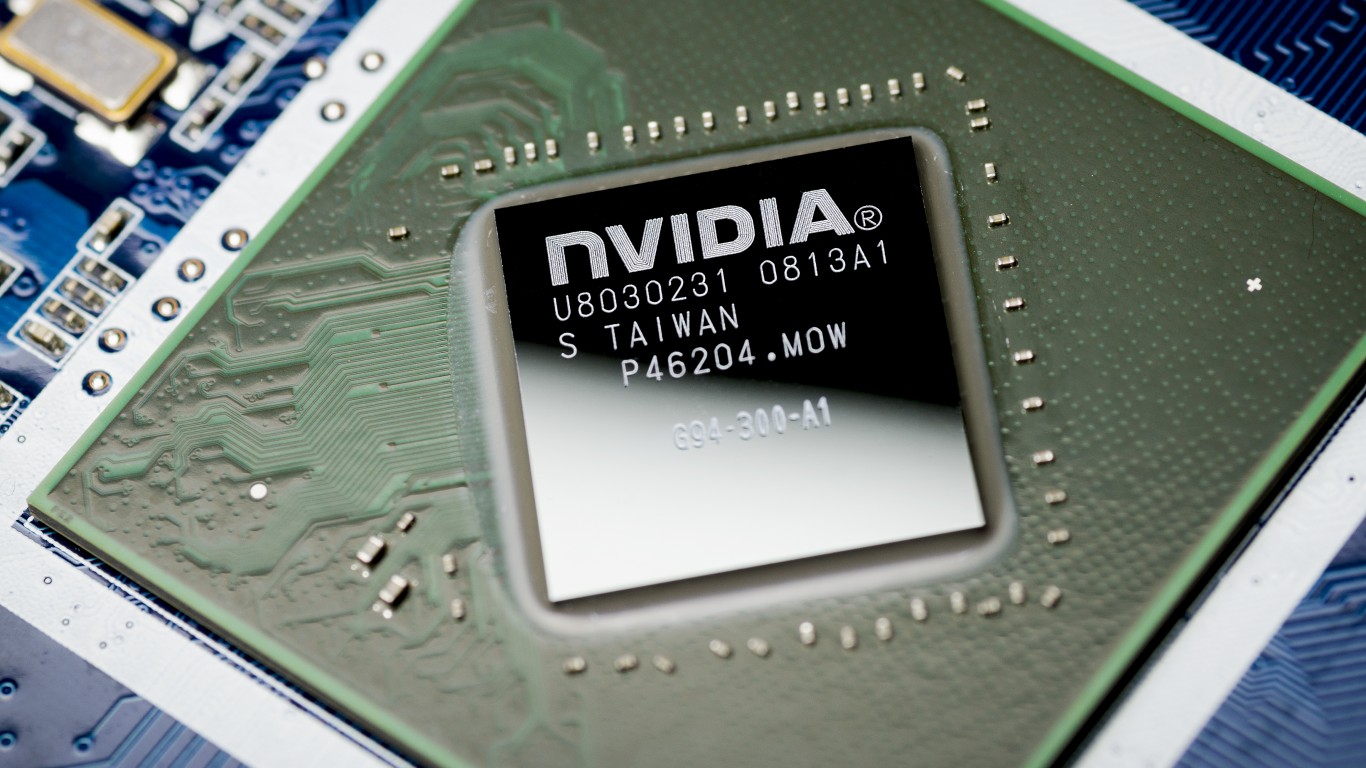
Nvidia (NASDAQ:NVDA | NVDA Price Prediction) is everywhere right now because it just posted Q4 revenue of $68.13 billion, up 73.2% year-over-year, and Jensen Huang declared that “the agentic AI inflection point has arrived.”
The real opportunity could be elsewhere.
The trade everyone is piling into has a name: NVDA. A CPU shortage is quietly reshaping data center economics, and that is the catalyst nobody is talking about. Advanced Micro Devices (NASDAQ:AMD) is the beneficiary, and the market is only beginning to notice.
The Problem With the Consensus Trade
Nvidia commands a $5 trillion market capitalization. That’s nearly 10 times the size of AMD. Every major hyperscaler has already committed to Nvidia’s roadmap. Every institutional investor already owns it. The stock is up 7.18% year-to-date and 106.3% over the past year. These are impressive numbers, but they represent a crowded trade where the good news is already in the price.
Then there’s the China problem. Nvidia took a $4.5 billion H20 charge in Q1 FY2026 from export controls, and the company’s Q1 FY2027 guidance explicitly excludes any Data Center compute revenue from China. Gaming supply constraints are flagged as a headwind in Q1 FY2027 and beyond. Jensen Huang himself acknowledged that manufacturing bottlenecks are a “2-3 year problem.”
Prediction market sentiment for Nvidia sits at a composite score of 53.5, which is neutral. The crowd has already priced in the bull case.
Why AMD Is the Real Opportunity
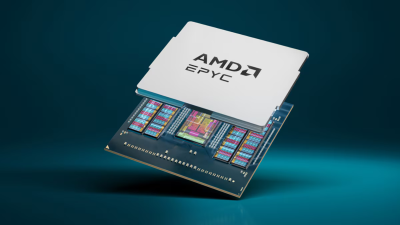
The first thing to understand is that AI infrastructure isn’t just about GPUs anymore. Morgan Stanley recently predicted that agentic AI will expand chip spending beyond graphics processors to include CPUs and memory, potentially adding $32.5-60 billion to the data-center CPU market by 2030. AMD’s EPYC server processors are directly positioned to capture this shift.
Point one: AMD is gaining CPU market share as Intel struggles. The company noted in its Q3 2025 earnings that AMD is gaining CPU market share as Intel contends with supply constraints. AWS launched new instances on 5th Gen EPYC. Oracle, Google Cloud, and Microsoft Azure are all deploying EPYC. The deployments are live and expanding.
Point two: The financials are accelerating. AMD delivered Q4 2025 EPS of $1.53 versus estimates of $1.32, a 15.91% beat. Revenue came in at $10.27 billion, up 34.1% year-over-year. Data Center revenue hit a record $5.38 billion, up 39%. Free cash flow surged 129.48% year-over-year to $5.52 billion for the full year. Lisa Su put it plainly: “We are entering 2026 with strong momentum across our business, led by accelerating adoption of our high-performance EPYC and Ryzen CPUs and the rapid scaling of our data center AI franchise.”
Point three: The stock is moving, and sentiment is bullish. AMD is up 65% over the past month and 49% year-to-date.
The Bottom Line
Nvidia is a great company. It is also a crowded trade with China exposure, supply constraints, and a valuation that leaves little margin for error. AMD trades at a forward P/E of 52 (32 if you look at 2027 earnings) versus Nvidia’s 25, but AMD’s growth trajectory and CPU shortage tailwind make that premium defensible.
AMD’s CPU market share gains, accelerating data center revenue, and bullish prediction sentiment suggest the CPU shortage narrative has not yet been fully priced in by the broader market.








 Top Gaining Stocks
 Top Losing Stocks