


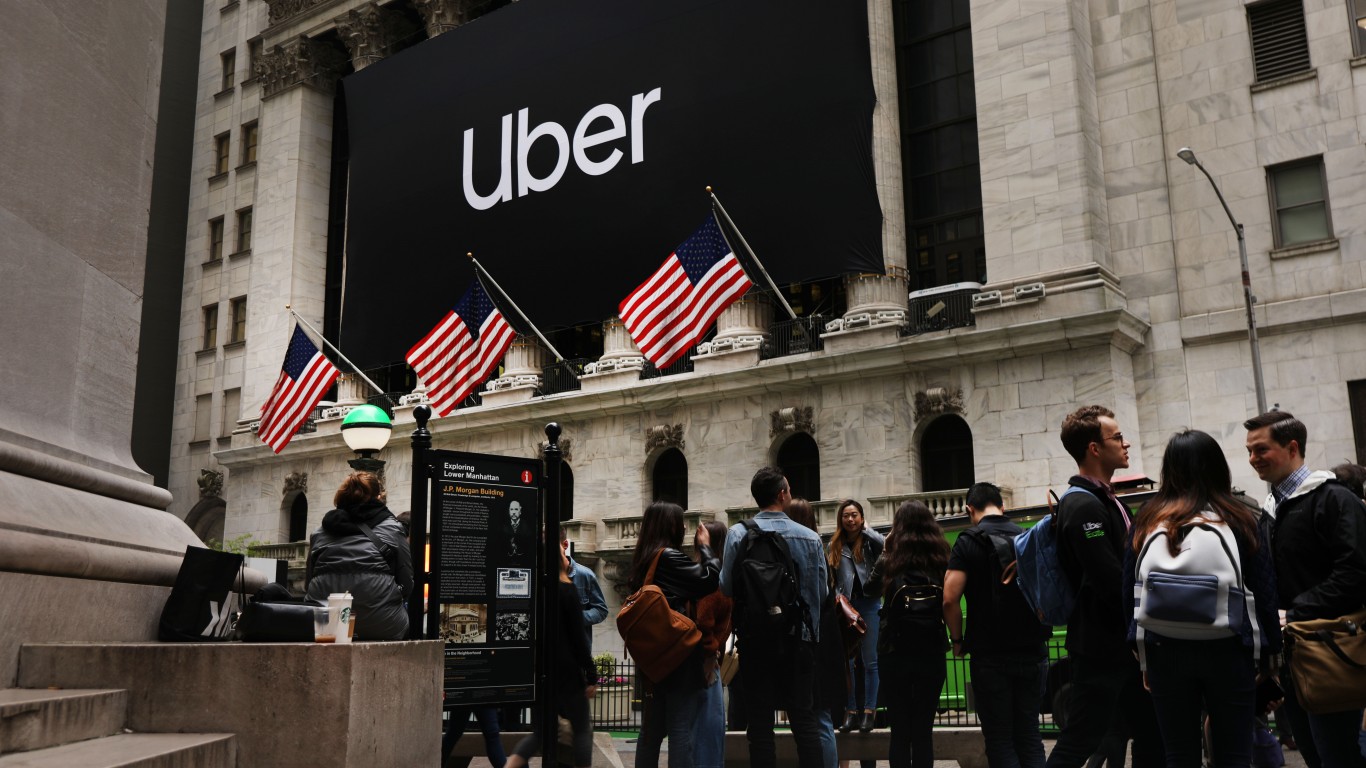
Wall Street delivered a split verdict on Uber Technologies (NYSE:UBER | UBER Price Prediction) following the company’s Q1 2026 earnings report on May 6. Goldman Sachs (NYSE:GS) lowered its price target to $115 from $125 while maintaining a Buy rating, and Piper Sandler (NYSE:PIPR) analyst Thomas Champion raised his target to $105 from $100 while keeping an Overweight rating. Both firms remain bullish, yet their recalibrations move in opposite directions, an unusual tension worth unpacking for long-term holders of Uber stock.
The takeaway for prudent investors in Uber stock: this comes down to a modeling debate over assumptions. Both firms agree the quarter was solid and the platform is compounding.
| Ticker | Company | Firm | Action | Old Rating | New Rating | Old Target | New Target |
|---|---|---|---|---|---|---|---|
| UBER | Uber Technologies | Goldman Sachs | Price Target Cut | Buy | Buy | $125 | $115 |
| UBER | Uber Technologies | Piper Sandler | Price Target Raised | Overweight | Overweight | $100 | $105 |
The Analyst’s Case
Goldman Sachs called Uber’s quarter “broadly positive” with accelerating momentum across mobility and delivery, despite external headwinds. The firm pointed to strong U.S. consumer demand, insurance-related cost savings, international delivery strength, and growing non-restaurant categories as the engines behind the trajectory.
Champion focused on the topline durability of Uber’s core business, flagging 20% constant currency Mobility bookings growth as the standout in a maturing rideshare industry. He also noted that Q2 2026 bookings and EBITDA were guided above consensus, with strong rideshare momentum and aggressive buybacks the two takeaways from his bus-tour channel checks.
Company Snapshot
Uber posted Q1 2026 revenue of $13.20 billion, up 14% year over year, with Gross Bookings of $53.72 billion, up 25%, and non-GAAP EPS of $0.72. The company also crossed 50 million Uber One members, who now drive half of Gross Bookings across Mobility and Delivery.
Capital return continues to anchor the story. Uber repurchased $3.011 billion of stock during Q1 2026, building on $6.523 billion in full-year 2025 buybacks. For more context on the platform’s recent trajectory, see our recent coverage of Uber’s Q1 2026 results.
Why the Move Matters Now
Uber stock trades at a P/E ratio of 16x, with shares down 3% year to date and 8% lower over one year. Against the consensus analyst target of $104, both new prints sit comfortably above the current quote near $78.37.
When Uber ratings stay bullish but targets diverge by $10 or more, the gap typically reflects different assumptions about long-term margin progression or the terminal multiple investors should pay. Goldman’s trim looks like a modeling refresh; Piper’s hike reflects rising confidence in the bookings and EBITDA path plus the buyback catalyst.
What It Means for Your Portfolio
The bull case for Uber stock rests on continued bookings growth, margin expansion supported by insurance cost savings, and disciplined capital return. Network effects, the multi-product platform, and scale economics remain structural advantages.
The bear case for UBER is also intact: regulatory risk around worker classification, potential autonomous vehicle disruption, and macro consumer pressure could compress the very margins analysts are modeling. Both Goldman and Piper see those risks but conclude the reward still tilts favorably.
For prudent investors, the analyst upgrade from Piper alongside Goldman’s price target cut on Uber stock is a useful reminder that bullish theses can survive number changes. Moderate position sizing and a focus on the bookings, margin, and buyback cadence may serve long-term holders better than reacting to a single target revision.












 Top Gaining Stocks
 Top Losing Stocks