


Six months ago, Mastercard, Ripple, WebBank, and Gemini ran a pilot on the XRP Ledger to settle credit card transactions through RLUSD. Then on May 6, JPMorgan’s blockchain platform, Kinexys, joined Mastercard, Ripple, and Ondo Finance to complete the first cross-border, cross-bank redemption of a tokenized US Treasury fund.
The redemption settled on the XRP Ledger in under five seconds, and JPMorgan delivered U.S. dollars to Ripple’s bank in Singapore in the same flow—a trade that normally takes one to three business days.
The pilot is a credibility win for the XRP Ledger, with JPMorgan’s $3 trillion settlement platform connecting to XRPL. Ripple’s RLUSD stablecoin did the bridging work, while a fraction of XRP is used as the network fee. That distinction could determine if the pilot moves the XRP price or is just another Ripple win that has no impact on the token.
What JPMorgan and Mastercard Just Did on the XRP Ledger
Until now, tokenized Treasury redemptions worked in two disconnected steps. The on-chain part was fast: you’d redeem the token in seconds. But getting the cash into your bank account was slow because the dollars still moved through wire transfers, manual checks, and banking hours.
So a near-instant blockchain trade often took one to three business days before the dollars hit. Now, the Ondo, JPMorgan, Mastercard, and Ripple pilot connected both steps into one continuous flow, and that’s what makes the “first” claim hold up.
JPMorgan’s blockchain unit, Kinexys, has been on this. In May 2025 it ran a swap test with Chainlink and Ondo on the Ondo Chain testnet, settling tokenized Treasuries against dollar deposits. But that was an entirely on-chain trade—no banks involved. So the new pilot is something Kinexys hadn’t tried: it ran on a live public blockchain (XRPL) and added the cross-border, cross-bank cash settlement through JPMorgan’s correspondent banking network.
Then, Ripple redeemed part of its OUSG holding—Ondo’s tokenized US Treasury fund—on the XRP Ledger. The redemption triggered an instruction through Mastercard’s Multi-Token Network to Kinexys, which debited Ondo’s blockchain deposit account at JPMorgan and wired the equivalent dollars to Ripple’s bank in Singapore.
The redemption cleared on XRPL in under five seconds. So, the full settlement—from token to dollars in Singapore—closed in near real time, which is the same trade that takes correspondent banks one to three business days.
How the Settlement Actually Worked — and Where XRP Fits In
If you were watching this trade unfold and waiting to see XRP move, you’d be waiting a while. The bridge asset was RLUSD, and a small amount of XRP was used as the network fee—fractions of a cent on a transaction that moved tokenized US Treasuries worth far more.
Moreover, that structure existed before this pilot. When Ondo launched OUSG on XRPL in June 2025, the design had a key use case: OUSG would be issued and redeemed using RLUSD as the settlement asset.
Ripple built it that way deliberately because RLUSD is dollar-pegged, fully backed by U.S. Treasuries and cash, and regulated under the New York DFS. For an institutional product like OUSG—which itself is backed by BlackRock’s BUIDL fund—only a stable, audited dollar token will pass institutional compliance, and XRP’s price volatility rules it out.
So, Ripple redeemed OUSG on XRPL by exchanging the tokens for RLUSD. Mastercard’s MTN routed the cash payout instruction, while JPMorgan did the bank-side work. XRP’s role through all of it was the same role it plays in every XRPL transaction—paying the network fee that makes the ledger run.
What This Pilot Means for XRP Token Demand
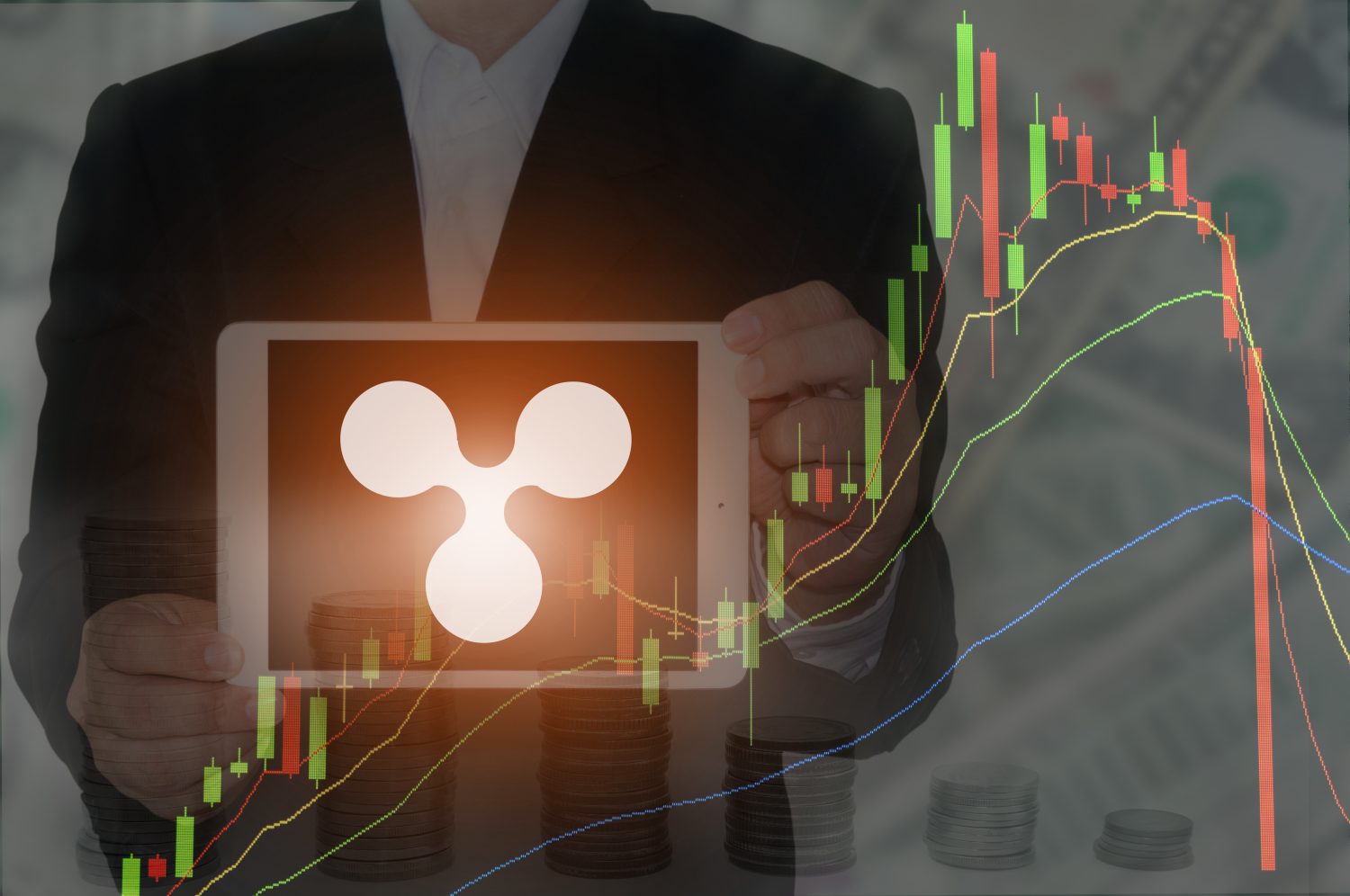
The XRP price barely moved on the news. The token traded around $1.42 when the announcement broke, up about 1% on the day. For one of the biggest institutional moments XRP has had this year, that’s a quiet response—because XRPL adoption has been growing for over a year, and the XRP price has barely flinched.
This isn’t the first time institutions have used XRPL without moving XRP price. Société Générale launched its euro stablecoin on XRPL earlier this year. SBI Holdings issued a $65 million tokenized bond on XRPL in 2025. Deutsche Bank integrated Ripple’s payment stack but said it wouldn’t use XRP directly.
None of the news has any meaningfully impact on the XRP price because institutions use XRPL for the rails and settle in stablecoins. So the recent pilot followed the same pattern even with JPMorgan and Mastercard’s names attached.
However, this pilot does change one thing: XRPL’s credibility just got a major lift. JPMorgan’s $3 trillion Kinexys platform now has a working integration with XRPL—and other major banks just got a working reason to take XRPL seriously..
It also gives the CLARITY Act—the bill that would classify XRP as a commodity under federal law—fresh ammunition. If JPMorgan is comfortable settling tokenized Treasuries on XRPL, the regulatory case for treating XRP as a commodity gets easier to argue in DC. None of that might flow to the token immediately, but it changes what the next pilot looks like, and the one after that.
What XRP Holders Should Watch Next
The pilot’s impact on the XRP price comes down to one calendar question: the CLARITY Act markup. The Senate Banking Committee has until May 21 to mark up the bill.
If it clears the committee, XRP gets a regulatory backbone to lean on, and pilots like this could push XRP beyond the payment fee role. But if it stalls, this becomes another XRPL milestone that doesn’t move XRP, and the ledger will keep absorbing tokenized assets the same way it has for over a year.










 Top Gaining Stocks
 Top Losing Stocks