Can WeWork Start Closing Offices?

Photo of Douglas A. McIntyre
By Douglas A. McIntyre Updated Published
This post may contain links from our sponsors and affiliates, and Flywheel Publishing may receive compensation for actions taken through them.
Can WeWork Start Closing Offices?

© Tigeroner / Getty Images

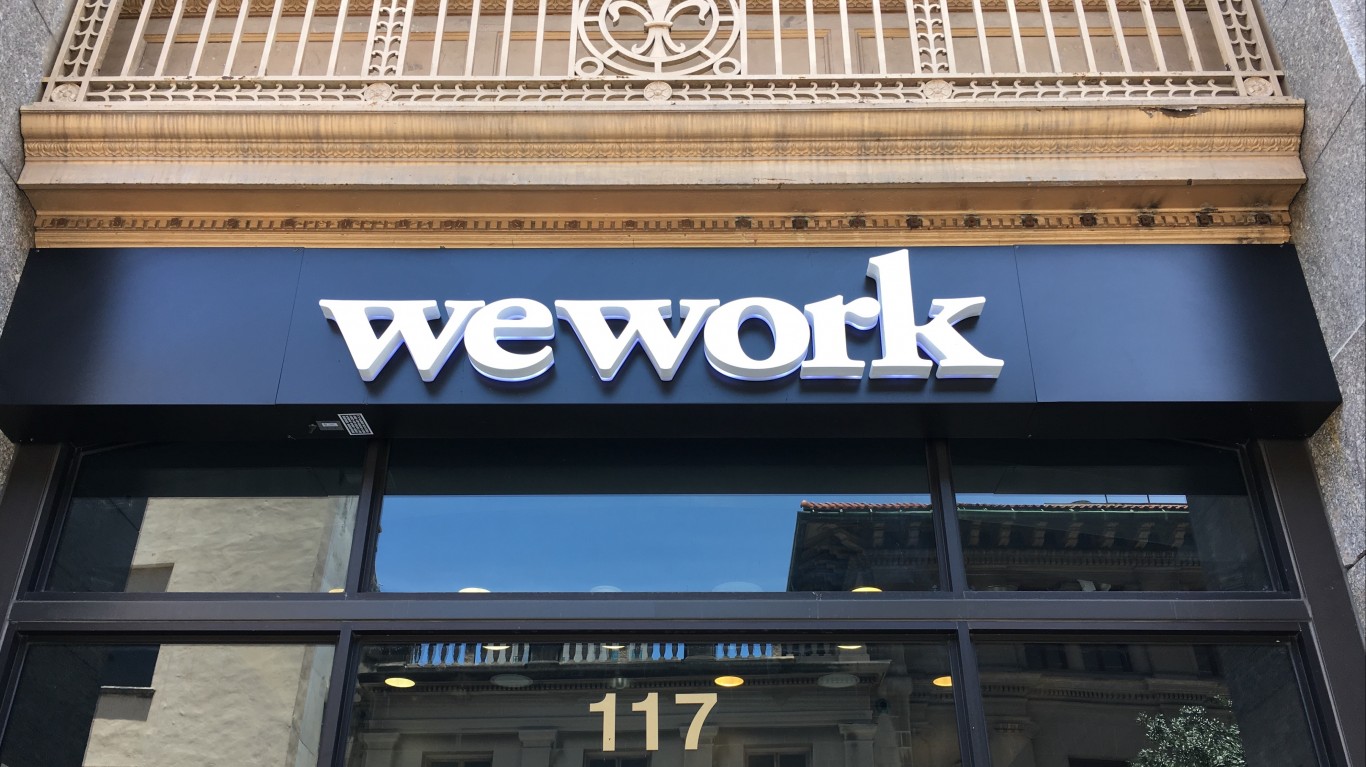
WeWork is in the midst of negotiations to get new financing. Based on some reports, it will run low on money toward the end of the first quarter of next year. JPMorgan reportedly is leading the discussion. Softbank, which is already a large shareholder in WeWork, may invest again. Observers have said that WeWork will need to slow its growth and cut staff to move toward profitability. Management may want to close offices if it can.

WeWork says it has 845 offices either open or “coming soon.” The locations span 123 cities. Like companies in the retail industry, some locations perform much worse than the average. Firms like Gap and J.C. Penney have abandoned many stores to save money. The issue with shrinking WeWork is hidden in the leases it has for each location. They likely vary substantially from office to office and may vary most from country to country. WeWork had more leverage in lease negotiations in some places, as is the case with any multiple location tenant.

WeWork probably has two sets of locations likely to be pruned. Some cities have a large number of WeWork offices, perhaps too many. This will become a larger problem when a recession begins. For example, WeWork has 62 locations in the New York area. If there is a sharp economic downturn, it is almost certain that not all those locations will be fully occupied. Some of them are only a few blocks from others, which could be critical to consolidation.

The other hurdle WeWork probably has is the support of cities that only have one or two offices. These cannot share management who run several locations. This likely drives up cost per office. For example, WeWork only has two offices in Western Australia and only two in South Africa.

[nativounit]

WeWork management has to be combing through locations for profit potential. Yet, can management break leases in underperforming areas or those with poor forecasts? That will be part of whether WeWork can improve overall margins.

[recirclink id=584286]
[wallst_email_signup]

Photo of Douglas A. McIntyre
About the Author Douglas A. McIntyre →

Douglas A. McIntyre is the co-founder, chief executive officer and editor in chief of 24/7 Wall St. and 24/7 Tempo. He has held these jobs since 2006.

McIntyre has written thousands of articles for 24/7 Wall St. He is an expert on corporate finance, the automotive industry, media companies and international finance. He has edited articles on national demographics, sports, personal income and travel.

His work has been quoted or mentioned in The New York Times, The Wall Street Journal, Los Angeles Times, The Washington Post, NBC News, Time, The New Yorker, HuffPost USA Today, Business Insider, Yahoo, AOL, MarketWatch, The Atlantic, Bloomberg, New York Post, Chicago Tribune, Forbes, The Guardian and many other major publications. McIntyre has been a guest on CNBC, the BBC and television and radio stations across the country.

A magna cum laude graduate of Harvard College, McIntyre also was president of The Harvard Advocate. Founded in 1866, the Advocate is the oldest college publication in the United States.

TheStreet.com, Comps.com and Edgar Online are some of the public companies for which McIntyre served on the board of directors. He was a Vicinity Corporation board member when the company was sold to Microsoft in 2002. He served on the audit committees of some of these companies.

McIntyre has been the CEO of FutureSource, a provider of trading terminals and news to commodities and futures traders. He was president of Switchboard, the online phone directory company. He served as chairman and CEO of On2 Technologies, the video compression company that provided video compression software for Adobe’s Flash. Google bought On2 in 2009.

Featured Reads

Our top personal finance-related articles today. Your wallet will thank you later.

Continue Reading

Top Gaining Stocks

CBOE Vol: 1,568,143
PSKY Vol: 12,285,993
STX Vol: 7,378,346
ORCL Vol: 26,317,675
DDOG Vol: 6,247,779

Top Losing Stocks

LKQ
LKQ Vol: 4,367,433
CLX Vol: 13,260,523
SYK Vol: 4,519,455
MHK Vol: 1,859,865
AMGN Vol: 3,818,618