



December 2025 told two very different stories about institutional crypto appetite. XRP (CRYPTO: XRP) ETFs became the standout winner, pulling in $483 million. Bitcoin ETFs bled $1.09 billion while Ethereum products shed $564 million—yet XRP funds kept attracting fresh money.
The disconnect gets stranger when you look at price action. XRP dropped 15% from $2.22 to $1.77 in December while institutions kept buying. Retail traders sold into every bounce, creating the exact supply institutions needed to build positions without moving prices. The pattern reveals something critical about how professional allocators think versus how retail reacts to short-term charts.
December’s flows show institutions weigh factors retail traders miss entirely: regulatory windows, mandate cycles, and infrastructure buildout. When these elements align around a newly investable asset, price becomes secondary to position-building. XRP gave institutions something they couldn’t get from Bitcoin—a fresh allocation opportunity backed by regulatory clarity and real-world utility narratives.
XRP ETFs Led December 2025 With $483M in Inflows

December exposed a sharp institutional split across crypto ETFs. XRP funds pulled in $483 million during the month, maintaining steady inflows for 30 consecutive trading days before the first zero-inflow day on December 26. Total inflows since November launch climbed to $1.3 billion, the fastest adoption curve for any altcoin ETF.
The momentum stood out because it was steady—not reactive. Capital arrived daily regardless of price movements, pointing to mandate-driven allocation rather than tactical trading. Bitcoin told the opposite story. Bitcoin ETFs shed $1.09 billion in December, capped by an $825 million drawdown over eight consecutive days around Christmas. The streak reflected profit-taking and year-end tax-loss harvesting, not a collapse in conviction.
Ethereum faced deeper pressure. Ethereum ETFs lost $564 million in December alone, following a brutal November that pushed the two-month total past $2 billion in outflows. Structure matters. XRP flows were evenly distributed across issuers, showing coordinated institutional participation. Bitcoin and Ethereum flows were lumpy and episodic, concentrated in specific funds during rebalancing windows.
Why Institutions Chose XRP Over Bitcoin in December

December’s ETF split wasn’t about price momentum—it reflected how institutions allocate capital when regulation, mandates, and infrastructure suddenly align around a newly investable asset.
Regulatory Clarity Created a Fresh Green Light
The August 2025 SEC settlement transformed XRP from a compliance headache into a clean allocation. For institutions, new legal clarity matters more than long-standing acceptance. XRP moved from restricted to investable in one stroke, while Bitcoin’s status was already fully priced into portfolio construction.
This reset gave compliance teams cover to act. It explains why XRP ETF demand outpaced Bitcoin despite Bitcoin’s deeper liquidity and longer institutional history. Fresh regulatory green lights create allocation urgency that established assets can’t match.
XRP Filled a Portfolio Slot Bitcoin Could Not
Bitcoin sits in portfolios as a store-of-value proxy and macro hedge. XRP plays a different role—it maps to payments infrastructure, cross-border settlement, and enterprise utility. Institutions building diversified crypto exposure needed more than inflation hedges.
Ripple’s enterprise partnerships and payments focus gave allocators a functional narrative Bitcoin couldn’t provide in December. XRP became the way to get crypto exposure tied to real-world financial infrastructure rather than pure monetary theory.
New ETF Mandates Favored Early Accumulation
XRP ETFs were still in their first allocation window. New mandates require initial positions, not trimming or rebalancing. Bitcoin ETFs faced year-end portfolio cleanup and tax-related exits instead—calendar mechanics, not fundamental rejection.
The result was steady accumulation in XRP products while Bitcoin ETF outflows reflected scheduled rebalancing. Mandate-driven buying operates on quarterly timelines, not daily price charts, which explains why XRP inflows persisted through 15% price declines.
Infrastructure Signals Backed the Allocation
Ripple’s Hidden Road acquisition and expanding payment licenses reinforced an infrastructure-first thesis. Institutions respond to operational progress more than headlines. Combined with sustained ETF inflows, these developments gave allocators concrete justification to rotate capital even as XRP’s price lagged.
Why XRP ETF Demand Continued Despite 15% Price Drop
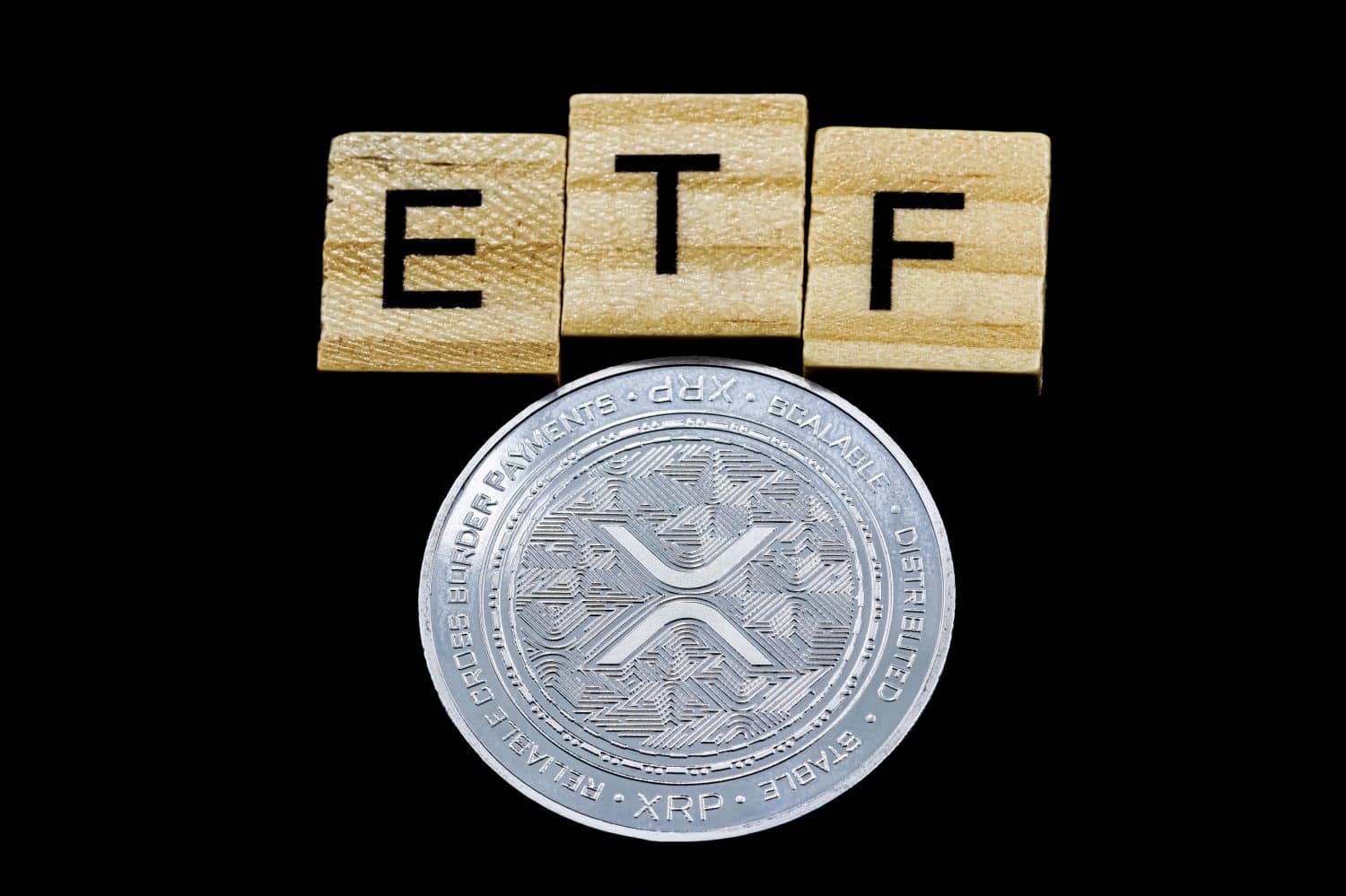
December exposed a gap between price action and institutional behavior. XRP fell sharply, yet capital continued flowing in. For large allocators, structure and supply dynamics mattered more than short-term charts.
ETF demand is mechanical, not emotional. Institutions buying XRP ETFs were filling mandates and completing scheduled allocations, not chasing momentum. December inflows reflected planned capital deployment, not discretionary trading decisions tied to technical levels.
Retail sellers provided steady supply, allowing ETFs to accumulate without pushing prices higher. From an institutional perspective, price softness during forced retail selling improved entry quality rather than signaling failure. Buying weakness is standard practice when conviction is structural.
On-chain data showed long-term holders exiting as prices slipped below $2. Exchange deposits surged, creating visible selling pressure that retail interpreted as bearish. Institutions saw this as temporary capitulation—exactly the environment where patient capital accumulates from frustrated sellers.
Despite short bursts of selling, total XRP held on exchanges dropped to multi-year lows as ETF accumulation and custody withdrawals drained available liquidity. Institutions operating with long horizons focus on future supply constraints, not current sentiment. They were willing to buy through weakness, anticipating tighter liquidity once selling fatigue set in.
What January 2026 ETF Flows Will Reveal
January marks the moment when December’s calendar distortions fade and real positioning begins. Bitcoin’s late-month ETF outflows aligned closely with tax-loss harvesting mechanics, not sudden loss of institutional faith. Once the calendar resets, forced selling pressure disappears.
Early January flows will show whether institutions are rotating or retreating. If Bitcoin ETF assets stabilize and net flows turn positive in the first trading week, December reads as tactical rebalancing rather than exodus. Persistent outflows into mid-January would tell a different story—implying deeper rethinking of crypto exposure.
January will also decide whether XRP’s strength was structural or simply early positioning euphoria. The initial inflow streak reflected mandate-driven buying tied to new ETF approvals and fresh regulatory clarity. That phase typically fades after four to six weeks, making the first half of January critical. Continued daily XRP inflows would confirm institutions are still building exposure strategically, not just completing initial allocation checklists. A sharp drop in activity would suggest the mandate window has closed and demand is normalizing.
Price action adds another layer. XRP stabilizing above $2 would show institutional buying successfully absorbing retail supply. Flat pricing despite continued inflows would imply unresolved selling pressure that needs to exhaust before structure translates to momentum.














 Top Gaining Stocks
 Top Losing Stocks