


Military doctrine is supposed to tell soldiers how to fight, but history shows that some weapons refuse to follow the rules. In several cases, small arms entered service that didn’t just challenge existing tactics, but outright broke the manuals written to govern them. When battlefield reality exposed those gaps, units were forced to rewrite doctrine, training standards, and even unit roles. Here, 24/7 Wall St. is taking a closer look at the small arms the rewrote military doctrine.
To determine the small arms that forced militaries to rewrite doctrine, 24/7 Wall St. reviewed various historical and military sources. We included supplemental information regarding each weapon’s intended role at adoption, when it was put into action, and how each ultimately changed military doctrine.
Here is a look at the small arms that forced militaries to rewrite doctrine:
Why Are We Covering This?
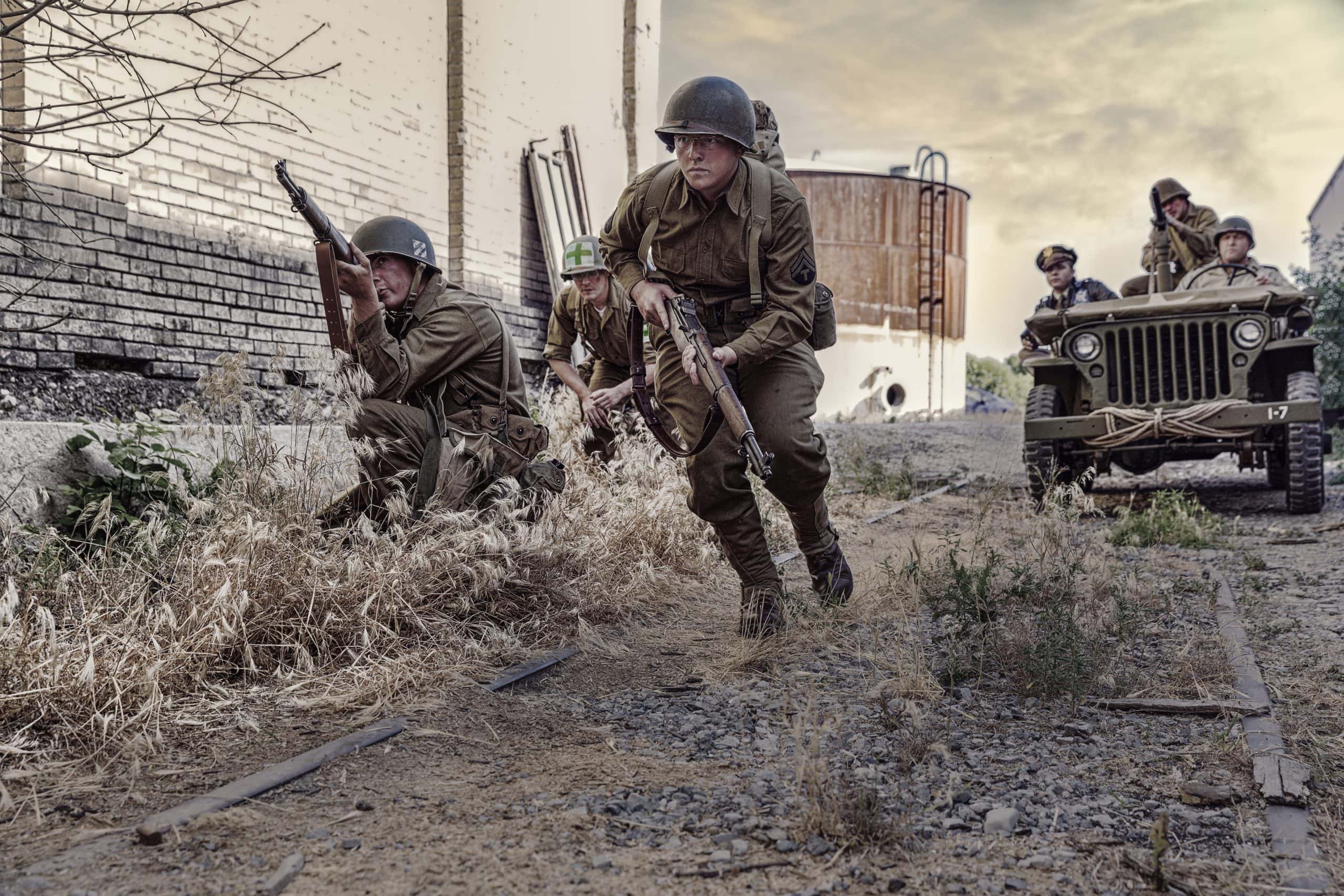
Understanding military small arms that forced units to rewrite doctrine matters because it reveals how battlefield reality can overturn institutional assumptions faster than planners expect. These weapons did not merely influence tactics in the field; they compelled armies to formally revise manuals, training systems, and unit roles when existing doctrine proved unworkable or unsafe. Examining these cases shows how doctrine is shaped by failure as much as success, and why some of the most important changes in military thinking emerged not from better weapons, but from the need to confront hard limits exposed by combat.
When Weapons Broke the Rulebook
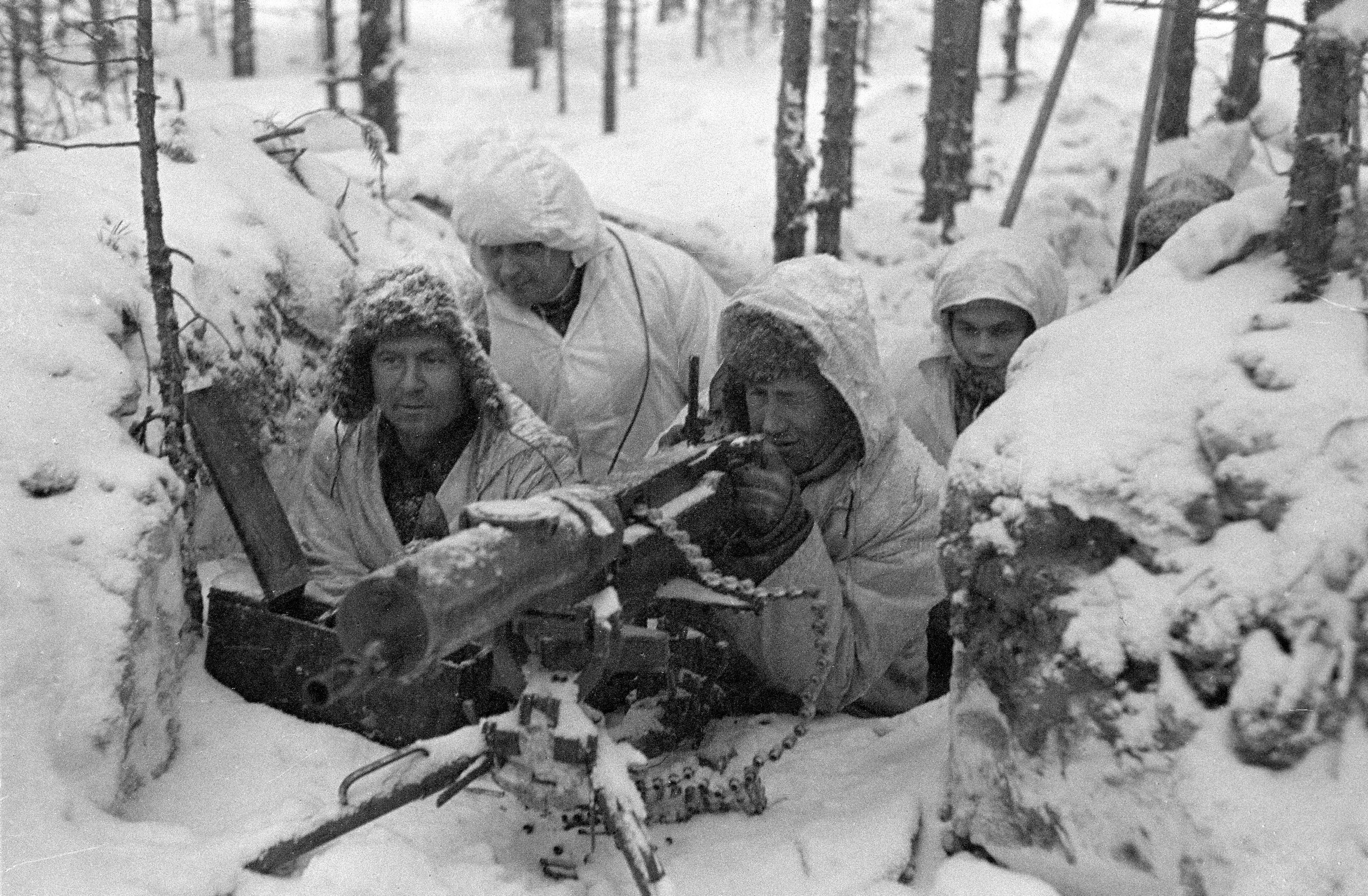
Military doctrine is built on assumptions about range, control, training, and how soldiers are expected to fight. In some cases, small arms entered service that simply did not work within those assumptions. This article examines weapons that forced units to formally rewrite manuals, training standards, and employment rules because existing doctrine failed under real-world conditions.
Doctrine Failed Before the Weapon Did
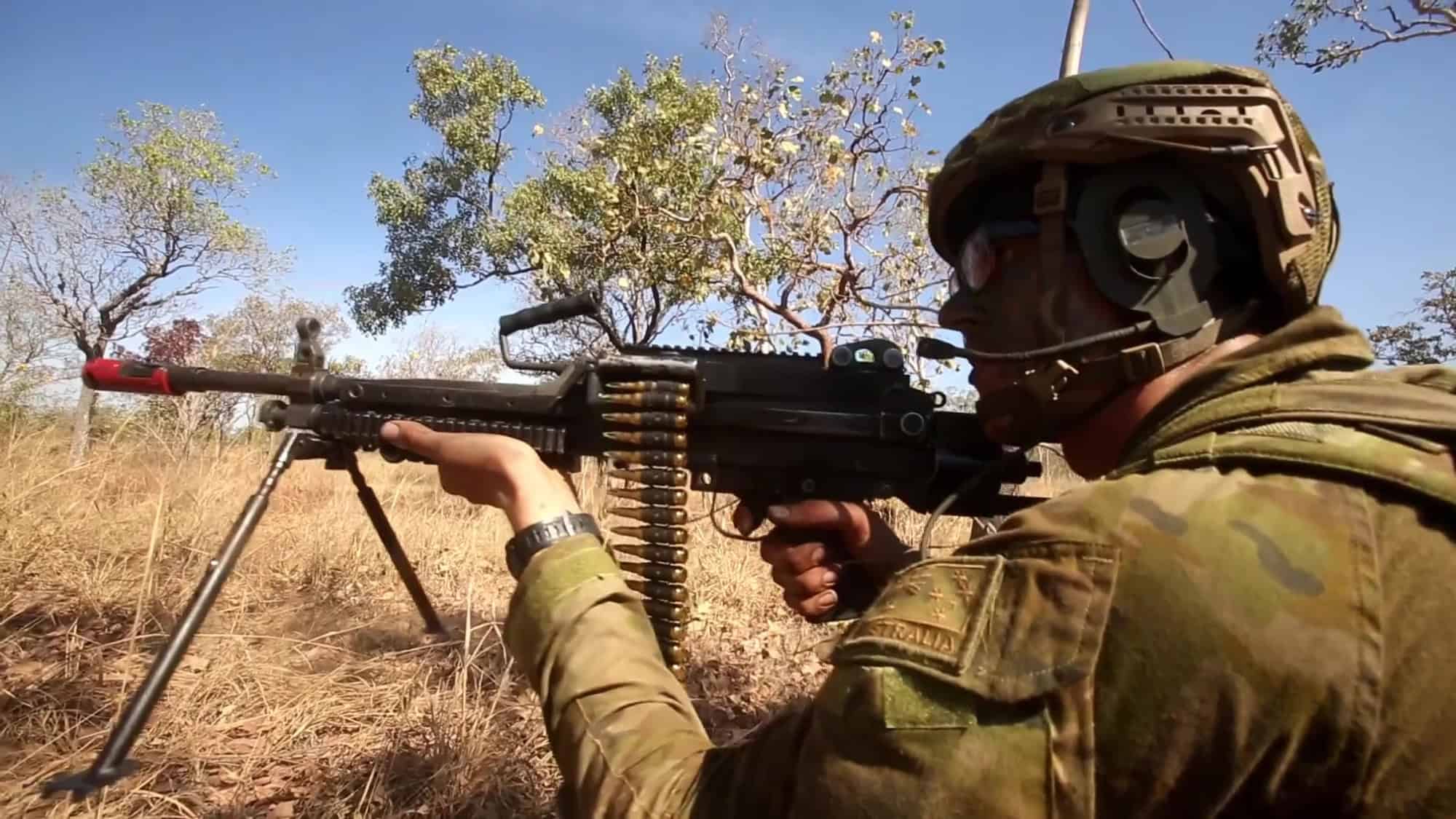
Many of the weapons on this list were not outright failures. Instead, they exposed gaps between design intent and battlefield reality. Automatic fire proved uncontrollable, engagement distances were misjudged, or sustainment demands exceeded training capacity. Doctrine had to change because continuing to apply the old rules became ineffective—or dangerous.
From Field Experience to Formal Rewrite
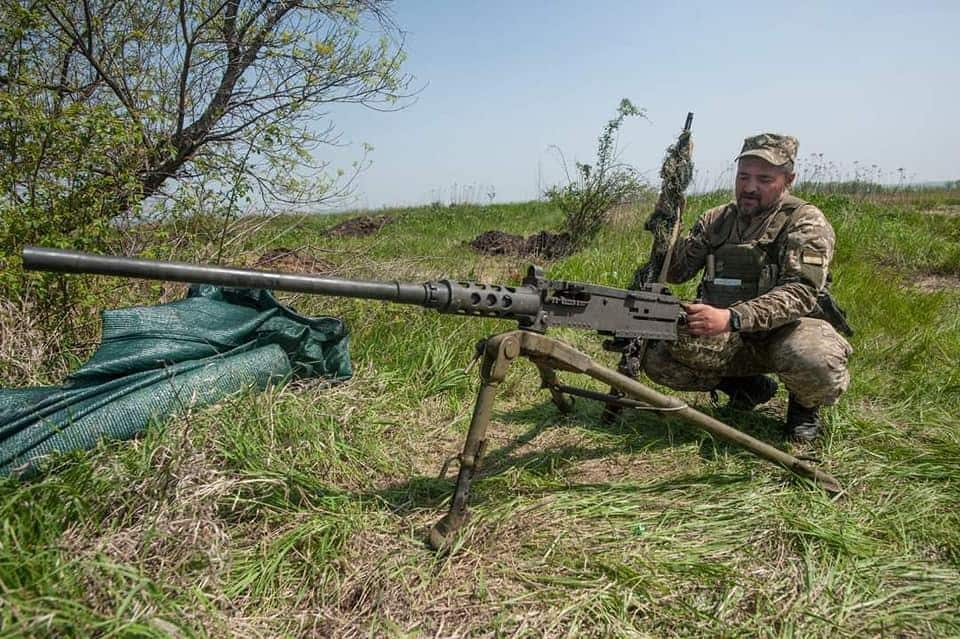
What began as battlefield improvisation eventually became institutional change. Repeated issues forced leadership to revise manuals, alter training pipelines, and codify new employment rules. These were not informal workarounds, but official doctrinal rewrites that reshaped how units were organized and expected to fight.
New Roles, New Structures
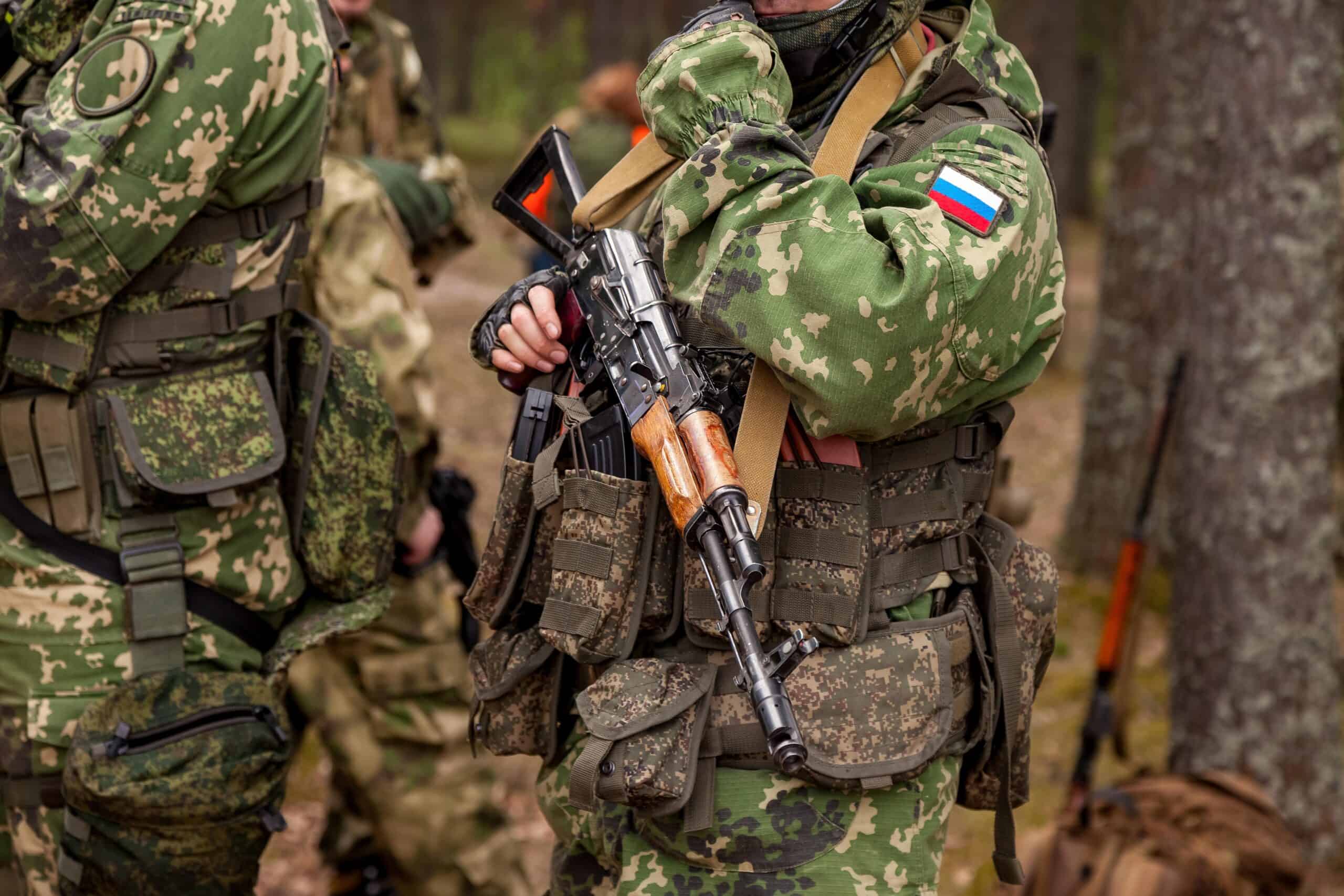
Several weapons on this list created entirely new roles within infantry units, such as grenadiers, designated marksmen, squad automatic gunners, or specialized CQB elements. Doctrine evolved not to exploit superior performance, but to manage limitations and integrate problematic systems safely and effectively.
What These Weapons Reveal About Military Reality
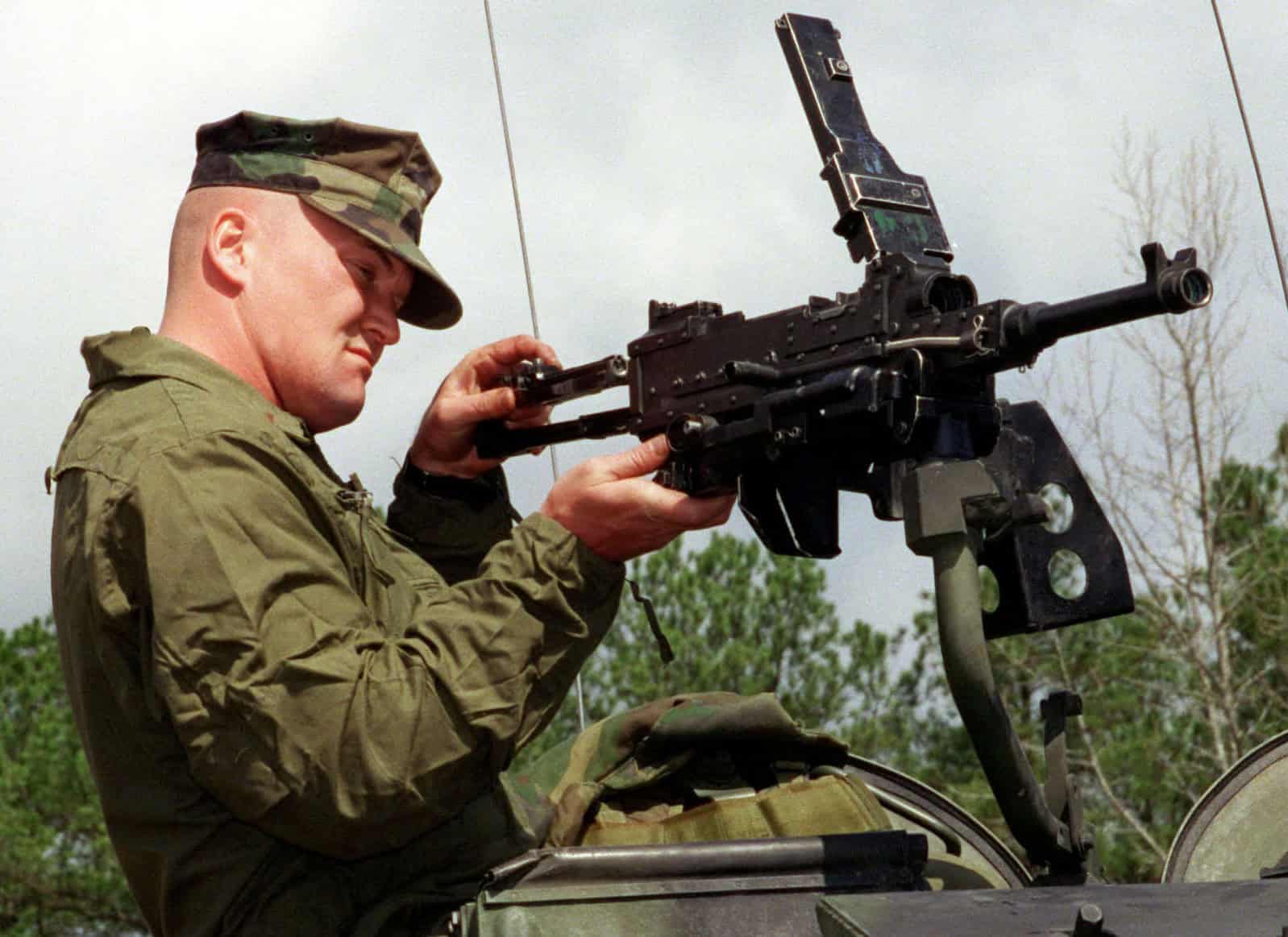
Together, these cases show that doctrine ultimately follows reality, not theory. When weapons expose flawed assumptions at scale, institutions are forced to adapt. Studying these small arms reveals how militaries learn under pressure—and why some of the most important doctrinal changes were driven by constraint rather than innovation.
Villar Perosa M1915
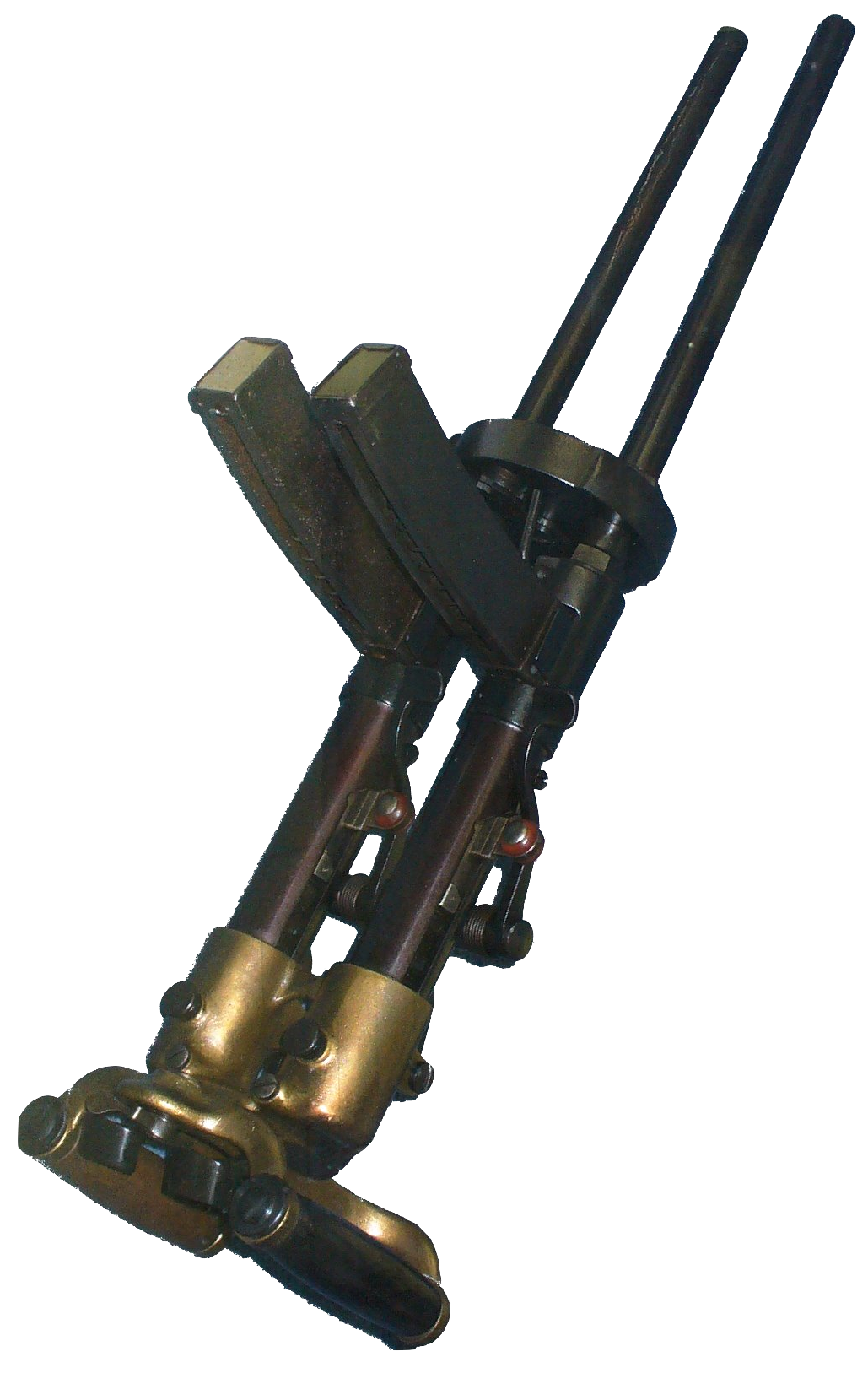
- Era: WWI
- Intended role at adoption: Aircraft MG adapted for infantry
- What doctrine assumed before: Rifle-centric assault doctrine
- What broke in practice: Uncontrollable and awkward for infantry use
- Doctrine that had to be rewritten: Assault and automatic-fire doctrine
- New role or structure created: Dedicated assault teams
The Villar Perosa forced Italian units to abandon rifle-centric assault doctrine. Its impracticality for standard infantry use led to formal changes that separated automatic fire into specialized assault teams. Doctrine adapted to the weapon’s limitations rather than the design meeting existing infantry expectations.
Fedorov Avtomat

- Era: WWI
- Intended role at adoption: Automatic rifle
- What doctrine assumed before: Bolt-action rifles as standard
- What broke in practice: Intermediate cartridge broke range assumptions
- Doctrine that had to be rewritten: Rifle employment doctrine
- New role or structure created: Hybrid rifle-automatic role
The Fedorov Avtomat disrupted traditional rifle doctrine by introducing controllable automatic fire at shorter ranges. Russian units revised employment concepts to acknowledge a middle ground between rifle and machine gun, briefly adapting doctrine despite logistical challenges.
Pedersen Device
- Era: WWI
- Intended role at adoption: Rifle conversion system
- What doctrine assumed before: Bolt-action rifles defined assault capability
- What broke in practice: Required new logistics, training, and employment methods
- Doctrine that had to be rewritten: Assault training and rifle employment doctrine
- New role or structure created: Temporary assault rifle role
The Pedersen Device forced U.S. planners to rewrite assault doctrine by temporarily transforming riflemen into rapid-fire troops. Manuals and training reflected a shift from deliberate bolt-action fire to close-range assault employment, with new ammunition handling and procedures. Even though it saw limited combat use, the system shows how a weapon concept can drive formal doctrinal change before the battlefield fully validates it.
Bergmann MP18
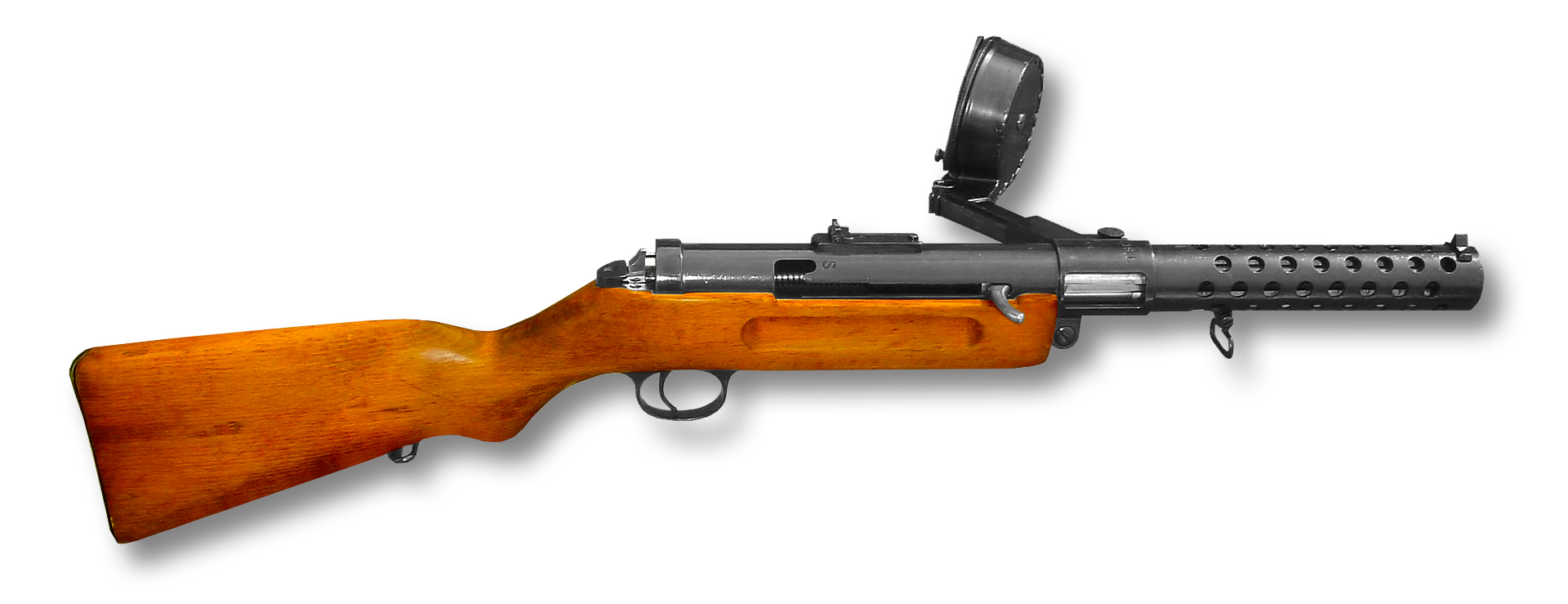
- Era: WWI
- Intended role at adoption: Submachine gun
- What doctrine assumed before: Mid-range rifle engagements
- What broke in practice: Extremely short range
- Doctrine that had to be rewritten: CQB and trench-clearing doctrine
- New role or structure created: Assault troops
The MP18 forced formal close-quarters battle doctrine during World War I. Manuals were rewritten to emphasize trench-clearing teams and short-range assault tactics, creating a new doctrinal category separate from standard rifle combat.
Lewis Gun

- Era: WWI
- Intended role at adoption: Light machine gun
- What doctrine assumed before: Centralized machine-gun employment
- What broke in practice: Mobility and cooling needs
- Doctrine that had to be rewritten: Squad fire-support doctrine
- New role or structure created: Automatic rifleman
The Lewis Gun forced armies to rewrite doctrine by embedding automatic fire within squads. Manuals shifted from centralized machine guns to section-based support, permanently altering infantry organization and employment.
FG 42
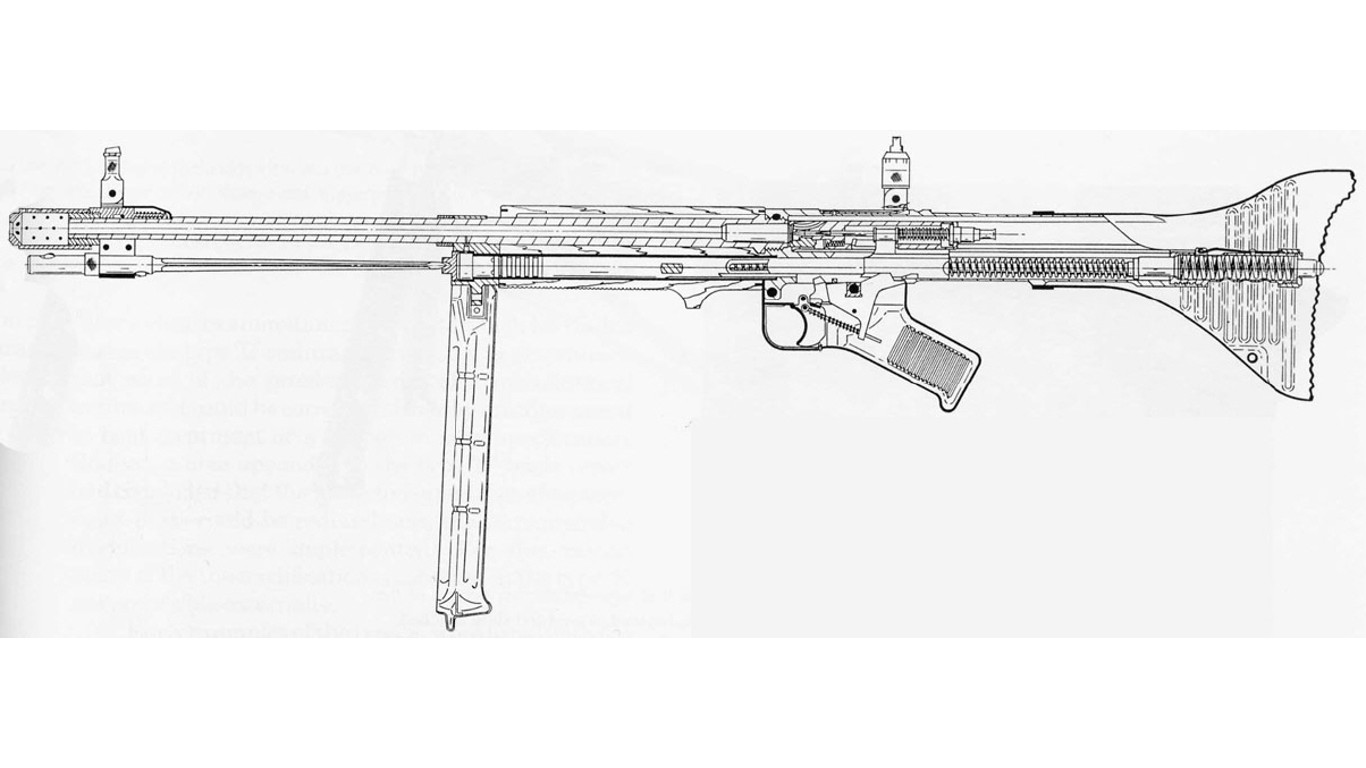
- Era: WWII
- Intended role at adoption: Paratrooper rifle
- What doctrine assumed before: Airborne troops as light infantry
- What broke in practice: Recoil and complexity
- Doctrine that had to be rewritten: Airborne weapons doctrine
- New role or structure created: Hybrid airborne roles
The FG 42 forced German airborne doctrine to confront the limits of multi-role weapons. Manuals were revised to clarify its use, separating expectations of rifle accuracy and automatic fire.
Johnson M1941 Rifle
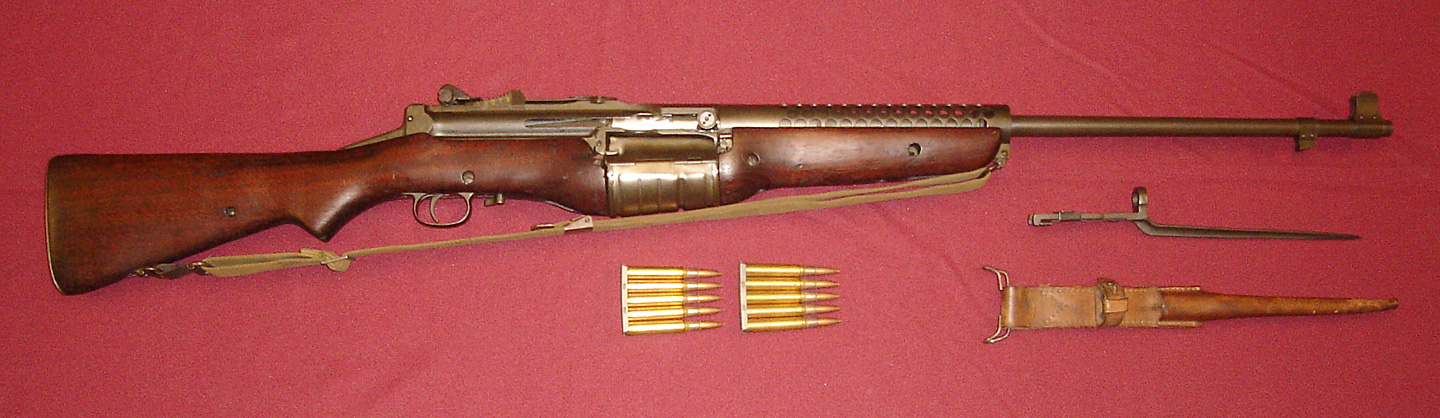
- Era: WWII
- Intended role at adoption: Semi-automatic rifle
- What doctrine assumed before: Standardized Garand-style rifle training and maintenance
- What broke in practice: Different manual-of-arms complicated mixed-unit training and sustainment
- Doctrine that had to be rewritten: Rifle training and sustainment procedures
- New role or structure created: Selective unit employment rules
The Johnson M1941 rifle forced doctrinal and training adjustments in units that fielded it alongside the M1 Garand. Its different loading system, handling, and maintenance requirements broke assumptions of standardized rifle procedures. Units rewrote training and sustainment guidance to manage mixed inventories, illustrating how even comparable small arms can pressure doctrine when they disrupt uniformity across formations.
M2 Carbine

- Era: WWII
- Intended role at adoption: Select-fire carbine
- What doctrine assumed before: Carbines were defensive weapons for support troops
- What broke in practice: Automatic fire blurred rifle/carbines roles and demanded new controls
- Doctrine that had to be rewritten: Carbine employment and automatic-fire doctrine
- New role or structure created: Expanded assault role guidance
The M2 Carbine forced doctrine to redraw the line between a “support weapon” and a frontline fighting arm. Select-fire capability required new rules on engagement distance, fire discipline, and ammunition management. Manuals adapted to constrain and define its use rather than treating it as a simple upgrade. The doctrinal rewrite reflected role confusion created by the weapon—not a clear leap in battlefield effectiveness.
SVT-40

- Era: WWII
- Intended role at adoption: Semi-automatic service rifle
- What doctrine assumed before: Mass semi-auto rifles would replace bolt-actions at scale
- What broke in practice: Maintenance burden and reliability issues exceeded unit capacity
- Doctrine that had to be rewritten: Infantry rifle fielding and training doctrine
- New role or structure created: Selective issue / reversion rules
The SVT-40 forced Soviet doctrine to confront a hard truth: a modern rifle that demands too much maintenance can break an army’s training and sustainment model. As reliability and upkeep proved difficult at scale, doctrine shifted toward selective issue and, in many cases, a return to bolt-action patterns. The rewrite was driven by institutional capacity, not by a weapon’s theoretical advantages.
Type 96 LMG
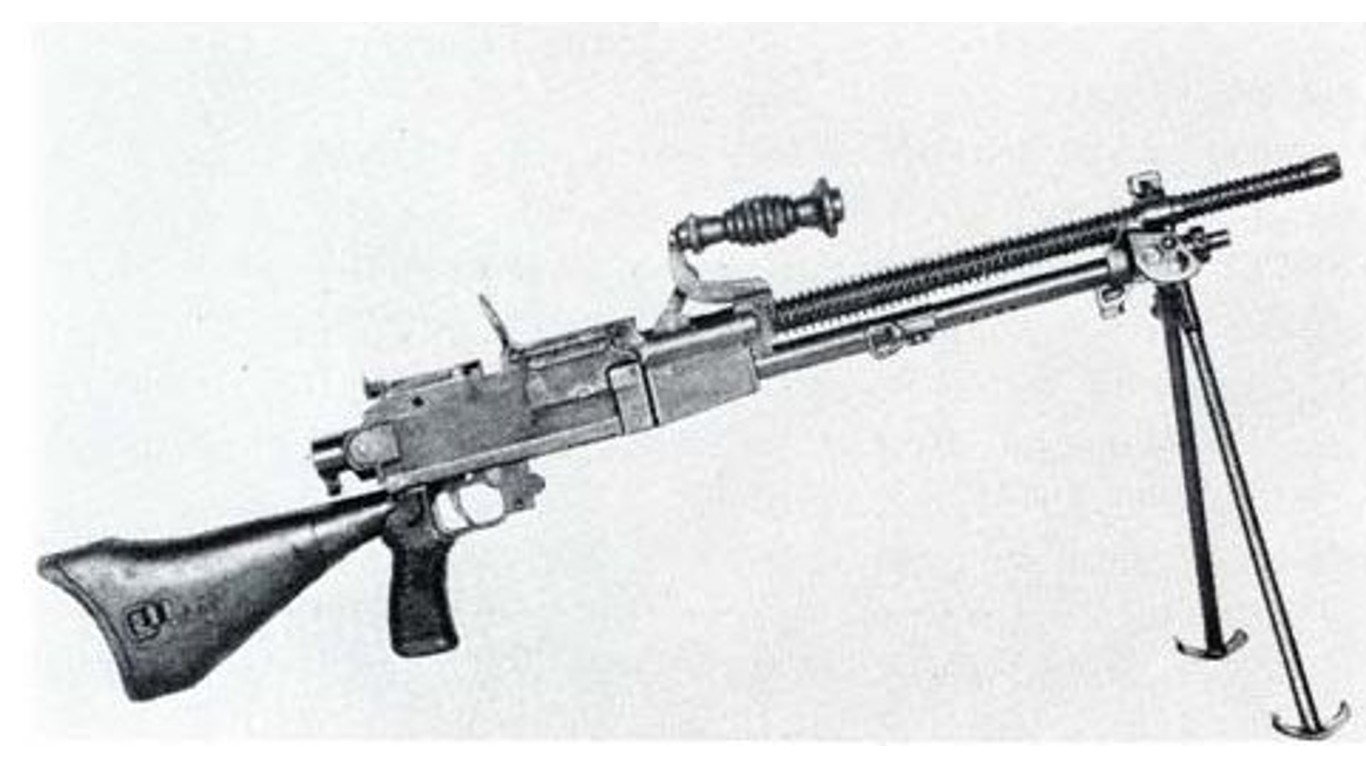
- Era: WWII
- Intended role at adoption: Squad automatic weapon
- What doctrine assumed before: Rifle squads with limited organic automatic fire
- What broke in practice: Feeding and handling characteristics required structured employment
- Doctrine that had to be rewritten: Japanese section and fire-control doctrine
- New role or structure created: Reorganized fire sections around the gun
The Type 96 pushed Japanese infantry doctrine toward a more formalized section model built around a squad automatic weapon. Manuals adjusted spacing, ammunition handling, and fire control to support the gun’s practical realities. The doctrinal change was less about a decisive performance advantage and more about reshaping unit structure so the weapon could be employed consistently under battlefield conditions.
PTRD-41
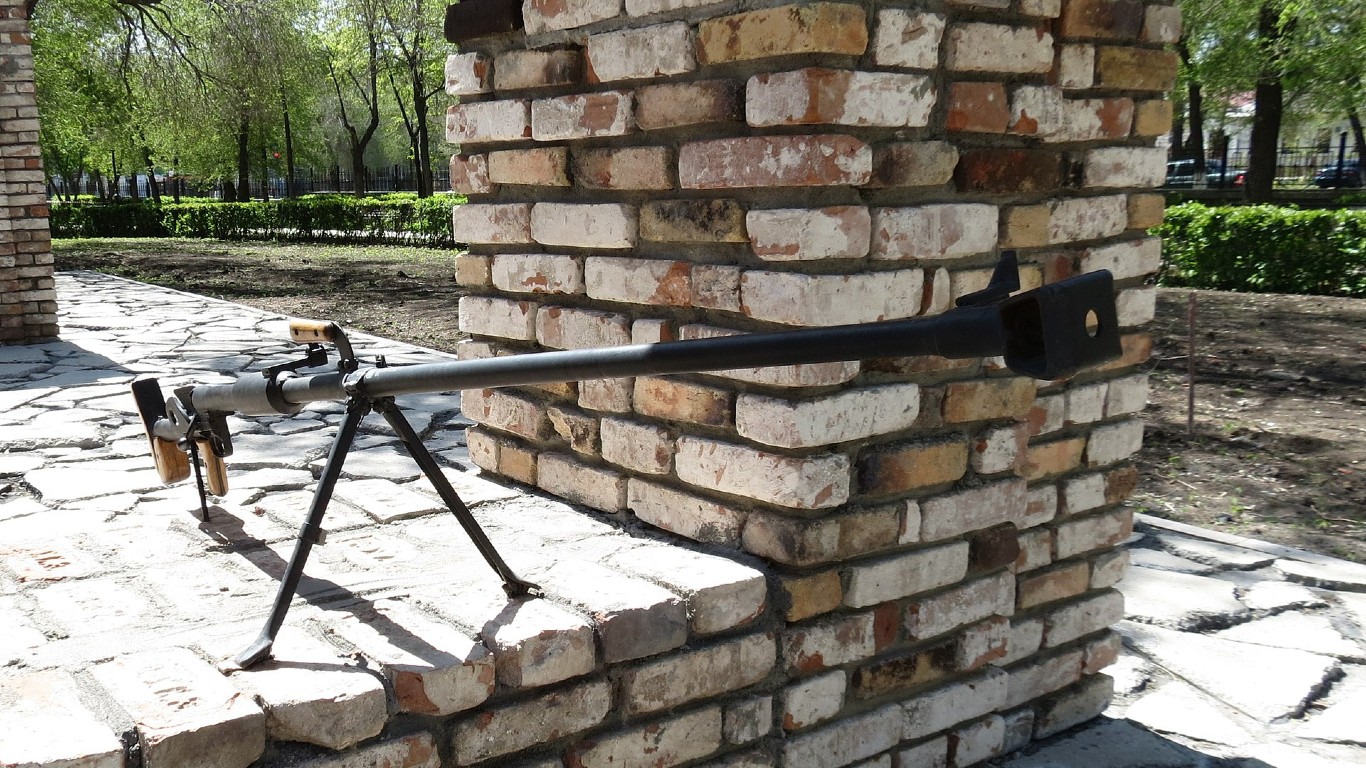
- Era: WWII
- Intended role at adoption: Anti-tank rifle
- What doctrine assumed before: Infantry anti-armor relied mainly on artillery, mines, and heavier weapons
- What broke in practice: Single-shot AT rifles demanded close-range rules and disciplined ambushes
- Doctrine that had to be rewritten: Infantry anti-armor engagement doctrine
- New role or structure created: Dedicated AT rifle teams
The PTRD-41 forced Soviet units to codify infantry anti-armor doctrine around small teams and strict engagement rules. Its limitations—single-shot operation and dangerous engagement distances—made ad hoc use too costly. Manuals emphasized ambush positioning, target selection, and coordination, reflecting a formal doctrinal rewrite driven by necessity rather than an inherently superior infantry weapon.
M60E3

- Era: Cold War
- Intended role at adoption: Lightened general-purpose machine gun
- What doctrine assumed before: A lighter GPMG could preserve performance with fewer crew burdens
- What broke in practice: Reduced durability and reliability undermined sustained-fire assumptions
- Doctrine that had to be rewritten: Machine-gun employment and sustainment doctrine
- New role or structure created: Reaffirmed crew-served employment standards
The M60E3 forced doctrine to retreat from the idea that a lighter machine gun could be treated as a near one-man solution without tradeoffs. Reliability and durability issues broke sustained-fire expectations, pushing manuals back toward stricter crew-served procedures and maintenance discipline. The doctrinal rewrite was about aligning employment with reality—not celebrating a capability gain.
AKS-74U
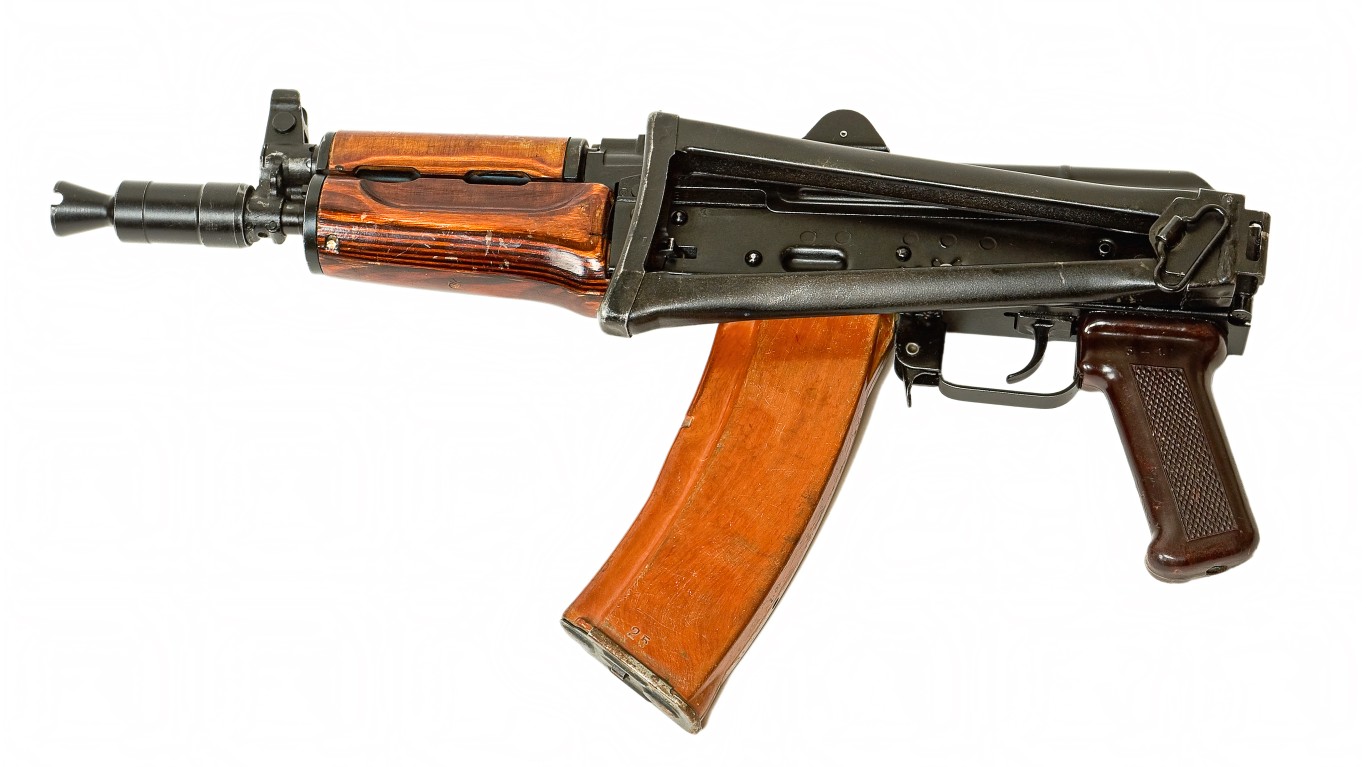
- Era: Cold War
- Intended role at adoption: Compact carbine for crews and rear-echelon troops
- What doctrine assumed before: Rear-area personnel were minimally armed and not primary fighters
- What broke in practice: Range and controllability limits required role-specific training and rules
- Doctrine that had to be rewritten: Rear-area defense and crew-weapon doctrine
- New role or structure created: Dedicated compact-weapon employment guidance
The AKS-74U forced doctrine to formally separate “crew weapons” from standard rifle employment. Its compact size solved carriage problems, but its ballistic and control limits broke assumptions about what rear-echelon troops could do at distance. Manuals codified new training and engagement rules specific to crews and support forces, reflecting doctrinal change driven by constraints, not superiority.
PK Machine Gun
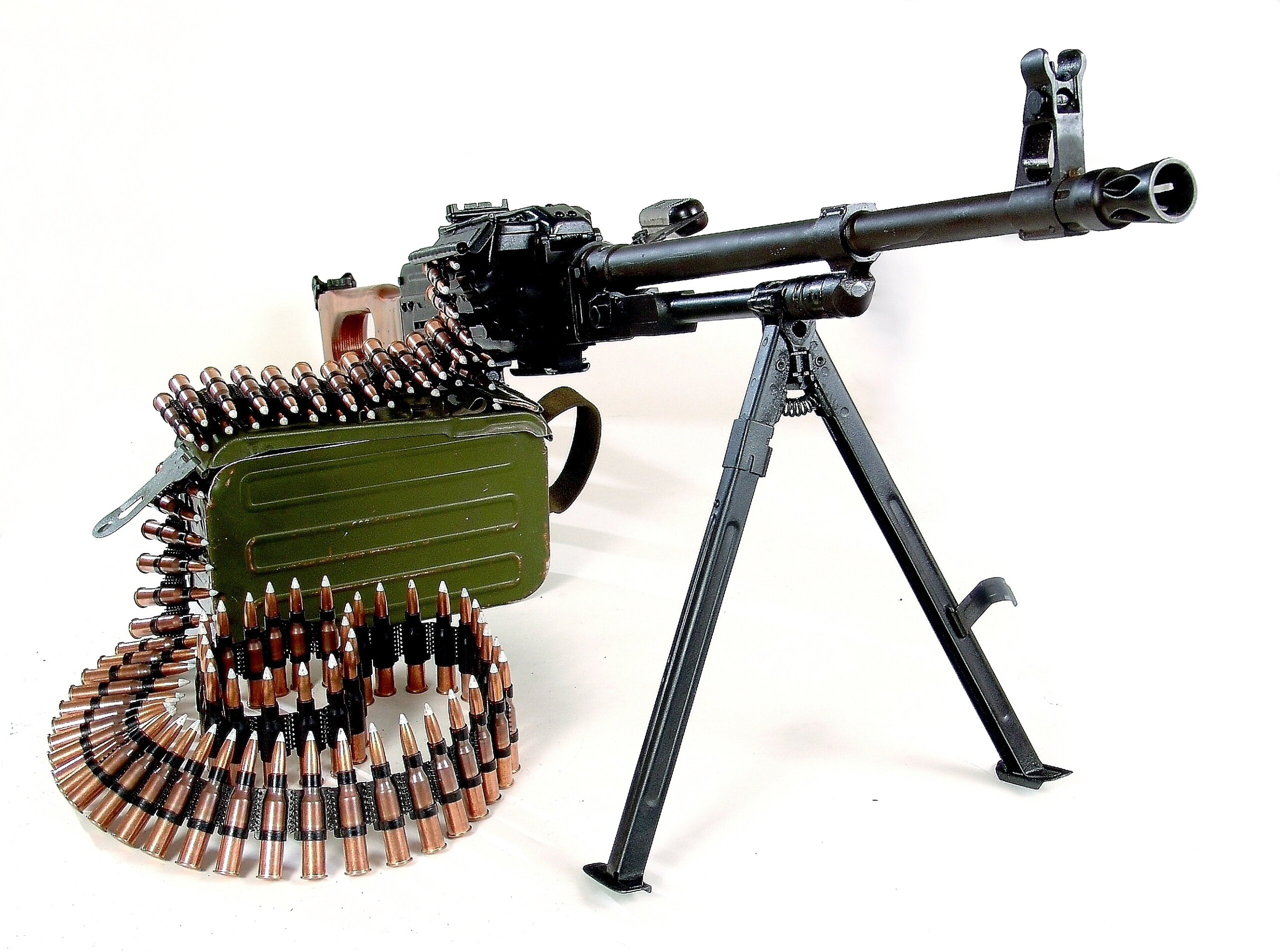
- Era: Cold War
- Intended role at adoption: General-purpose machine gun
- What doctrine assumed before: Automatic rifles could shoulder much of squad suppression
- What broke in practice: Belt-fed sustained fire reshaped platoon organization and movement
- Doctrine that had to be rewritten: Platoon fire support and maneuver doctrine
- New role or structure created: Dedicated GPMG teams at lower echelons
The PK forced doctrine to clearly separate automatic rifle roles from true machine-gun suppression at the platoon level. Belt-fed sustained fire changed how units planned movement, positioned support, and allocated ammunition. Manuals formalized dedicated GPMG teams and employment rules, demonstrating a doctrinal rewrite driven by the organizational impact of sustained-fire weapons rather than a simple incremental improvement.
RPD
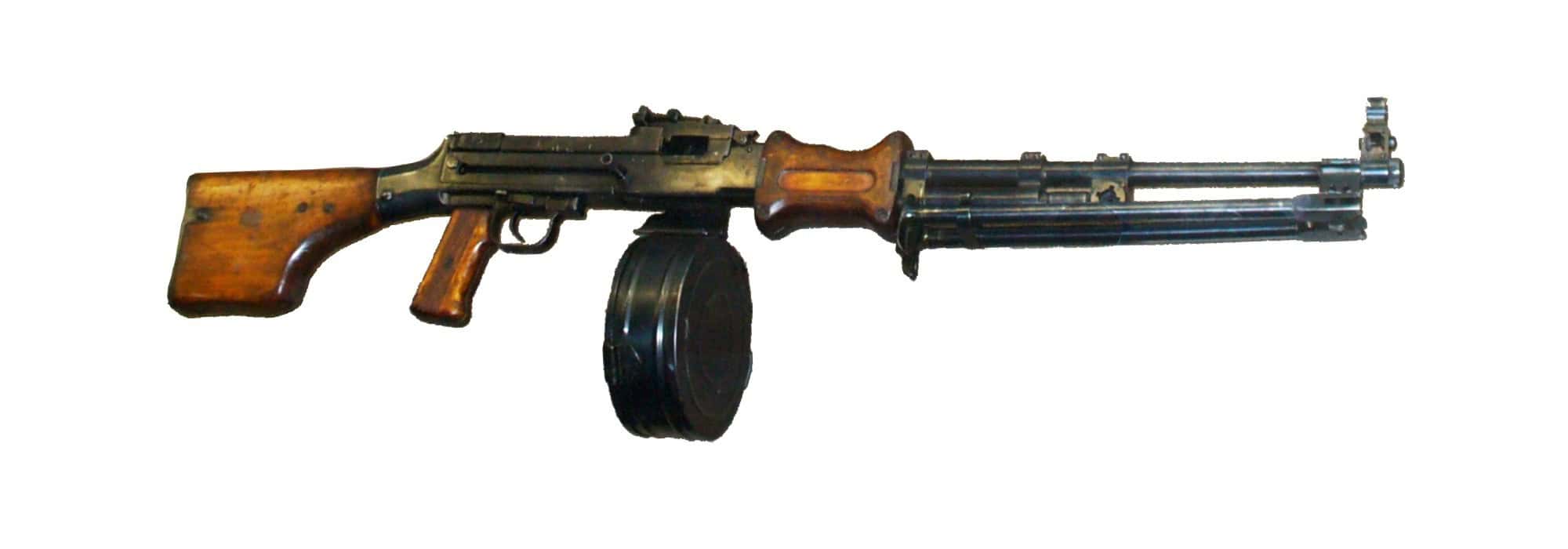
- Era: Cold War
- Intended role at adoption: Squad machine gun
- What doctrine assumed before: Magazine-fed automatic rifles were sufficient for squad suppression
- What broke in practice: Belt-fed squad weapons demanded new fire control and logistics
- Doctrine that had to be rewritten: Squad automatic-fire and resupply doctrine
- New role or structure created: Belt-fed squad gunner model
The RPD forced a doctrinal shift by making belt-fed sustained fire a squad expectation. That change broke older assumptions about magazine-fed automatic rifles and required new rules for ammunition carriage, resupply, and fire control. Manuals adapted squad structure and movement around a true squad machine gun, reflecting institutional change driven by sustainment realities and role clarity rather than outright weapon superiority.
M231 FPW
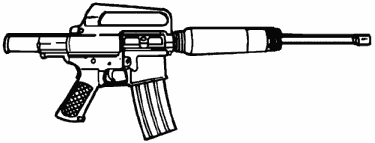
- Era: Cold War
- Intended role at adoption: Vehicle firing-port weapon for mechanized infantry
- What doctrine assumed before: Infantry primarily fought dismounted, with vehicles as transport/support
- What broke in practice: Weapon tied employment to vehicle constraints and poor ergonomics
- Doctrine that had to be rewritten: Mechanized infantry fighting and training doctrine
- New role or structure created: Vehicle-centric firing roles and drills
The M231 FPW forced mechanized doctrine to address fighting from inside vehicles as a formal concept. Manuals incorporated firing-port drills, vehicle positioning, and engagement rules that differed from dismounted infantry practice. The weapon’s awkward handling and constrained employment drove doctrine toward vehicle-centric procedures, illustrating a rewrite prompted by platform assumptions more than by improved infantry effectiveness.
M4 Carbine

- Era: Post–Cold War
- Intended role at adoption: Carbine
- What doctrine assumed before: Full-length rifle standard
- What broke in practice: Reduced range and velocity
- Doctrine that had to be rewritten: Engagement-distance doctrine
- New role or structure created: Carbine-centric units
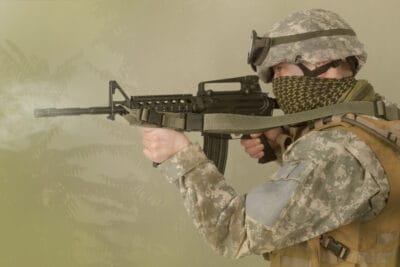
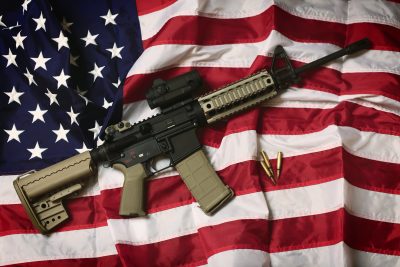
The M4 forced doctrine to abandon full-length rifle assumptions. Manuals revised engagement distances and training to reflect tradeoffs rather than pure improvement.
M249 SAW
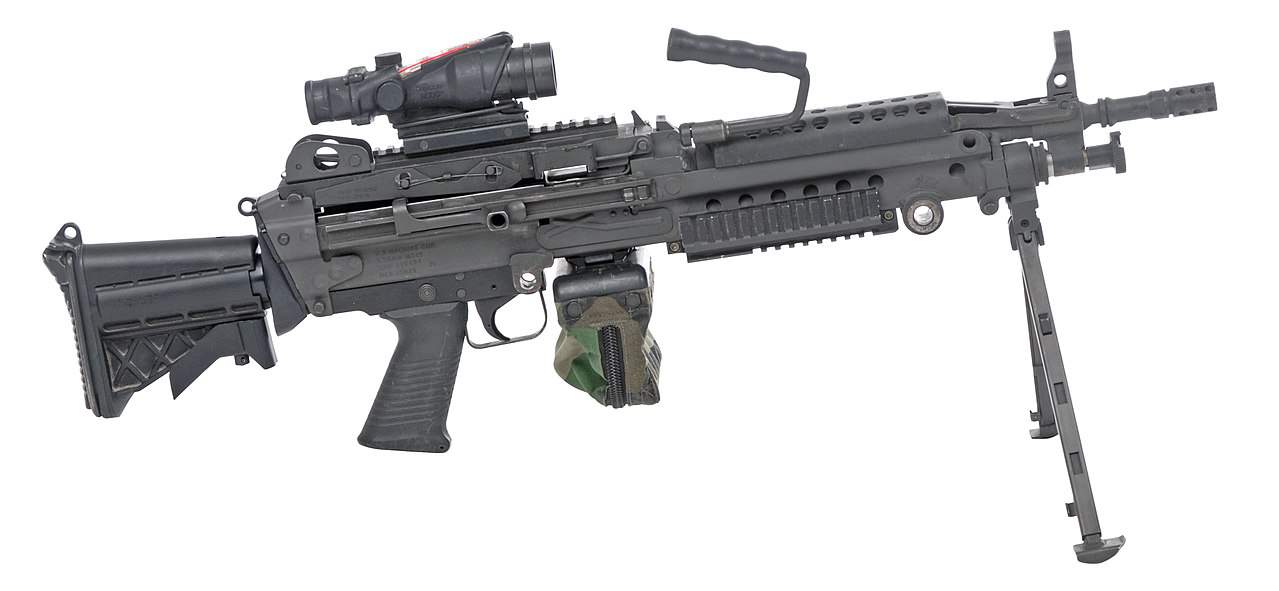
- Era: Cold War
- Intended role at adoption: Squad automatic weapon
- What doctrine assumed before: Automatic rifles suppressed
- What broke in practice: Belt-fed fire altered squad movement
- Doctrine that had to be rewritten: Fire team doctrine
- New role or structure created: SAW gunner
The M249 rewrote U.S. fire team doctrine by formalizing belt-fed suppression at the squad level, reshaping infantry organization beyond simple replacement.
HK MP5
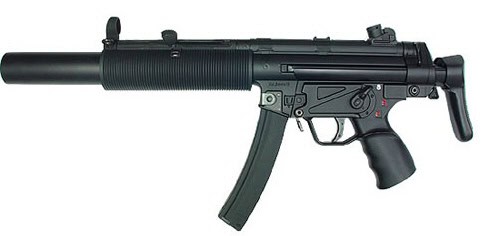
- Era: Cold War
- Intended role at adoption: Submachine gun for specialized units
- What doctrine assumed before: CQB treated as a subset of standard infantry skills
- What broke in practice: Precision CQB demanded distinct training, safety, and team procedures
- Doctrine that had to be rewritten: CQB and counterterror training doctrine
- New role or structure created: Dedicated CQB units and techniques
The MP5 helped force CQB into a separate doctrinal lane. Units rewrote manuals to formalize room-clearing methods, team movement, target discrimination, and safety procedures that standard infantry doctrine did not cover in detail. The change was institutional in specialized forces and police-military units, driven by the demands of close-range precision rather than the MP5 being broadly “better” for general combat.
Galil ARM
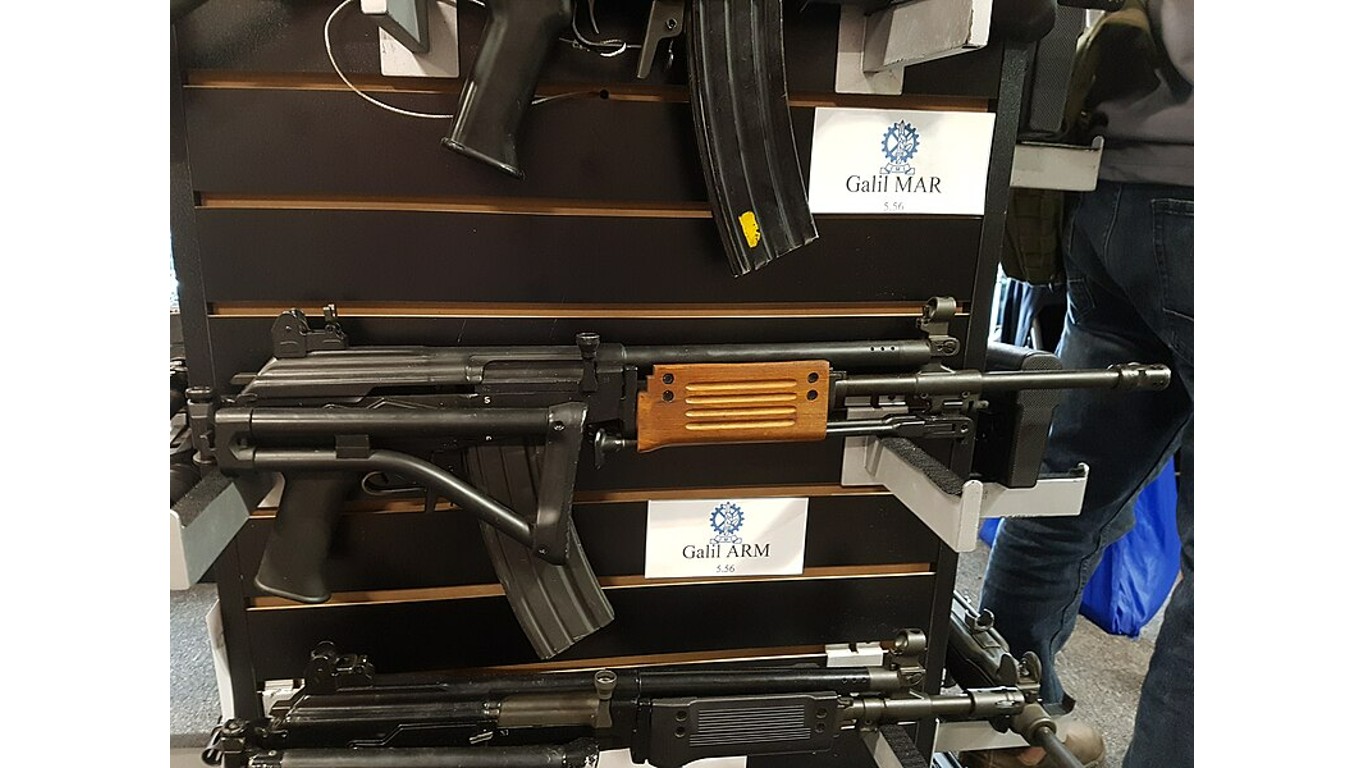
- Era: Cold War
- Intended role at adoption: Assault rifle with support-weapon features
- What doctrine assumed before: A single standard rifle pattern could fit most unit needs
- What broke in practice: Weight and role overlap demanded clearer unit-by-unit employment
- Doctrine that had to be rewritten: Unit armament and terrain-specific doctrine
- New role or structure created: Region/unit-specific employment guidance
The Galil ARM pushed doctrine to acknowledge that terrain and unit type can demand different small-arms employment. Its weight and hybrid features challenged one-size-fits-all rifle assumptions, prompting manuals to clarify where it fit best and how it should be carried and used. The doctrinal change reflected organizational adaptation to role overlap and environment, not a simple performance upgrade.
Ultimax 100
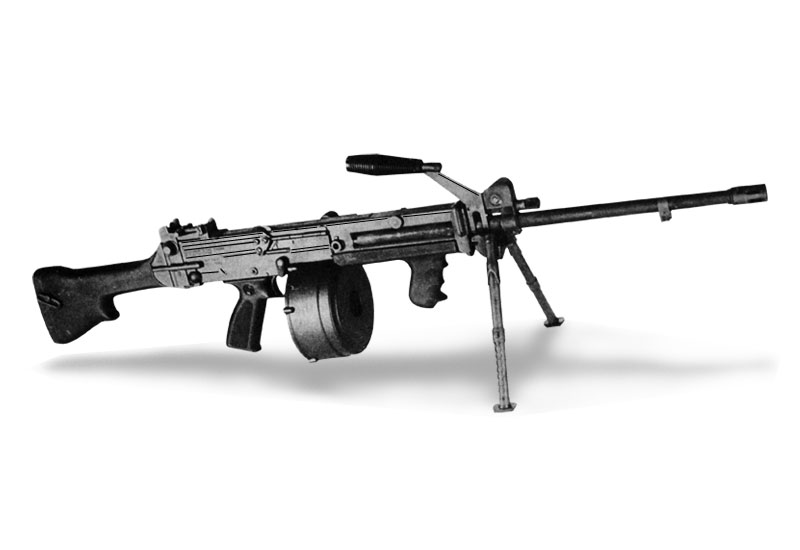
- Era: Cold War
- Intended role at adoption: Light machine gun
- What doctrine assumed before: Suppression depended on recoil-heavy, volume-centric automatic fire
- What broke in practice: Low recoil enabled accurate sustained fire, changing firing assumptions
- Doctrine that had to be rewritten: Automatic-fire and suppression doctrine
- New role or structure created: Accuracy-based suppression concepts
The Ultimax 100 challenged traditional suppression doctrine by enabling unusually controllable automatic fire. That broke assumptions that LMGs must trade accuracy for volume, prompting formal experimentation with accuracy-based suppression and movement support. While adoption was limited, manuals and training concepts had to adapt to a weapon that changed what “sustained fire” could look like at the small-unit level.
HK416
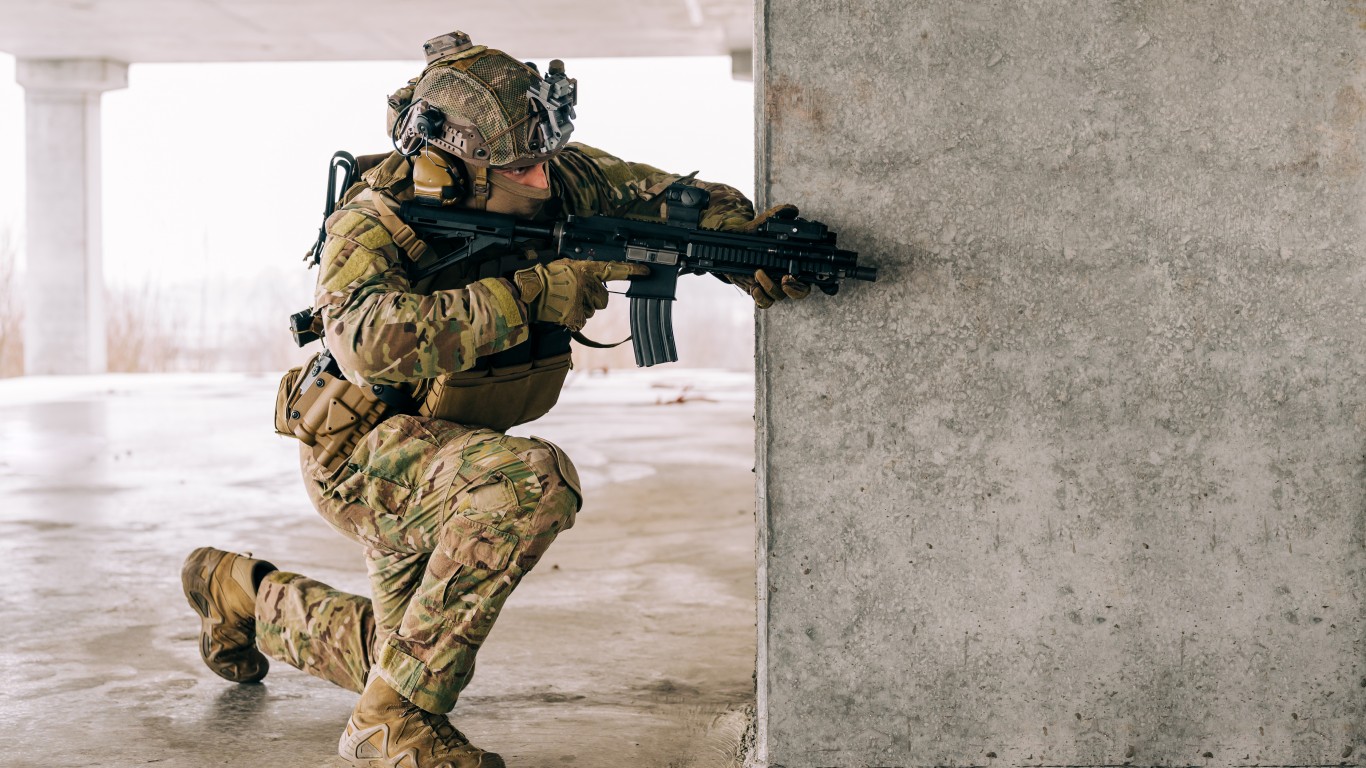
- Era: Modern
- Intended role at adoption: Assault rifle for high-reliability use
- What doctrine assumed before: Direct-impingement maintenance and training norms were standard
- What broke in practice: Different maintenance patterns and parts regimes required updates
- Doctrine that had to be rewritten: Small-arms maintenance and training doctrine
- New role or structure created: Revised armorer and user training standards
The HK416 forced adopting units to revise maintenance and training doctrine built around direct-impingement rifles. Different parts schedules, lubrication expectations, and armorer procedures broke assumptions embedded in manuals and courses. Doctrinal changes focused on sustainment and user training as much as employment, reflecting institutional adaptation to a system that required different upkeep realities rather than simply offering a drop-in “better M4.”
XM25 CDTE
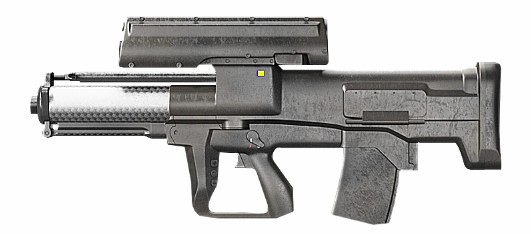
- Era: Modern
- Intended role at adoption: Airburst grenade launcher
- What doctrine assumed before: Infantry engagements were primarily direct-fire problems
- What broke in practice: Cover denial required new targeting, training, and ROE concepts
- Doctrine that had to be rewritten: Infantry engagement and fires-integration doctrine
- New role or structure created: Squad-level cover-denial employment concepts
The XM25 forced experimental doctrine rewrites by introducing airburst cover denial at the small-unit level. That broke assumptions about direct-fire dominance and required new training for ranging, target selection, and integration with squad tactics. Manuals evolved to treat “protected targets behind cover” as a distinct engagement problem, even as reliability and program issues limited widespread institutional adoption.
Mk 48
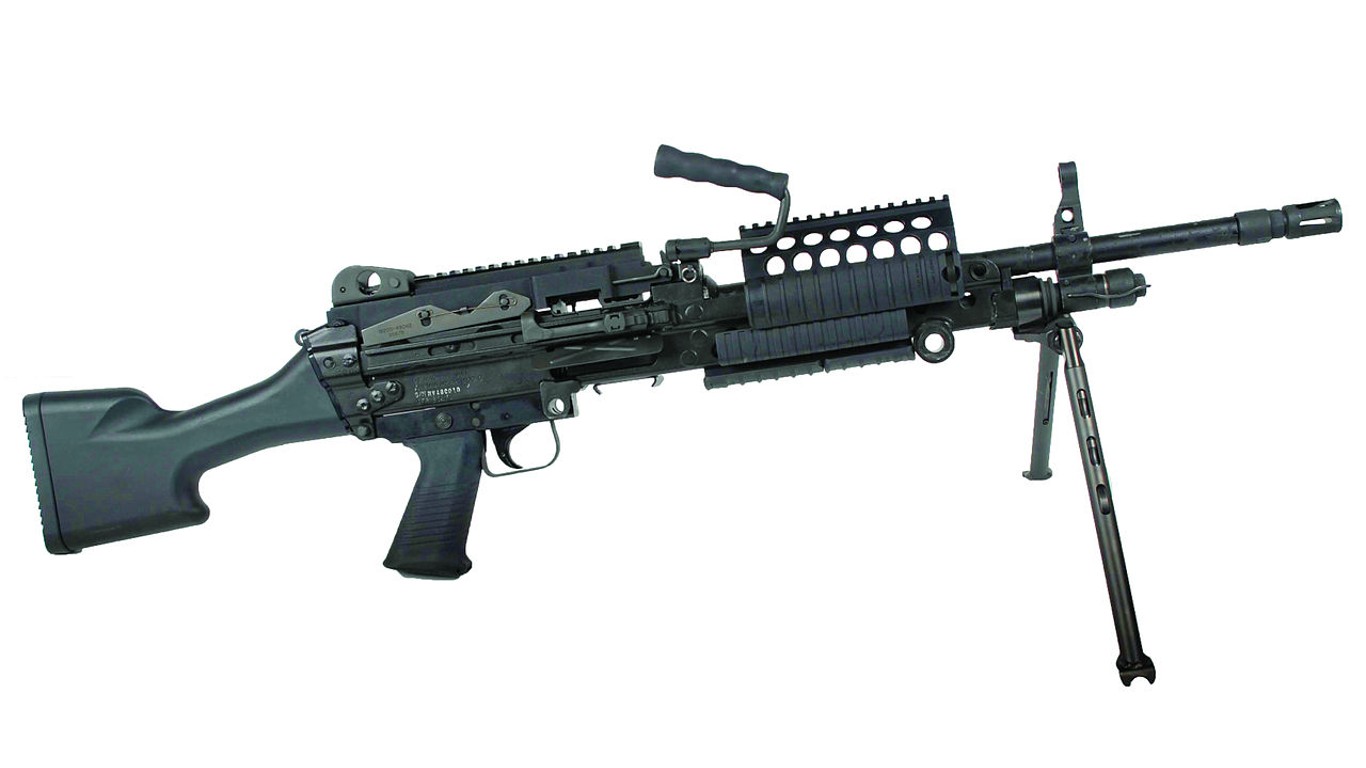
- Era: Modern
- Intended role at adoption: Lightweight 7.62mm machine gun for SOF
- What doctrine assumed before: GPMG doctrine and sustainment models could be shared across forces
- What broke in practice: SOF mobility and sustainment needs differed from conventional units
- Doctrine that had to be rewritten: SOF fire support and sustainment doctrine
- New role or structure created: SOF-specific MG employment rules
The Mk 48 helped force doctrinal separation between SOF and conventional machine-gun employment. Its role highlighted different sustainment realities, mobility requirements, and ammunition planning. Manuals and training emphasized SOF-specific employment rules rather than assuming a universal GPMG model. The doctrinal rewrite was driven by organizational needs and logistics constraints more than by the weapon being superior for general infantry use.
NGSW Rifle (XM7)

- Era: Modern
- Intended role at adoption: Assault rifle
- What doctrine assumed before: 5.56mm dominance
- What broke in practice: Range and recoil tradeoffs
- Doctrine that had to be rewritten: Engagement-distance doctrine
- New role or structure created: Revised rifle employment
The NGSW rifle is actively forcing doctrine rewrites around engagement distance, recoil management, and soldier load. Manuals are being rewritten to adapt to its realities rather than assuming improvement alone.







 Top Gaining Stocks
 Top Losing Stocks